Tree Removal From Roof Areas
Crews reduce weight from houses, apartment buildings, offices, garages, and other structures without dragging unsupported wood across the surface.
Review Structure Impact Response
When storm damaged wood blocks a street, presses into a roof, or hangs above a busy property, the scene needs to be controlled before cleanup begins. Robert Burk Tree & Landscaping provides 24 hour emergency tree service in Dover for residential, commercial, and managed properties, with crane, bucket, rigging, hauling, and debris removal capabilities.

Robert Burk Tree & Landscaping handles sudden tree failures throughout Dover, including trunks on buildings, branches over parking areas, uprooted trees, blocked entrances, split stems, and debris from severe weather. The first objective is to stop access to the danger zone and determine which parts remain unstable.
Dover calls often involve more than one protected area. A single crown may extend across a house, sidewalk, parked vehicles, utility service, and neighboring lot, while commercial or multifamily sites may need pedestrian and traffic control throughout the work.
Conditions near State Street and The Green differ from open properties along US 13, Bay Road, or the city's outer edges. Building spacing, public access, water influenced soils near Silver Lake and the St. Jones watershed, and room for a crane or chipper all affect the response.
Choose the closest description and use the guidance while you arrange professional help. Keep the public, tenants, customers, and household members away from the entire reach of the damaged tree. Electrical hazards must be reported to the utility first.
Move occupants away from the side of the building under the tree and avoid rooms with visible ceiling, wall, or roof movement. Do not attempt to push the trunk off the structure. The crew must understand how the wood is supported before reducing the load.
A damaged tree in Dover may be surrounded by residents, traffic, pedestrians, tenants, delivery vehicles, and neighboring buildings. Before cutting starts, the crew creates an exclusion area large enough for falling pieces, rope movement, crane swing, and equipment travel.
Historic streets near State Street and The Green can offer limited staging, while larger sites near US 13 and Bay Road may require parking controls or room for commercial access. Trees near Silver Lake, low drainage areas, or the St. Jones system can add soft ground and root instability to an already urgent job.
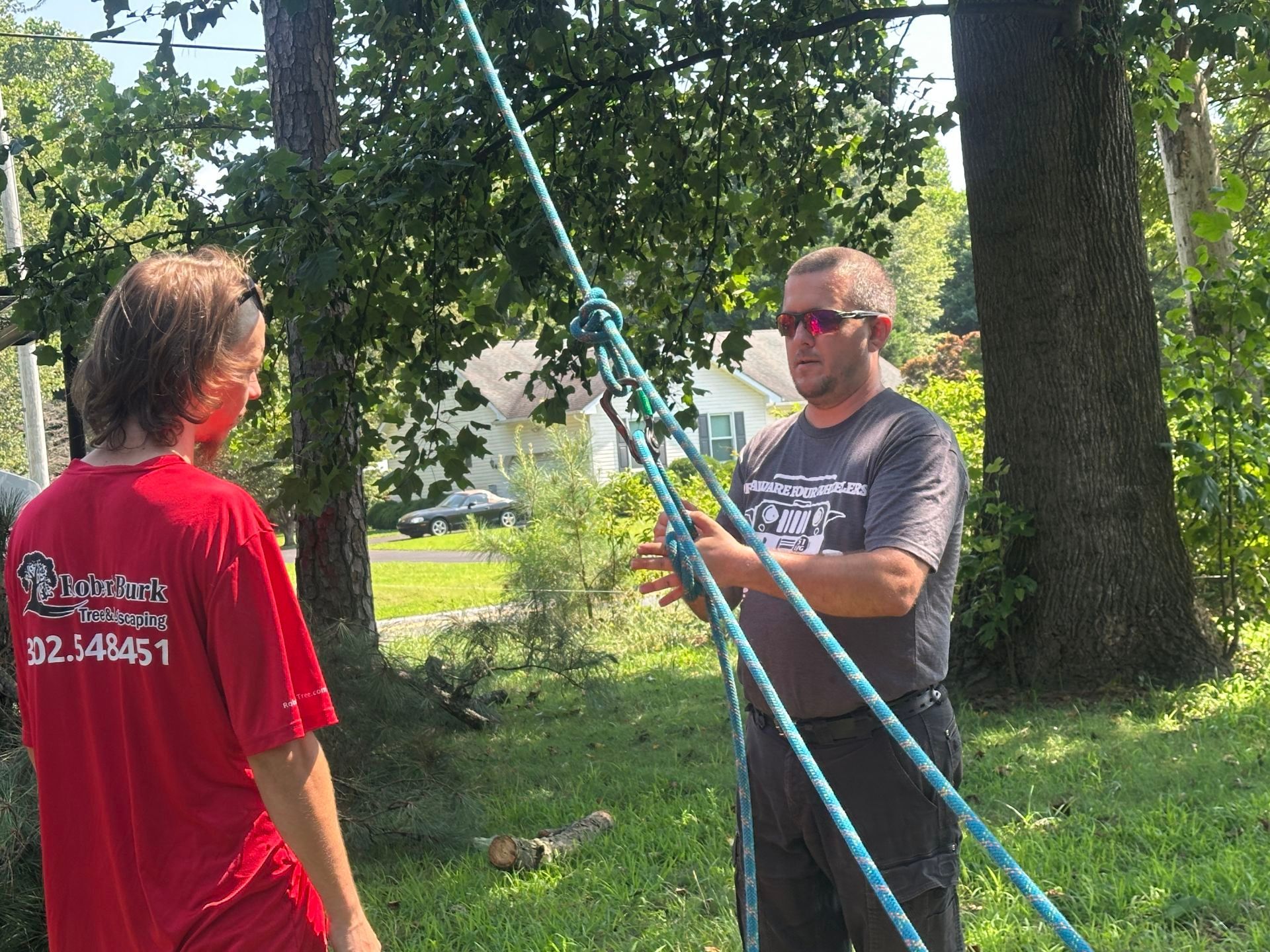
Dense neighborhoods and active commercial sites require a response that considers the people around the tree as carefully as the tree itself. The crew can isolate the hazard, control damaged sections, relieve structures, reopen access, and manage the resulting material.
Crews reduce weight from houses, apartment buildings, offices, garages, and other structures without dragging unsupported wood across the surface.
Review Structure Impact ResponseBroken limbs above customer spaces, tenant routes, patios, and sidewalks are secured and lowered before normal use resumes.
Address A Public Area HazardFallen crowns across drive lanes, fire access, loading areas, and residential entrances are cut back through a controlled sequence.
Request Priority Access ClearingNew trunk fractures, shifting roots, and storm lean are evaluated for continued movement and the reach of a possible failure.
Call About An Unstable TreeHeavy sections can be lifted from confined sites when ground lowering would threaten buildings, vehicles, utilities, or adjacent properties.
Explore Controlled Crane WorkBrush, wood, and scattered tree material can be loaded and hauled so parking, entrances, and operating areas return to service.
Plan Debris And Hauling SupportHigh occupancy and public access can turn a damaged branch into an urgent problem even before the whole tree fails. Close the affected space whenever movement, contact, or structural damage places people within reach.
Pedestrians may not see cracked fibers or understand that the limb can drop without another gust.
Additional settling can worsen structural damage and expose rooms below to falling wood or water.
Raised sidewalk or soil can indicate root plate rotation rather than ordinary surface growth.
Residents, customers, and responders need a designated alternate route outside the hazard area.
A split union can send one stem toward a different target than the other, expanding the danger zone.
Utility contact is not safe to approach, even when the line is quiet or the neighborhood has lost power.
A busy property may need a walkway, fire lane, or building entrance restored quickly, while the remaining stable tree work can wait. In other cases, root failure or a fractured trunk makes complete emergency removal the only reasonable way to eliminate the threat.
The cutting plan and the public safety plan operate together. Crews may need barriers, spotters, traffic coordination, elevated access, rigging, and heavy lifting to move wood without exposing occupied areas.
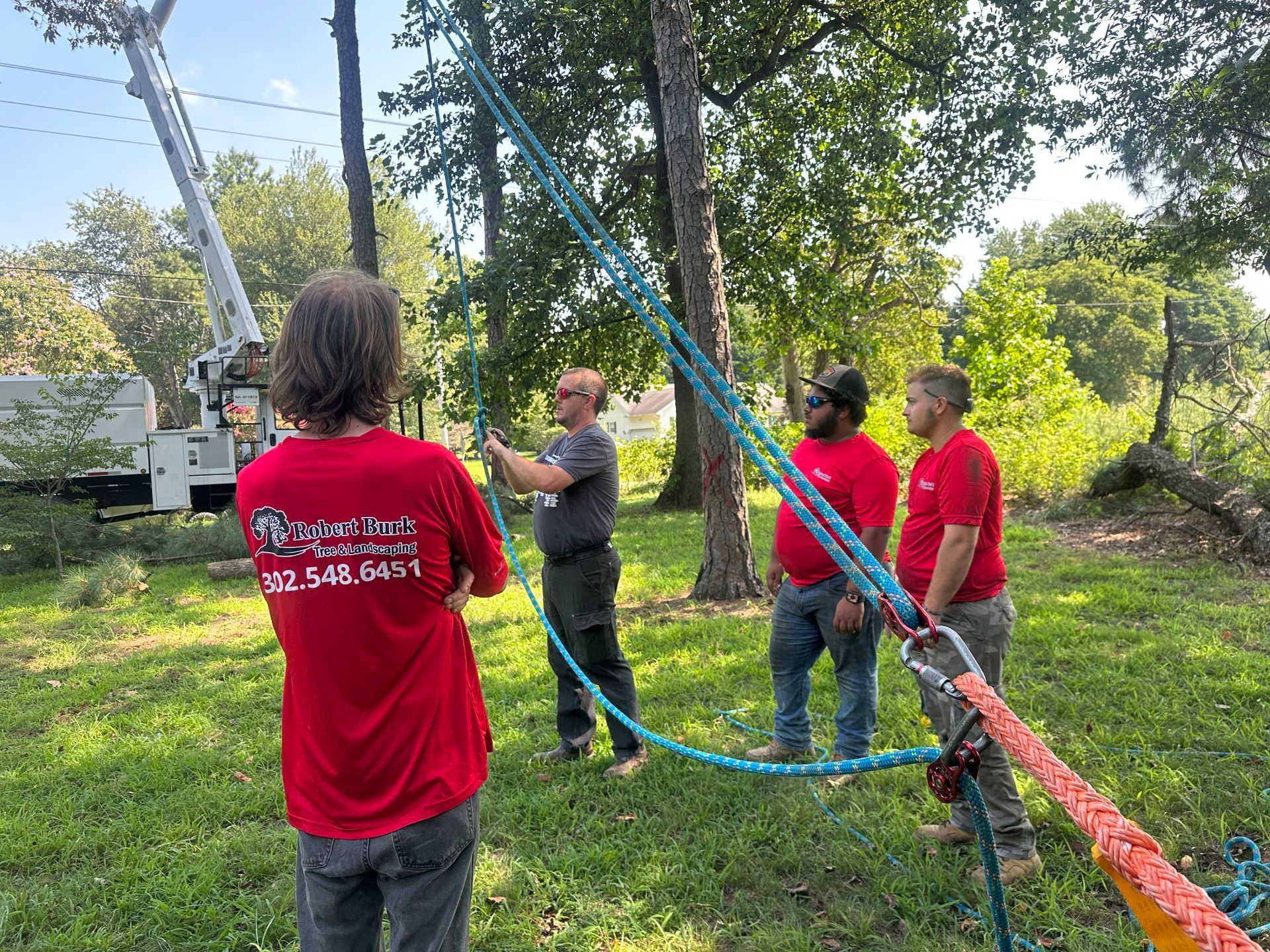
The crew identifies all possible impact areas, building occupancy, traffic routes, utility conflicts, and the safest equipment perimeter.
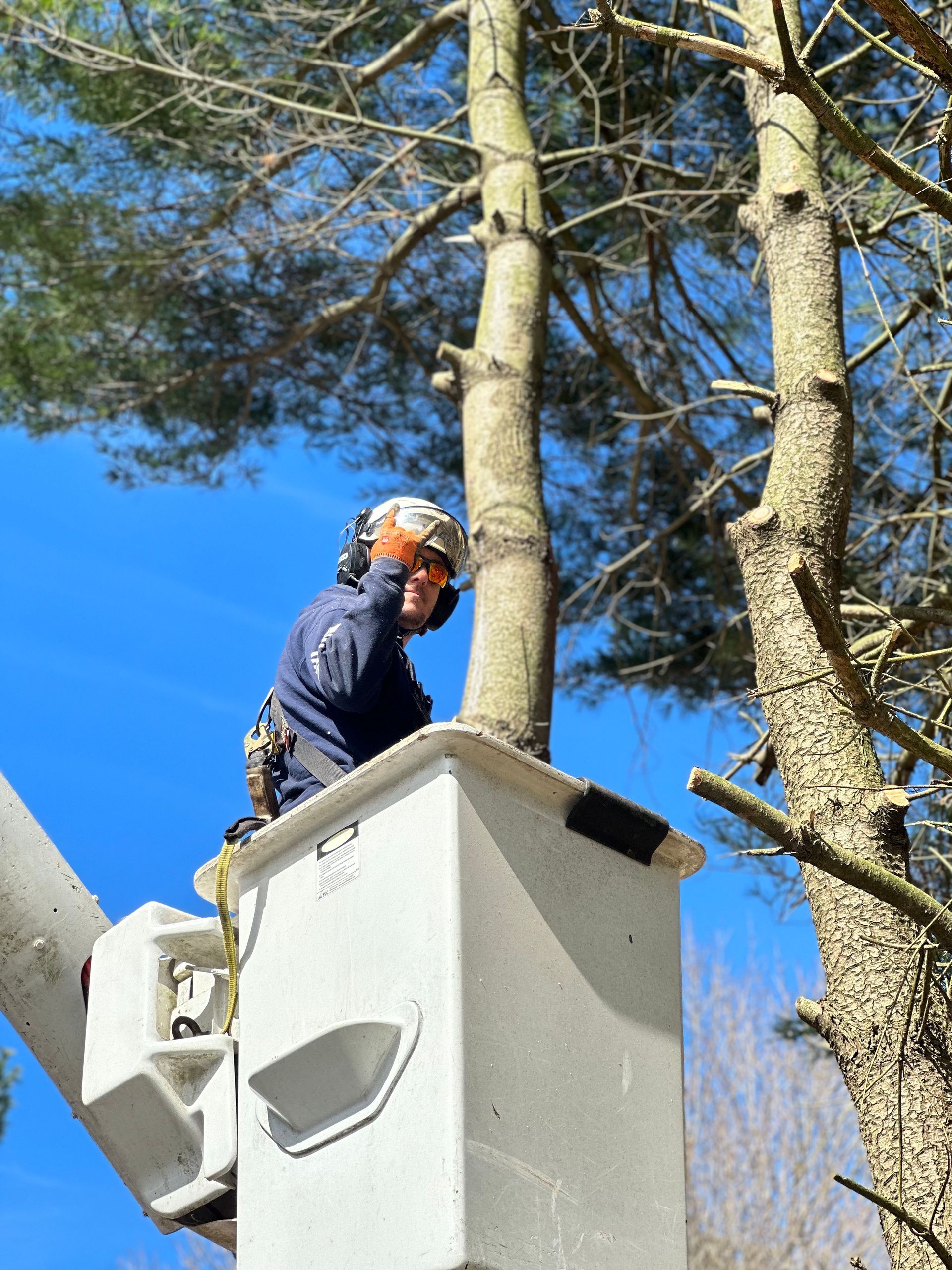
Branches are tied and lowered where free fall could strike roofs, pavement, vehicles, signs, landscaping, or neighboring space.

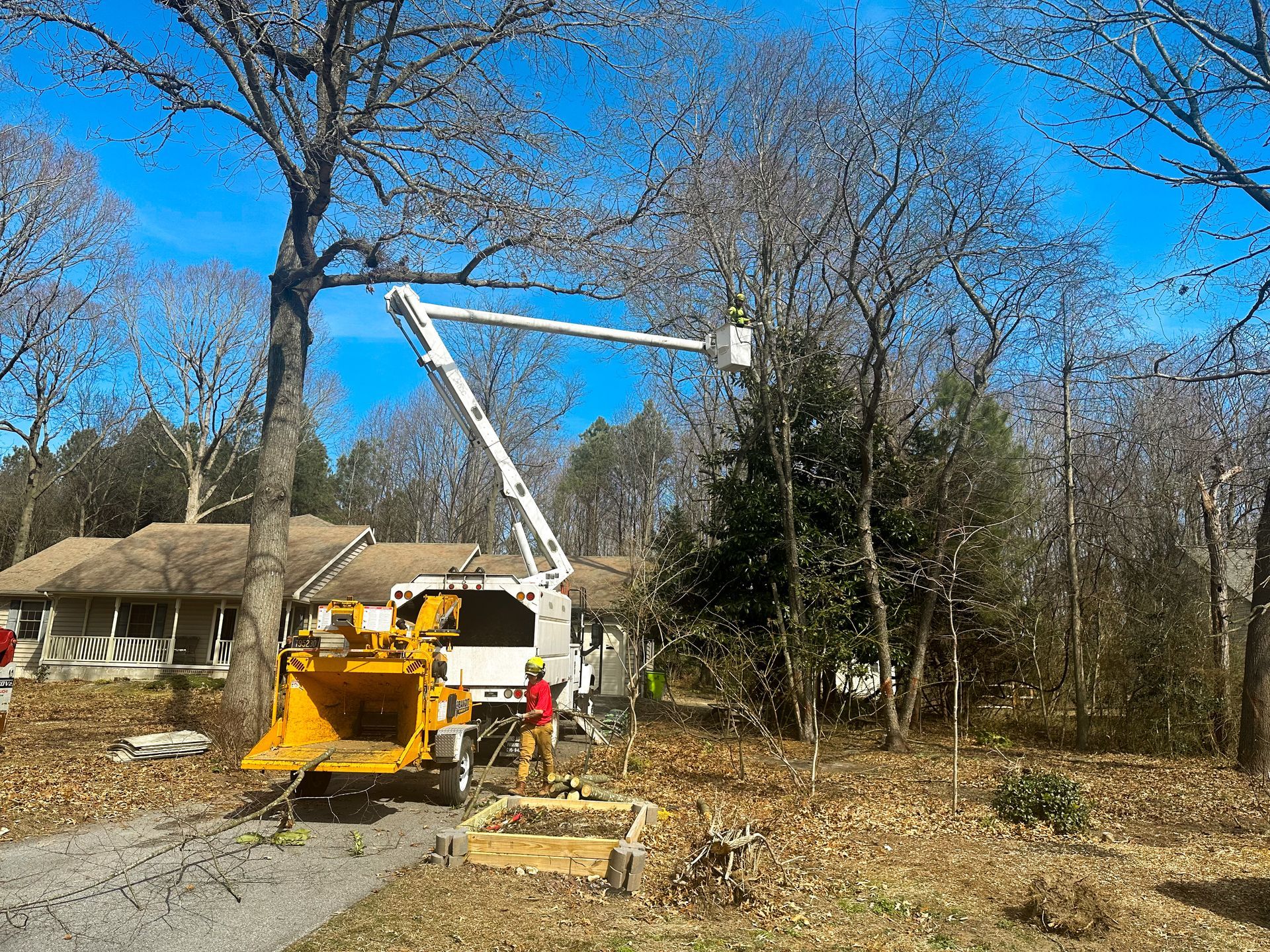
Specialized reach allows damaged crown sections to be cut or lifted from a stable position when the tree itself cannot support a climber.

Ground equipment processes debris in an order that restores entrances, parking, walkways, and essential service areas.
A clear sequence helps reduce confusion on occupied or public facing sites. One contact person, accurate hazard details, and an established work perimeter keep the response moving safely.
Share the address, building type, active entrances, affected rooms or parking, utility involvement, and the safest route for the crew.
The team reviews movement, structural damage, access, traffic, bystanders, support points, and equipment reach before setting the cutting zone.
Branches and trunk sections are supported, shortened, lifted, or lowered so weight leaves roofs and public areas without uncontrolled travel.
Included debris is moved from priority routes, the remaining condition is reviewed, and the owner or manager is told what follow up work is recommended.
Around State Street, The Green, and established neighborhoods near Silver Lake, mature trees may stand close to homes, offices, sidewalks, and curbside parking. Emergency equipment must fit within the available street and property space while keeping the public outside the work zone.
Along US 13, Bay Road, Route 8, and larger commercial or institutional parcels, the tree may be easier to reach but harder to isolate from traffic and ongoing operations. Low areas connected to Silver Lake and the St. Jones watershed can also remain soft enough to influence crane outrigger or truck placement.
The response must balance the condition of the tree with occupancy, public exposure, access, and property operations. Those variables determine whether the site needs a quick isolated cut or a multi equipment removal.
Homes, apartments, offices, schools, stores, and public spaces require different evacuation and exclusion considerations.
Roofs, vehicles, walks, roads, signs, utilities, and neighboring parcels may all sit within one crown's reach.
Settling, root rotation, cracking, and shifting support points can change the plan after the crew arrives.
Active streets, parking aisles, delivery zones, and sidewalks may need temporary control during lifting and cutting.
Building setbacks, parked cars, overhead lines, pavement strength, and reach distance determine equipment options.
Wet ground, landscaped areas, curbs, underground systems, and paved edges influence where weight can be placed.
Electrical clearance, property management, emergency services, and repair contractors may affect work sequence.
A site may prioritize fire access, a resident entrance, business parking, or complete debris removal depending on use.
Robert Burk Tree & Landscaping responds to urgent tree hazards at houses, apartment properties, businesses, institutions, and other sites throughout the Dover area. Call with the location, access instructions, and the part of the property affected.
Service extends through Dover and surrounding communities for fallen trees, blocked routes, hanging branches, storm damaged structures, and urgent cleanup needs.
On a Dover emergency call, the work zone may share space with residents, customers, deliveries, traffic, or repair contractors. Clear boundaries and one designated contact help keep people from walking back into the area while suspended wood is being moved.
Robert Burk Tree & Landscaping plans the equipment path and debris path before the first lift. That reduces avoidable damage to pavement, curbs, landscaping, lighting, signage, and underground systems while essential parts of the property are reopened.
A tree emergency at an occupied property requires technical tree work and disciplined site coordination. The company combines long term field experience with equipment for lifting, elevated access, debris processing, and hauling.
These images show elevated access, sectional dismantling, crane support, ground equipment, and cleanup methods useful when damaged trees affect developed properties and active access areas.
Emergency service addresses the condition that cannot wait. Planned pruning, health care, remaining tree removal, commercial maintenance, clearing, or hauling can be scheduled separately when the site is stable.
The following guidance addresses occupied buildings, public areas, blocked fire access, commercial sites, electrical contact, crane use, insurance records, response timing, cleanup, and local coordination.
Robert Burk Tree & Landscaping accepts emergency calls 24 hours a day. Actual arrival depends on travel conditions, utility clearance, equipment needs, active storm volume, and the severity of competing hazards. Calls involving life safety, occupied structures, essential access, or continuing movement receive urgent attention.
Close the sidewalk and any adjacent entrance or parking spaces before people walk beneath the branch. Use a detour beyond the tree's reach, notify occupants or staff, and call for an assessment. Do not send maintenance personnel up a ladder or attempt to pull the limb down from below.
Yes, the company handles residential and commercial emergency tree work. The crew examines where the trunk and crown are supported, coordinates a protected work zone, and may use rigging, bucket access, or a crane to reduce the load. Building repair remains a separate service.
Tell the dispatcher that emergency or primary access is closed and identify any alternate route. The crew may prioritize opening a safe lane before completing all debris processing. Keep vehicles and bystanders back so trucks and lifting equipment can approach without another obstruction.
The electric utility controls the electrical hazard. Call the provider or 911, maintain a wide perimeter, and do not touch the tree, wires, fences, vehicles, or wet surfaces near them. Tree removal can proceed only after the utility makes the area safe for the crew.
A crane may be appropriate when heavy sections rest on a building, the trunk cannot be climbed, the landing area is confined, or lowering wood would endanger occupied or public space. Reach, setup room, pavement support, overhead clearance, and utility conditions must all be checked first.
A new lean with lifted ground, exposed roots, or continuing movement should be treated promptly, especially when the tree can reach a home, street, walk, or parked vehicles. Stay outside the fall radius and report the wet ground, direction of lean, and recent weather when calling.
From a safe location, take overview images, close views only where they do not require entering the hazard zone, and photographs of affected buildings or vehicles. Record the event date, keep the tree service scope and invoice, and ask your insurer what emergency mitigation documentation it requires.
The cleanup level depends on the approved work order. The crew can chip branches, move logs, load debris, and reopen priority areas, but a first phase response may leave stable material for later work. Make sure the written scope identifies hauling, final cleanup, and exclusions.
Sometimes, but only when operations can stay fully outside the exclusion zone. Management may need to close parking, reroute pedestrians, restrict an entrance, or pause activity near crane and chipper areas. The crew decides whether separation is adequate for safe work.
Not necessarily. Immediate hazards may require action before normal scheduling, but street trees, public rights of way, historic settings, shared property, utility easements, and regulated areas can involve additional coordination. Contact the City of Dover, Kent County, the utility, or the relevant property authority when time and safety allow.
Call Robert Burk Tree & Landscaping when storm damaged wood threatens an occupied building, public walk, parked vehicle, entrance, utility, or neighboring property. Provide the site address, active closures, and what the tree is resting on so the team can organize an appropriate response.