Emergency Driveway Clearing
Crews create a controlled passage through fallen trunks and tangled limbs when a private lane or property entrance cannot be used safely.
Open A Blocked Entrance
A tree across a country lane, a broken top above the house, or a trunk leaning after high wind can turn ordinary storm cleanup into a serious hazard. Robert Burk Tree & Landscaping answers emergency calls in Harrington 24 hours a day and brings the equipment needed to control damaged wood, restore access, and remove debris safely.

Robert Burk Tree & Landscaping provides immediate tree hazard response for Harrington homes, farms, businesses, and managed properties. Common calls involve trees across driveways, limbs through roofs, fresh trunk splits, uprooting after saturated weather, and branches hanging above areas people still need to use.
The crew does not assume that a fallen tree is finished moving. Broken sections can be pinned beneath the trunk, twisted against another tree, or stretched across a fence and utility service. Before cutting, the team identifies tension, compression, support points, and a protected route for equipment.
Harrington's mix of older residential streets, the rail corridor, US 13 frontage, and outlying acreage creates very different access problems. A small in town lot may need precise rigging, while a roadside or rural call may require traffic awareness, long equipment travel, and room to stage debris.
Use the choices below to organize the information you give the crew. Keep a full tree length away from unstable trunks and do not enter an area with sagging wires, hanging branches, or roots that are still lifting.
Do not drive over or beneath a fallen crown simply because part of the road looks open. Bent branches may recoil, the trunk may roll when weight changes, and wires can be hidden in leaves. Call so the crew can establish a work zone and cut a controlled opening.
Harrington sits where US 13 and Delaware Route 14 carry local and through traffic, while the railroad divides parts of the city. When a tree blocks a street, lane, or driveway, equipment placement must preserve a safe approach and avoid creating another obstruction for residents or responders.
Outside the compact street grid, tree failures may occur beside fields, drainage areas, barns, detached shops, and long private drives. Wind can reach tall crowns with less shelter, and soft ground near Brown's Branch or roadside ditches may restrict where a crane or bucket truck can set up.
Tree emergencies are defined by what can be harmed next, not only by how much wood is on the ground. The team can respond to hazards around homes, agricultural properties, commercial entrances, roadside lots, and other sites where damaged trees interrupt safe use.
Crews create a controlled passage through fallen trunks and tangled limbs when a private lane or property entrance cannot be used safely.
Open A Blocked EntranceLoaded wood is reduced or lifted from houses, garages, barns, and sheds without dragging branches across already damaged surfaces.
Get Help With Building ImpactLarge hangers above yards, parking areas, pens, and walkways are accessed from a safer position and lowered away from occupied spaces.
Report An Overhead HazardPartially uprooted trunks and exposed root plates are evaluated for continued movement before the crown or stem is dismantled.
Schedule An Urgent AssessmentCrane assistance can separate large storm sections from roofs, adjacent trees, or confined landing areas when ordinary lowering is not enough.
See Crane Supported ProjectsChippers, loaders, and hauling equipment help clear brush piles, trunk sections, and scattered debris after the active threat is removed.
Arrange Storm Debris RemovalA storm can leave hidden energy in bent wood and weakened connections. Stop using the affected area when you notice fresh movement, structural separation, overhead debris, or an obstruction that people may be tempted to cross.
A ridge of lifted soil or roots pulling from the earth can precede a complete windthrow.
Interlocked limbs may shift together, making the apparent support less stable than it looks.
A crack extending below a heavy union can release an entire side of the canopy.
Loaded wood can snap backward or roll as soon as a lower section is cut free.
People may take unsafe shortcuts when a single access point is covered by limbs and trunk wood.
Electrical contact may be hidden by leaves, darkness, or storm debris and must be cleared by the utility.
Storm demand, electrical clearance, daylight, and ground conditions can influence what is practical during the first response. The crew may fully remove an unstable tree, or it may first eliminate the portion threatening a building or access route and schedule the remaining stable work.
Open space does not automatically make storm work simple. A fallen tree can be anchored by roots, pinned against a fence, or bowed beneath neighboring wood. Crews select their cutting and lifting method after reading how the weight is distributed.
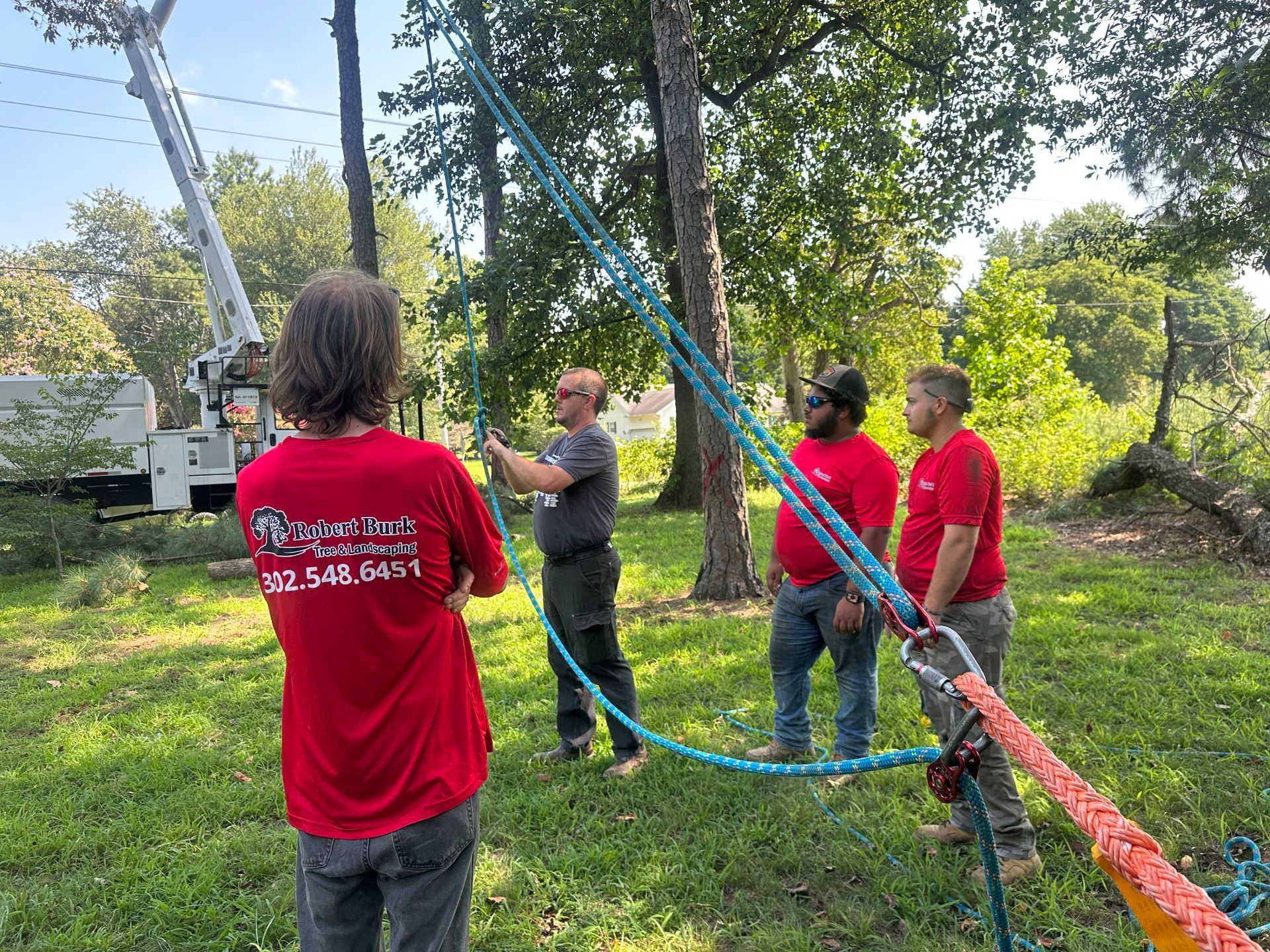
The team reviews traffic, structures, livestock areas, wire locations, root movement, and possible escape paths before anyone approaches the wood.
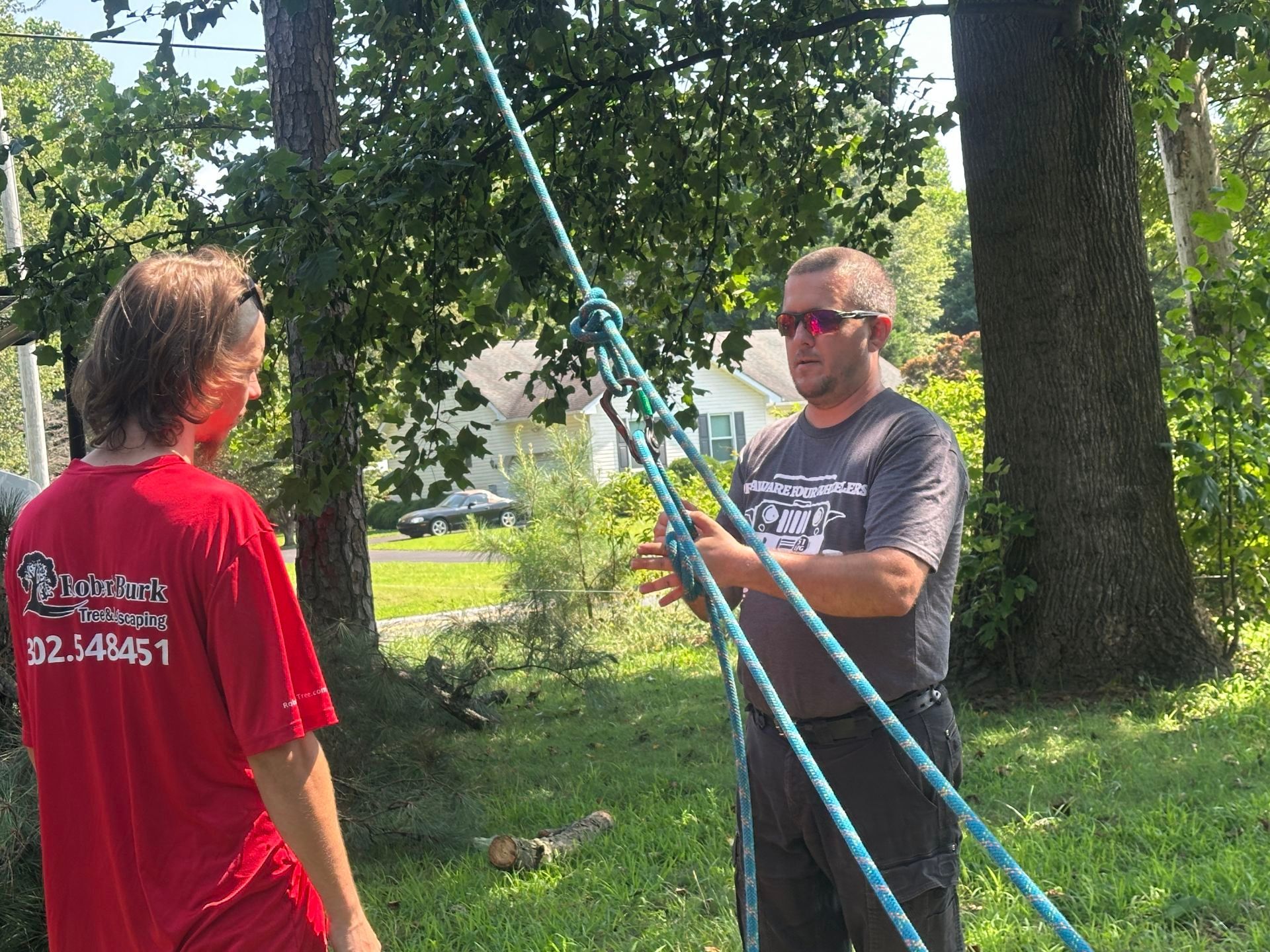
Ropes and lowering devices control branches that could swing into a building, pen, roadway, or adjacent tree when severed.

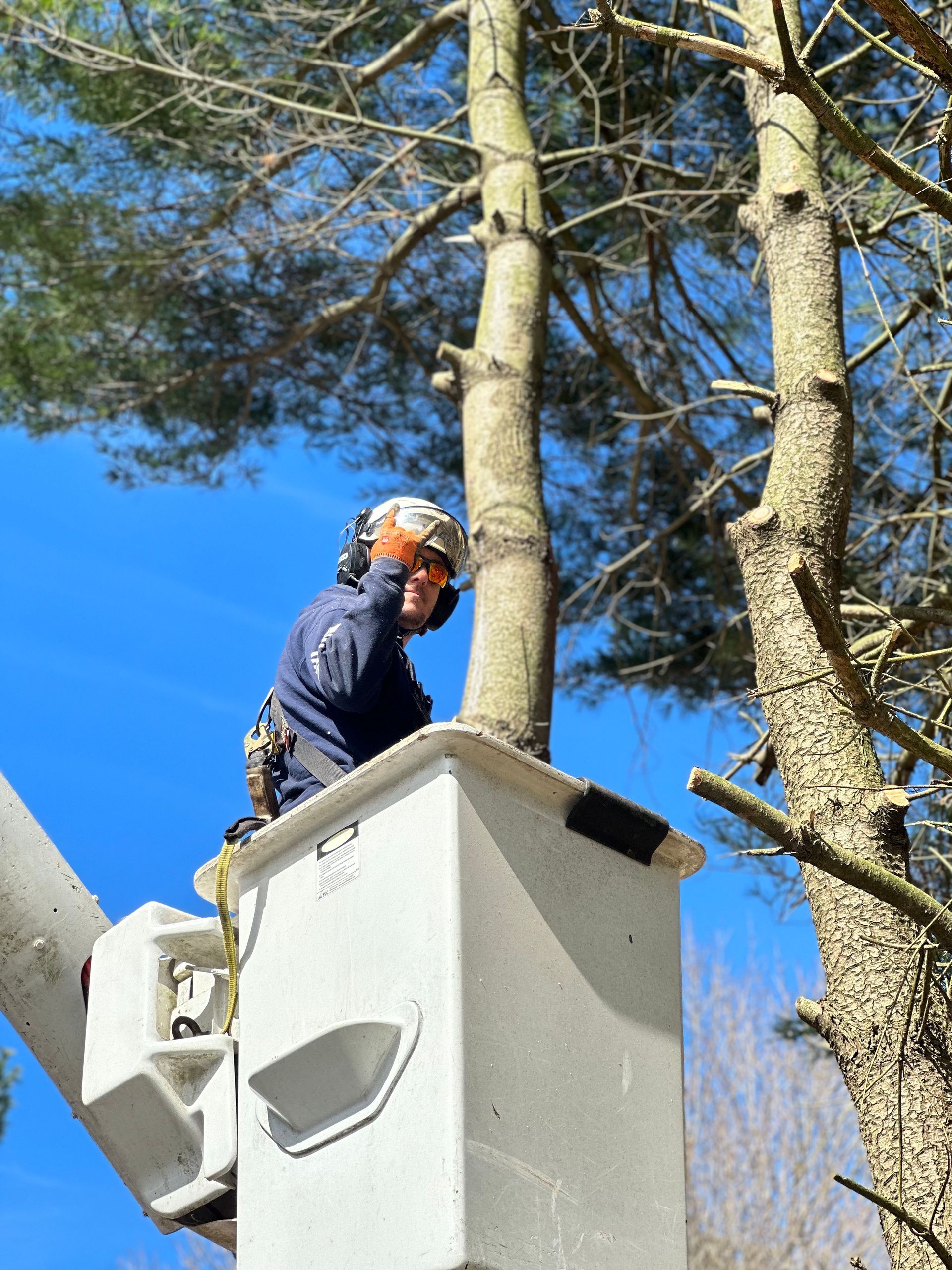
A bucket or crane provides reach when damaged stems cannot be climbed and the landing area is too confined for free cutting.

Once the unstable material is down, equipment consolidates brush and logs while preserving a usable route through the property.
The response is organized around risk first and cleanup second. Clear information about roads, wires, buildings, and access lets the crew arrive prepared for the site rather than treating every call the same.
Provide the address, road access, what the tree can strike, whether a lane is blocked, and whether wires, people, animals, or buildings are involved.
The crew checks the root plate, trunk fibers, canopy entanglement, supporting objects, equipment reach, and a safe staging area.
Damaged sections are controlled one at a time using the combination of rigging, bucket work, crane support, and ground equipment that fits the load.
Necessary access is reopened, included debris is moved, and the property owner receives an explanation of any stable material or follow up work left behind.
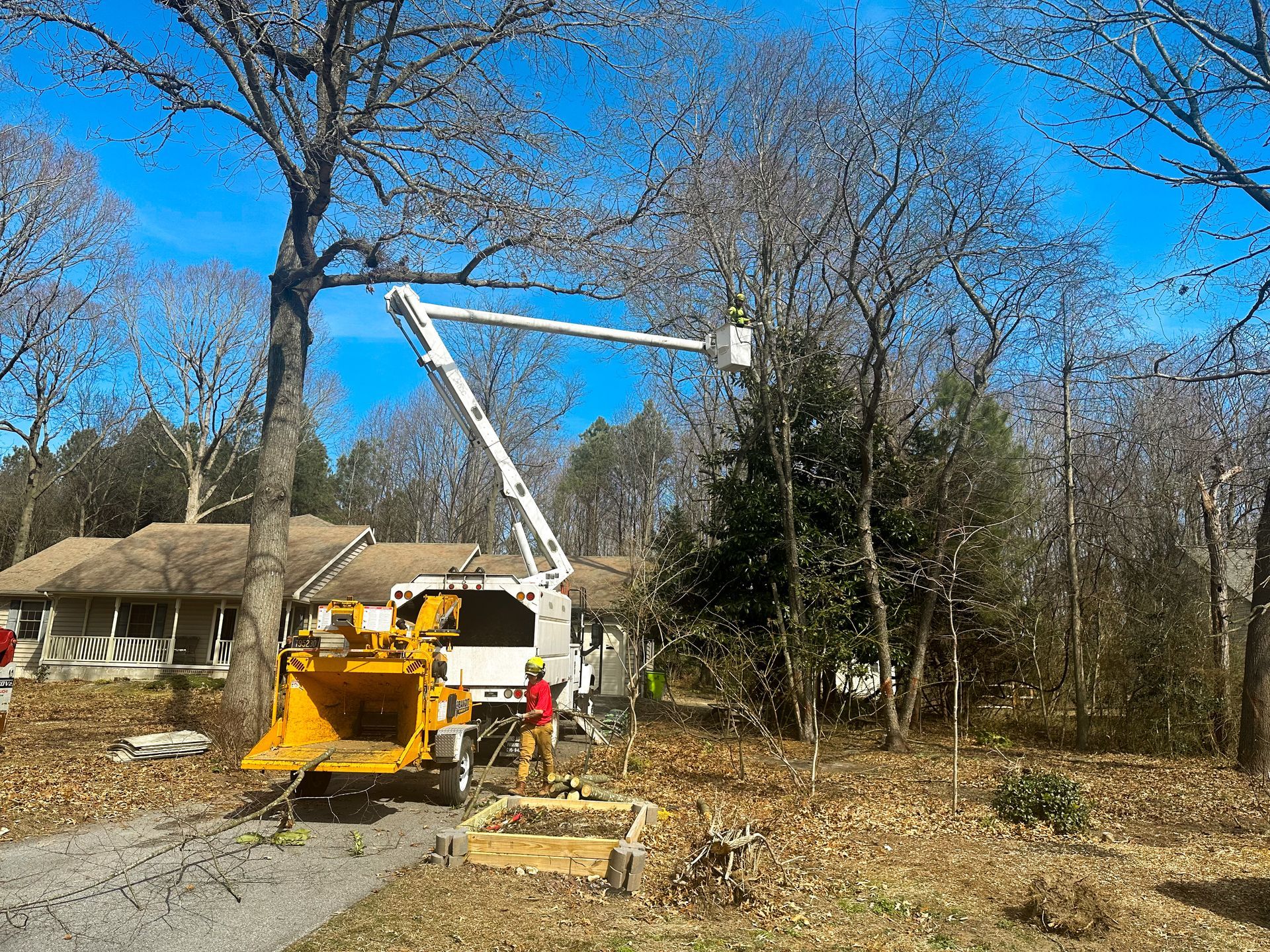
Near Harrington's older grid and rail crossings, a tree emergency may leave little room for a bucket truck, chipper, and passing traffic at the same time. Homes and small businesses close to Commerce Street, Route 14, or the tracks can require a compact setup and careful protection of neighboring property.
Properties toward US 13 and the surrounding rural landscape often have more open ground but greater wind exposure, roadside ditches, overhead lines, and longer private lanes. Brown's Branch and other drainage areas can also leave shoulders or low sections too soft for unrestricted equipment travel.
A smaller tree in the wrong position can demand more control than a large trunk in an empty field. Priority and method are based on movement, exposure, access, utilities, and the amount of material that must be handled.
A tree covering the only lane to a home, farm, or business can become a life safety and access concern.
Broken tops woven into adjacent trees may transfer weight and create more than one possible release direction.
Raised soil, torn roots, drainage saturation, and trunk rotation reveal whether the base is still changing.
Traffic lanes, shoulders, crossings, and restricted approaches influence staging and debris movement.
Homes, barns, pens, equipment sheds, and occupied outdoor areas define what must be protected first.
Overhead conductors, service drops, poles, and buried lines can limit cutting and machine placement.
Long drives, narrow gates, culverts, soft fields, and low wires determine which machines can reach the tree.
Wide crowns and multiple failed trees require additional chipping, loading, log placement, and haul capacity.
Robert Burk Tree & Landscaping serves Harrington and nearby central Delaware communities when trees threaten buildings, close roads, block private access, or leave dangerous limbs overhead. Give the crew the property address and the best available approach.
Emergency availability extends through nearby Kent County communities and into the company's broader Delaware service territory, with active hazards prioritized according to conditions.
A rushed cut can close the lane farther, tear a fence, strike a trailer, or send a loaded branch back toward the operator. The work plan needs enough control to reduce the hazard without sacrificing the rest of the property.
Before trucks move in, Robert Burk Tree & Landscaping reviews the approach, ground strength, overhead clearance, and the intended debris route. That preparation matters on both narrow city parcels and larger sites with fields, drainage crossings, or outbuildings.
Harrington emergency work may require precision beside a home one hour and heavy debris handling along a long lane the next. A capable response combines tree knowledge, suitable equipment, communication, and a practical plan for access.
These project images illustrate bucket access, elevated cutting, crane lifting, brush processing, and work zone preparation that can be adapted to urgent tree damage around Harrington.
Once the immediate danger is removed, the remaining trees may need pruning, health review, planned removal, clearing, or additional hauling. Use these resources to understand the next appropriate service.
Property owners often need quick guidance about access, roof impact, agricultural sites, power lines, arrival priority, equipment, debris, insurance records, and safe follow up after a storm.
A tree becomes an emergency when it threatens people, occupied buildings, vehicles, utilities, livestock areas, public travel, or the only usable entrance to a property. Active root movement, a widening trunk split, a suspended large limb, or wood resting on a structure also warrants prompt professional assessment.
Yes. Emergency tree calls are accepted around the clock. The crew will ask what happened, what the tree is touching, whether electrical lines are present, and how the property can be reached. Response order and travel time can change during widespread storms.
Keep vehicles and people from crossing beneath or over the wood, then provide the crew with the lane width, surface condition, gate access, and whether another route exists. Hidden tension and wires must be checked before a passage is cut through the crown or trunk.
They can plan around those features, but animals should be moved well away from the work zone before equipment arrives. Point out electric fencing, gates, wells, tanks, septic areas, drainage crossings, and stored machinery so the setup does not create another hazard.
Both trees are treated as part of the load until the supporting connections are understood. Crews may use elevated access, rigging, or a crane to separate sections gradually. Cutting the lower trunk first can be dangerous because the caught crown may rotate or release unpredictably.
The electric utility must address the energized hazard first. Stay away from the branch, wire, nearby fencing, wet ground, and connected equipment. After the utility confirms safe conditions, the tree crew can evaluate and remove the remaining wood.
When the scope involves a blocked route, restoring safe access is a priority. The crew may open a travel lane before completing all chipping or hauling. The exact width, remaining overhead hazards, and later cleanup should be discussed on site.
Trees along field edges can receive stronger, less obstructed wind than trees within a dense stand. A broad crown, shallow roots, prior soil disturbance, or saturated ground can increase leverage. New lean or lifted soil after a storm should be treated as a warning sign.
Notify your insurer as soon as practical when a tree damages covered property, but do not leave an active danger in place solely to wait for an adjuster. Take safe photographs, record the event, keep invoices, and ask what documentation the carrier needs after emergency work.
Not automatically. The approved scope should state whether the crew is only reducing the immediate danger or also chipping brush, hauling logs, clearing a lane, and completing full site cleanup. Confirm material handling before authorizing the work.
Trees in a public right of way, near railroad property, on a shared boundary, or connected to utility infrastructure may require coordination. For nonlife threatening conditions, check with the City of Harrington, Kent County, the utility, or the relevant property owner while documenting the hazard.
Contact Robert Burk Tree & Landscaping when storm damage closes a lane, drops wood onto a building, leaves a branch overhead, or causes a tree to lean or split. Share the road access, immediate targets, and any utility involvement so the response can be planned around the real hazard.