Trees On Homes And Outbuildings
When trunks or limbs rest on a roof, garage, shed, or porch, the load must be reduced in a sequence that avoids transferring more weight into the structure.
See Emergency Service Details
When a tree lands on a roof, opens at the trunk, or starts lifting from saturated soil, the safest next step is to clear the area and call for help. Robert Burk Tree & Landscaping provides 24 hour emergency tree service in Milford with hazard assessment, controlled removal, specialized equipment, and debris cleanup.

Robert Burk Tree & Landscaping responds to fallen trees, split trunks, hanging limbs, partial uprooting, blocked driveways, and storm damage throughout Milford. The immediate goal is to identify what may still move, isolate the danger area, and choose the safest way to reduce the load.
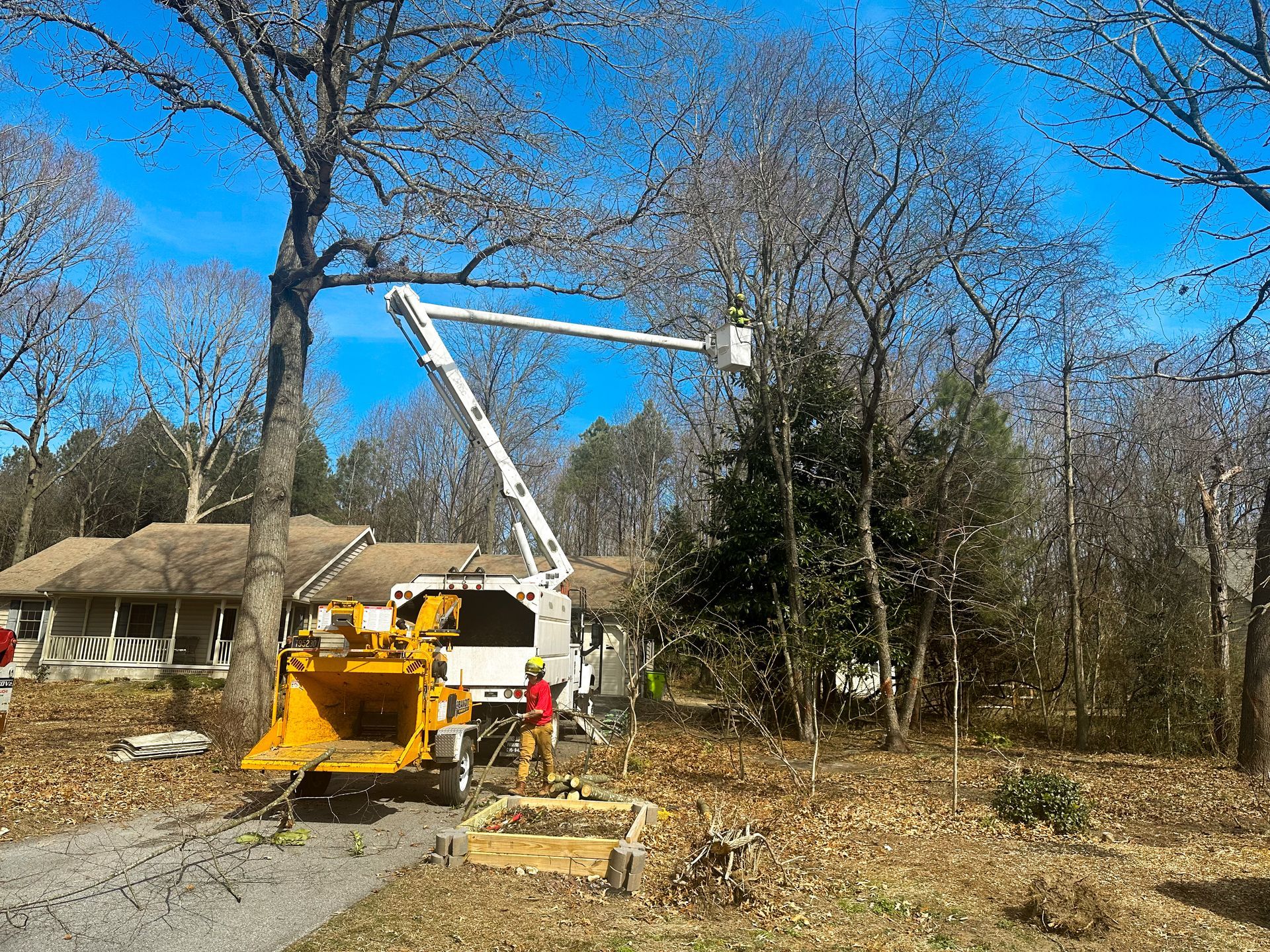
Emergency work is different from a scheduled removal because damaged wood may be twisted, suspended, or pressing against a roof, fence, vehicle, or nearby tree. Crews may use rigging, bucket access, crane support, loaders, and controlled cutting to keep the situation from shifting unexpectedly.
Milford properties range from compact riverfront blocks near Downtown and Silver Lake to open lots beyond Route 113. Access, soft ground, overhead service, and the path for debris all need to be evaluated before equipment is positioned.
Select the condition that most closely matches the scene. This tool helps you communicate the problem, but it is not a substitute for an on site assessment. Never stand beneath broken wood, approach a moving root plate, or touch a tree that may be energized.
Keep everyone away from the rooms and outdoor areas beneath the impact. Do not climb onto the roof, cut loaded branches, or try to pull the trunk with a vehicle. Call for emergency tree service so the weight, support points, and remaining movement can be assessed before removal begins.
Storm damage rarely leaves a tree in a predictable position. A trunk may be held by a roof edge, a broken top may be tangled in neighboring branches, or a root plate may continue to rise as the canopy shifts. The crew first determines what is carrying the load and what could move next.
Around the Mispillion River, Silver Lake, and lower parts of Milford, wet ground can limit truck placement and weaken already stressed roots. On tighter downtown parcels, the response may also need to account for adjoining homes, parked vehicles, alleys, sidewalks, and overhead service.
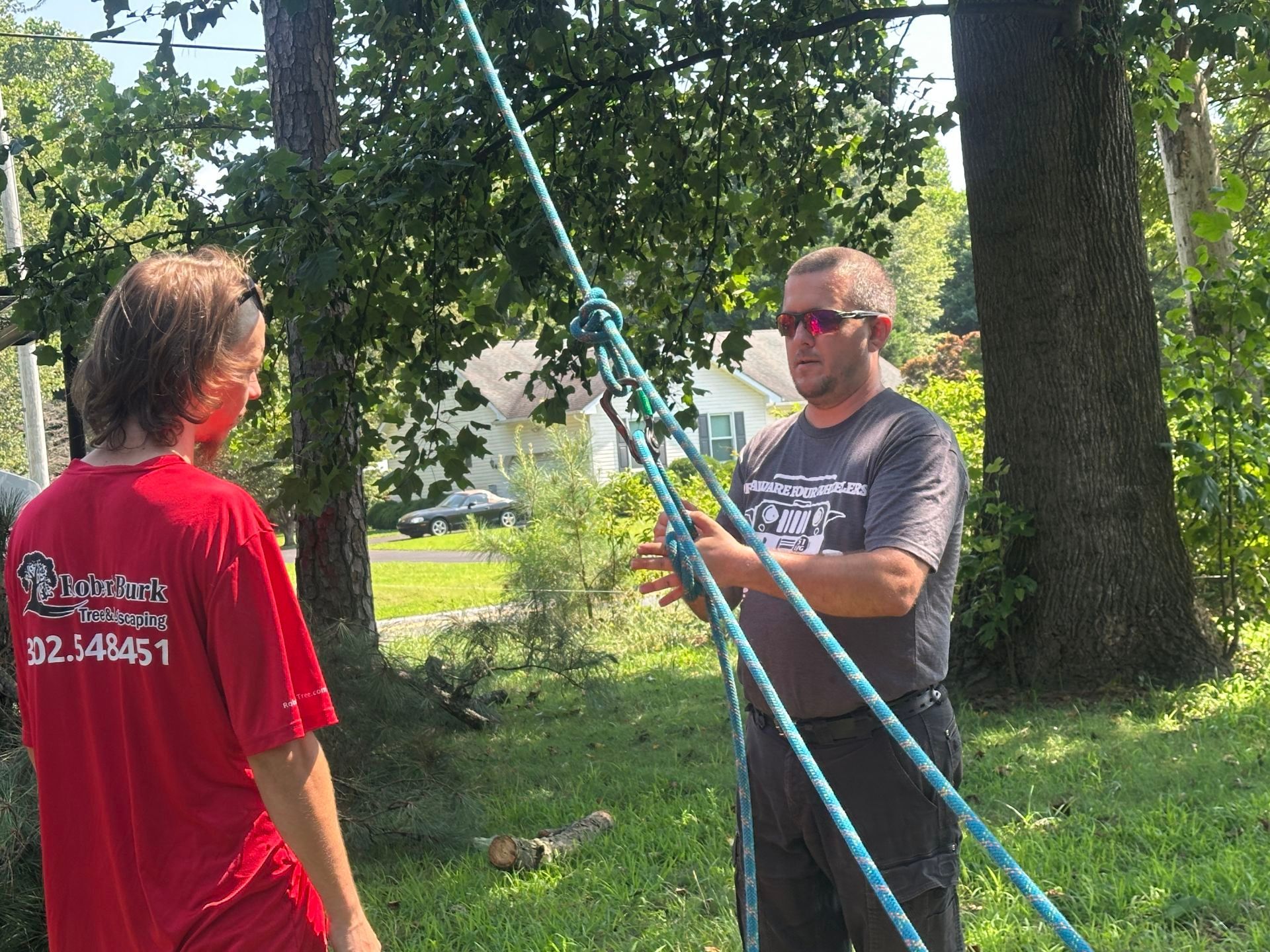
The right response depends on where the tree landed, what is still under tension, and whether utilities or structures are involved. Robert Burk Tree & Landscaping can address the immediate hazard and organize the cutting, lifting, hauling, and cleanup needed to regain safe use of the property.
When trunks or limbs rest on a roof, garage, shed, or porch, the load must be reduced in a sequence that avoids transferring more weight into the structure.
See Emergency Service DetailsA tree across a driveway, lane, or entrance can trap vehicles and prevent normal access. Crews work to open a safe route while controlling bent and suspended material.
Ask About Access ClearingStorm broken branches lodged over patios, walks, play areas, and parking spaces can be lowered with bucket access or rigging instead of cut from beneath.
Request Hazardous Limb HelpFresh root movement, exposed soil plates, and new lean after wind or heavy rain call for quick evaluation before the tree shifts farther.
Report A Moving TreeTall, unstable, or structure loaded trees may require controlled lifting or elevated access to remove weight without climbing compromised wood.
View Specialized EquipmentAfter the dangerous sections are down, brush, logs, and scattered limbs can be chipped, loaded, and removed according to the agreed cleanup scope.
Discuss Cleanup And HaulingSome storm effects are obvious, while others appear as small changes at the roots, trunk, or branch unions. Treat the situation as urgent when the tree can reach an occupied room, entrance, road, parked vehicle, utility line, or neighboring property.
Freshly lifted sod, radiating soil cracks, or exposed roots can mean the tree is rotating out of the ground.
Bright inner wood, opening bark, or a widening gap between trunks may signal that one side is about to release.
Broken wood caught above a yard or driveway can fall after wind, rain, or movement in the supporting branch.
A new lean toward a house, garage, porch, or service line changes the consequence of even a small additional movement.
A trunk or branch resting on shingles can slide, roll, or punch farther through when surrounding pieces are disturbed.
Blocked access becomes more serious when residents, medical needs, fire response, or utility restoration depend on that route.
Not every damaged tree must be completely removed during the first visit. Sometimes the safest action is to take weight off a structure, remove a suspended limb, or stabilize a remaining section, then return for additional work once utilities, weather, or ground conditions improve.
A storm damaged tree may be unsafe to climb or too entangled to cut freely. The response method must account for compression, tension, supporting structures, reachable setup space, and the direction each piece may move when released.
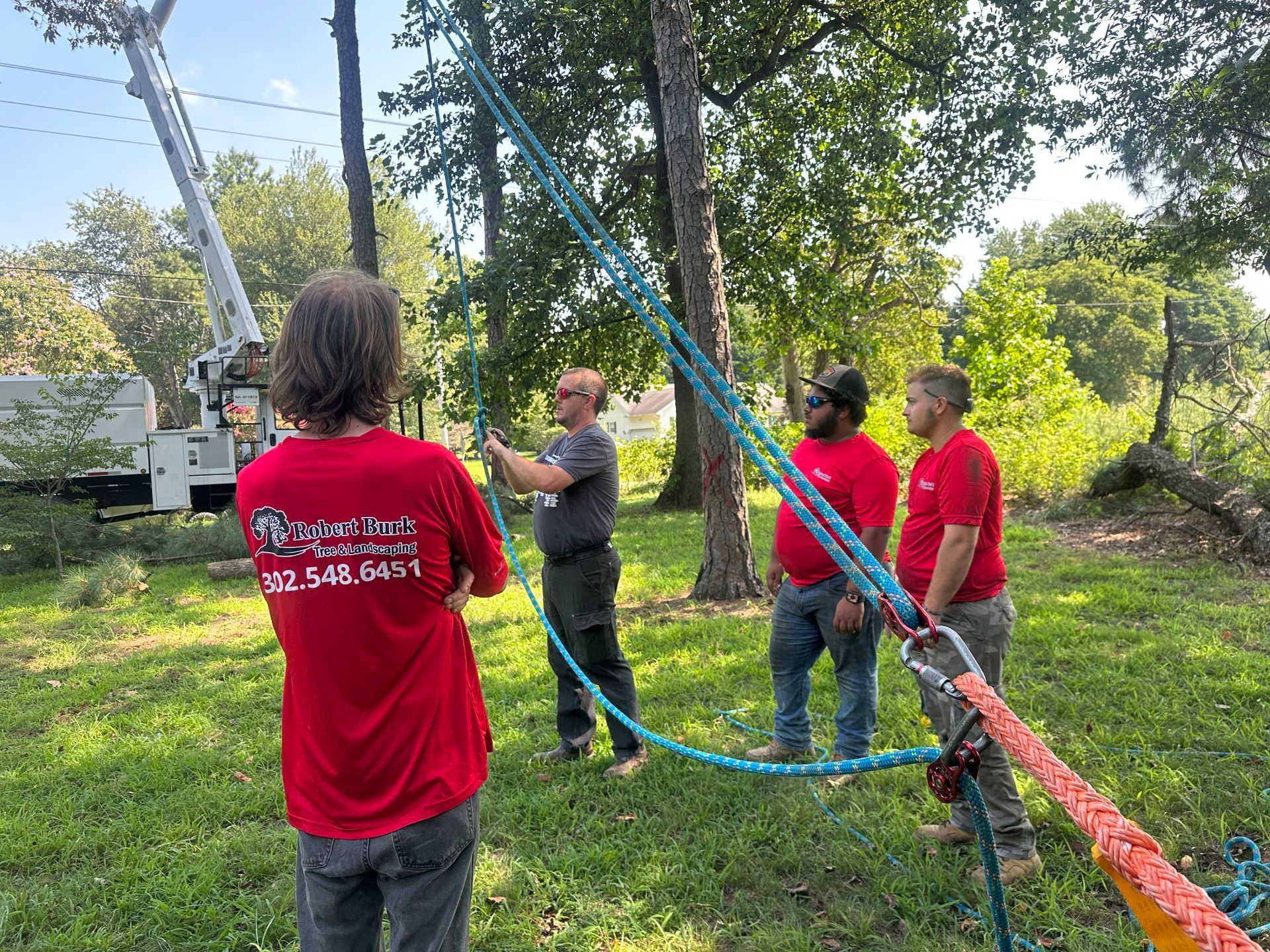
Crews identify support points, broken fibers, root movement, utility contact, damaged structures, and the safest place to establish the work zone.
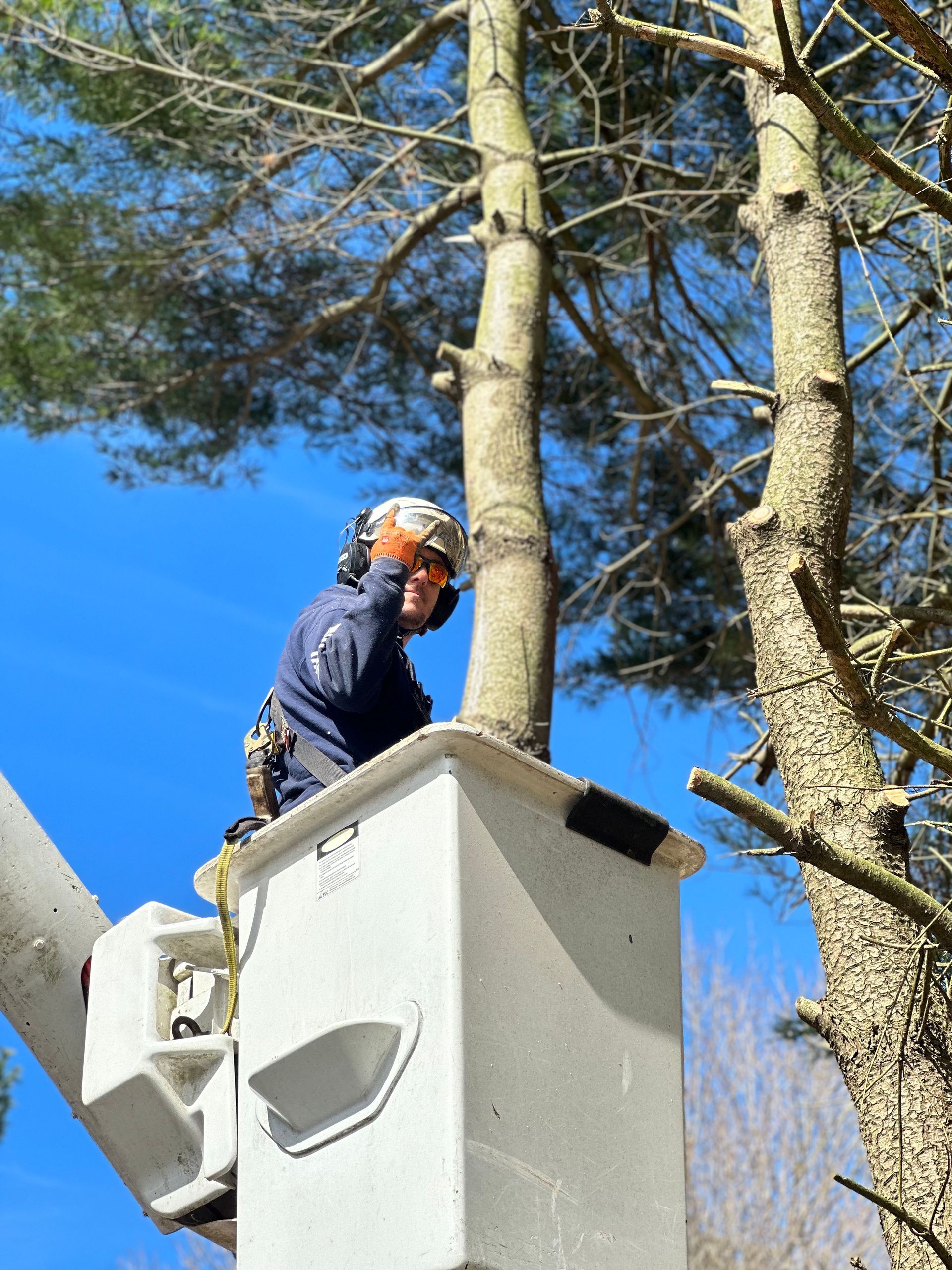
Suspended branches are shortened or lowered in a planned order so their weight does not roll across a roof or release toward people below.

Elevated access and controlled lifting may be used when the crown is unstable, the trunk cannot be climbed, or the tree is loaded onto a building.

Loaders, chippers, and hauling equipment move brush and logs after the hazard is controlled, with priority given to restoring safe access.
Useful details from the caller help the crew prepare, but the final method is decided at the property. Expect the response to move from scene control to hazard reduction, then access restoration and cleanup.
Tell us what fell or shifted, what it is touching, whether anyone is trapped, if access is blocked, and whether electrical lines are involved.
On arrival, the crew reviews the tree and surrounding targets, keeps bystanders out, and determines where equipment and rigging can operate safely.
Loaded limbs, trunk sections, or uprooted material are cut, lifted, or lowered in an order designed to avoid sudden movement and additional damage.
The team clears agreed debris, reopens necessary access, reviews the remaining stump or tree sections, and explains any follow up work still needed.
Milford's emergency tree calls can look very different from one side of the city to the other. Near Downtown, the Mispillion Riverwalk, and Silver Lake, mature trees may stand close to houses, sidewalks, parked vehicles, and overhead service. Beyond the built up core, longer drives, roadside ditches, septic areas, and open wind exposure can shape equipment access.
Rain can remain a factor even after the wind stops. Saturated soil may reduce root anchorage and make lawns, shoulders, or drainage edges unsuitable for heavy equipment, so the crew may need to change where trucks stage or how sections are moved.
Urgency is not based on tree diameter alone. Crews must understand whether the tree is still moving, what is supporting it, what could be struck next, and whether the site is safe for workers and equipment.
Root lifting, trunk rotation, cracking, or settling against a structure can make an otherwise accessible tree an immediate danger.
Bent limbs and twisted trunks may spring, roll, or split when cut, so their load direction has to be read before release.
Occupied rooms, entrances, vehicles, patios, roads, and neighboring yards raise the consequence of any secondary failure.
Lines, service drops, streetlights, and energized objects require utility control before a tree crew enters the affected zone.
Wet Milford soils, soft shoulders, drainage edges, and hidden systems can restrict where heavy equipment may stand.
Gate width, overhead clearance, building spacing, and setup distance determine whether bucket or crane access is practical.
A blocked drive may need to be opened first, while large brush and log volumes require room for chipping and loading.
Widespread damage can affect routing and arrival order, with active threats to life, structures, and sole access taking precedence.
Robert Burk Tree & Landscaping handles urgent residential and commercial tree hazards throughout central and southern Delaware. Call with the exact address, nearest cross street, and a clear description of what the tree is touching.
The crew responds to fallen trees, blocked access, damaged crowns, split trunks, and storm debris in Milford and surrounding service areas, subject to conditions and storm demand.
Urgency does not make uncontrolled cutting acceptable. A branch resting on a roof can shift toward a window, a trunk across a drive can roll when shortened, and heavy equipment can damage soft ground when placed without a route plan.
Robert Burk Tree & Landscaping considers the tree, the support surface, and the cleanup path as one job. Before work begins, the crew should understand which areas must remain clear, which surfaces need protection, and how debris will leave the site.
Emergency tree work requires more than a chainsaw and a truck. The crew must read damaged wood, control a changing load, work around structures and utilities, and leave the site safer than it was when the response began.
The project photos below show the equipment and methods used to reach damaged crowns, lower hazardous sections, handle heavy wood, and clear debris around Delaware homes and access routes.
An emergency visit may solve the immediate danger while leaving pruning, health evaluation, stump work, hauling, or broader property cleanup for another appointment. These service pages explain the available options.
These answers cover immediate safety, response priority, roof contact, blocked driveways, utility lines, wet ground, insurance documentation, cleanup, and what to expect after the first hazard is controlled.
Move everyone away from the affected rooms and the outdoor area beneath the tree. Do not climb onto the roof or cut branches that are carrying weight. Call emergency services for any injury or immediate life danger, contact the electric utility if wires are involved, then call Robert Burk Tree & Landscaping and describe where the tree is resting.
Yes. The company accepts urgent tree calls 24 hours a day. Arrival timing depends on the hazard, weather, road access, utility clearance, and the number of active storm calls, so provide the exact address and explain whether a building, vehicle, access route, or electrical line is affected.
A blocked sole entrance is treated as an access concern. The crew will examine bent limbs, hidden wires, the direction of stored tension, and room for equipment before opening a passage. In some cases, the first objective is a safe travel lane, with the remaining debris handled after the immediate obstruction is controlled.
Call the electric utility or emergency services first and stay well away. Do not touch the tree, a fence, a vehicle, tools, or the ground close to a downed conductor. A tree crew can proceed only after the electrical hazard has been addressed and the work area is safe to enter.
Sometimes. If damage is limited to a branch and the trunk, roots, and remaining crown are stable, selective removal or temporary stabilization may be possible. A split main union, moving root plate, extensive trunk failure, or severe impact on a structure often requires a larger emergency scope.
The crew evaluates where the trunk and branches are supported, then removes or lifts weight in a planned sequence. Rigging, bucket access, or a crane may be used so sections do not roll across shingles or push farther into the building. Roofing or structural repair is handled separately after the tree load is reduced.
Soft ground can change equipment placement, but it does not automatically prevent a response. The crew may stage from pavement, use a different machine, limit travel across the lawn, or address only the immediate overhead danger until the site can support full cleanup.
Photograph the overall scene, the point where the tree meets the building, visible property damage, and the base of the tree only from a protected distance. Never enter the fall zone for a better angle. Save images from before cutting when it is safe, along with invoices and notes about the time of the event.
Cleanup should be confirmed in the approved scope. Robert Burk Tree & Landscaping can chip branches, handle logs, load storm debris, and clear the work area, but the exact amount of hauling and any material left on site should be stated before work begins.
Pricing reflects the tree's condition, location, support points, time of response, access, electrical or structural complications, equipment required, traffic or work zone controls, and debris volume. A tree on a roof or tangled over a narrow riverfront lot generally requires more control than wood already resting in an open yard.
Immediate life and property safety comes first, but rules may still apply to street trees, public rights of way, utility easements, shared boundaries, historic areas, or protected land. When conditions allow, check with the City of Milford, the applicable county, your utility, or a property association and document why emergency action was necessary.
Call Robert Burk Tree & Landscaping when a fallen tree, split trunk, hanging limb, blocked entrance, or storm damaged crown puts your property at risk. Describe what moved, what it is touching, and whether utilities are involved so the crew can prepare for a controlled response.