Street And Sidewalk Clearance
Low or extended branches are pruned around pedestrian routes, corners, signs, and public-facing areas with a controlled exclusion zone below.
Discuss Sidewalk Clearance
A branch over a sidewalk, parking space, roofline, or neighboring yard has to be pruned with more control than one above open ground. Robert Burk Tree & Landscaping evaluates the full crown, sets the clearance or structural objective, and uses the access and lowering method the property requires.

Robert Burk Tree & Landscaping provides tree pruning throughout Dover for building clearance, sidewalk and parking safety, deadwood, structural defects, storm restoration, visibility, and young-tree development. Residential, commercial, and community properties can be evaluated with bucket, rigging, chipping, and hauling needs included in the plan.
The crew does not judge a pruning job by how open the crown looks afterward. Each cut should address a known branch condition, direct growth away from a target, improve structure, or remove damaged wood while leaving an appropriate amount of healthy canopy.
Dover includes historic central streets near State Street and Governors Avenue, established trees around Silver Lake and the St. Jones River, dense residential blocks, and newer development along major corridors. Those settings change pedestrian control, equipment access, utility clearance, and the way branches can be lowered.
Choose the closest match to the issue on your property. The guidance helps identify urgency and the likely pruning objective, but an on-site inspection is still needed to evaluate attachments, live crown, targets, traffic, and equipment access.
Branches over pedestrian routes and parked vehicles need a controlled work zone before cutting begins. The crew evaluates deadwood, height, traffic, branch path, and where equipment can stage so the area can be closed briefly and reopened after debris is processed.
A mature crown in a heavily used setting may extend over several targets at once: a roof, sidewalk, driveway, parking row, fence, sign, or neighboring yard. Good pruning starts by separating the actual branch problem from the understandable desire to make the entire tree look smaller.
Dover’s historic core, residential neighborhoods, commercial corridors, Silver Lake area, and St. Jones River drainage create varied access and ground conditions. The same branch cut may require different staging on a quiet backyard tree than it does beside a public walk or active business entrance.
Pruning can solve conflicts without sacrificing the tree when the objective is clear and the cuts are selective. The team evaluates what is below the crown, what the tree can retain, and how the work area will function while branches are being removed.
Low or extended branches are pruned around pedestrian routes, corners, signs, and public-facing areas with a controlled exclusion zone below.
Discuss Sidewalk ClearanceDirectional cuts create space around buildings while retaining a balanced crown instead of removing every branch on the structure side.
Request Roofline PruningSelected dead, broken, rubbing, and weak branches are removed without turning a healthy canopy into an unnecessarily thin shell.
Review Mature Tree PruningEarly branch selection improves leader development and spacing near homes, streets, and commercial sites before defects become large wounds.
Plan Structural Tree CareTrees can be pruned around signs, lighting, vehicles, walkways, and storefronts while preserving shade and a professional appearance.
Explore Commercial PruningBroken portions are removed, remaining unions are inspected, and a realistic recovery scope is developed when the trunk and healthy crown can support retention.
Get Storm Tree AssistanceTrees in active neighborhoods and commercial areas can create a problem before the whole tree appears unhealthy. These visible conditions help define a pruning objective and the people or surfaces that must be protected during the work.
A dead branch over a frequently used space can strike vehicles or people and may require a temporary closure for controlled removal.
Branches that force pedestrians into the street or catch clothing need clearance based on the route and future growth.
Constant contact can mark siding, fill gutters, hold moisture, and wear branch bark during wind.
Visibility pruning should direct growth away from the obstruction rather than create a flat wall of repeated heading cuts.
Included bark, swelling, or a new seam can indicate a structural concern that needs evaluation before routine pruning.
Torn upper growth can leave hidden cracks, hanging wood, and an uneven crown that should be assessed from a safe position.
Selective cutting can improve clearance, remove damaged wood, and guide growth. When the defect is in the roots, main stem, or a severely compromised union, reducing branches may change load without resolving the underlying failure potential.
The crew matches pruning technique to the objective and the work zone. Natural branch targets, directional growth, sound rigging points, and the crown left behind are considered together, especially where people and hard surfaces are close.
Dead, broken, rubbing, and poorly attached branches are selected individually so the tree keeps useful live growth and a natural outline.
Growth is redirected away from roofs, walks, signs, lights, and facades by cutting to branches that can assume the terminal role.

Young leaders, competing stems, and crowded branch spacing are managed while cuts remain smaller and the tree can adapt gradually.

Storm-damaged or overextended limbs are shortened to suitable laterals, reducing leverage and restoring function without indiscriminate topping.
Dover projects often involve more than the tree itself. The work plan should account for occupants, traffic, public access, vehicles, neighboring property, and the timing needed to close and reopen the area safely.
We identify who uses the area, when entrances or parking must stay open, what can be moved, and where the crew and equipment can work without conflict.
Branch condition, unions, clearances, prior cuts, live foliage, and suitable reduction points are evaluated before the final cut sequence is confirmed.
Hazards and essential clearance are handled first, with branches lowered or directed into the work zone and processed as the project progresses.
Pavement, lawn, walks, entrances, and parking are cleared according to the scope, then the pruning result and any monitoring needs are reviewed.
Central Dover includes older homes and mature trees around State Street, Governors Avenue, The Green, and adjoining residential blocks, where narrow access and public activity can limit the work zone. Around U.S. 13, Bay Road, west Dover, and newer subdivisions, larger parking areas and planned drainage may create different staging and clearance needs.
Silver Lake, the St. Jones River, tributaries, and older neighborhood drainage systems make stormwater and soft-ground conditions part of equipment planning. A pruning appointment may need a different access route or date after heavy rain even when the branches themselves are ready for work.
The cutting may happen in the crown, but the estimate is driven by the whole site. Public use, clearance targets, branch condition, live foliage, access, utilities, surface protection, and cleanup timing all influence the crew and method.
Homes, tenants, customers, pedestrians, school routes, deliveries, and parking determine when the work zone can be closed and reopened.
Roof space, sidewalk height, sign visibility, lighting, traffic sightlines, and vehicle access each call for a different finished crown.
Deadwood, cracks, rubbing, included bark, decay, old stubs, and storm tears affect priority, rigging, and the amount of correction possible.
The pruning plan must leave enough well-positioned foliage and branch structure for energy, taper, shade, and future growth.
Bucket reach, climbing position, gate width, parking, pavement strength, landscaping, and overhead obstructions shape setup.
Primary conductors, service drops, communication lines, signs, signals, and right-of-way limits may require coordination or specialized clearance.
Wet lawn, stormwater facilities, curbs, walks, asphalt, pavers, and historic landscape features influence equipment placement.
Brush processing, chipper location, hauling, sweeping, and removal of traffic controls affect how quickly normal use can resume.
Robert Burk Tree & Landscaping provides pruning throughout the Dover area and travels across central and southern Delaware. The team can discuss routine canopy maintenance, building clearance, commercial access, storm damage, and the equipment needed for the address.
Residential, commercial, municipal-facing, and larger property work can be scheduled with a site-specific plan for access, branch control, debris, and normal property use.
Tree work above pavement, entrances, parked cars, roofs, and pedestrian routes leaves little room for uncontrolled movement. The crew should know which areas can close, where branches will be lowered, how debris will travel to the chipper, and when normal access can resume.
Robert Burk Tree & Landscaping brings the personnel and equipment to manage difficult canopies, but good execution begins with site-specific communication among the crew, homeowner, manager, tenants, or anyone responsible for the property.
Dover tree pruning can involve roofs, traffic, tenants, sidewalks, utilities, and mature crowns in the same work zone. The company you hire should be able to organize those moving parts and explain the pruning result before work begins.
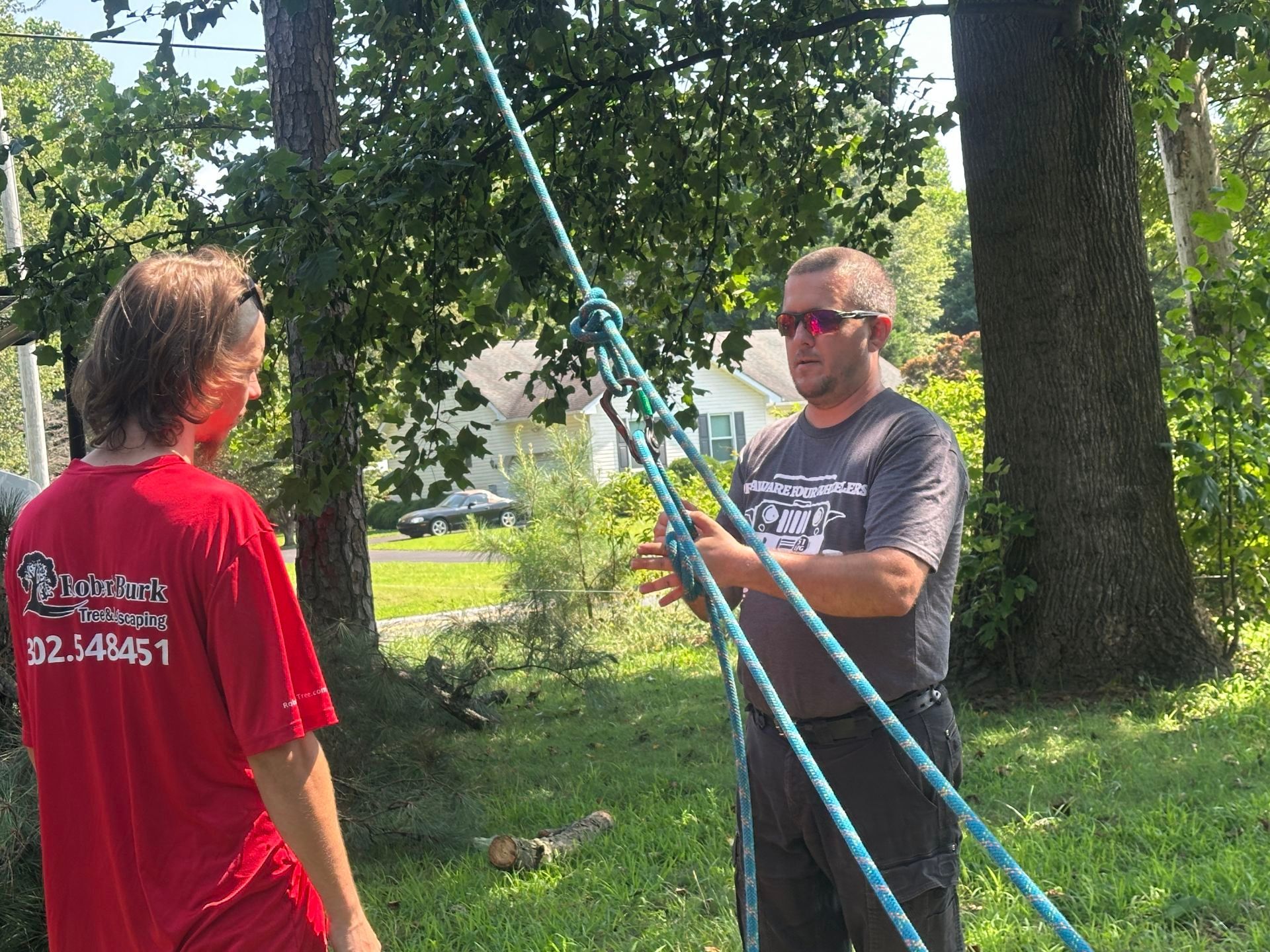
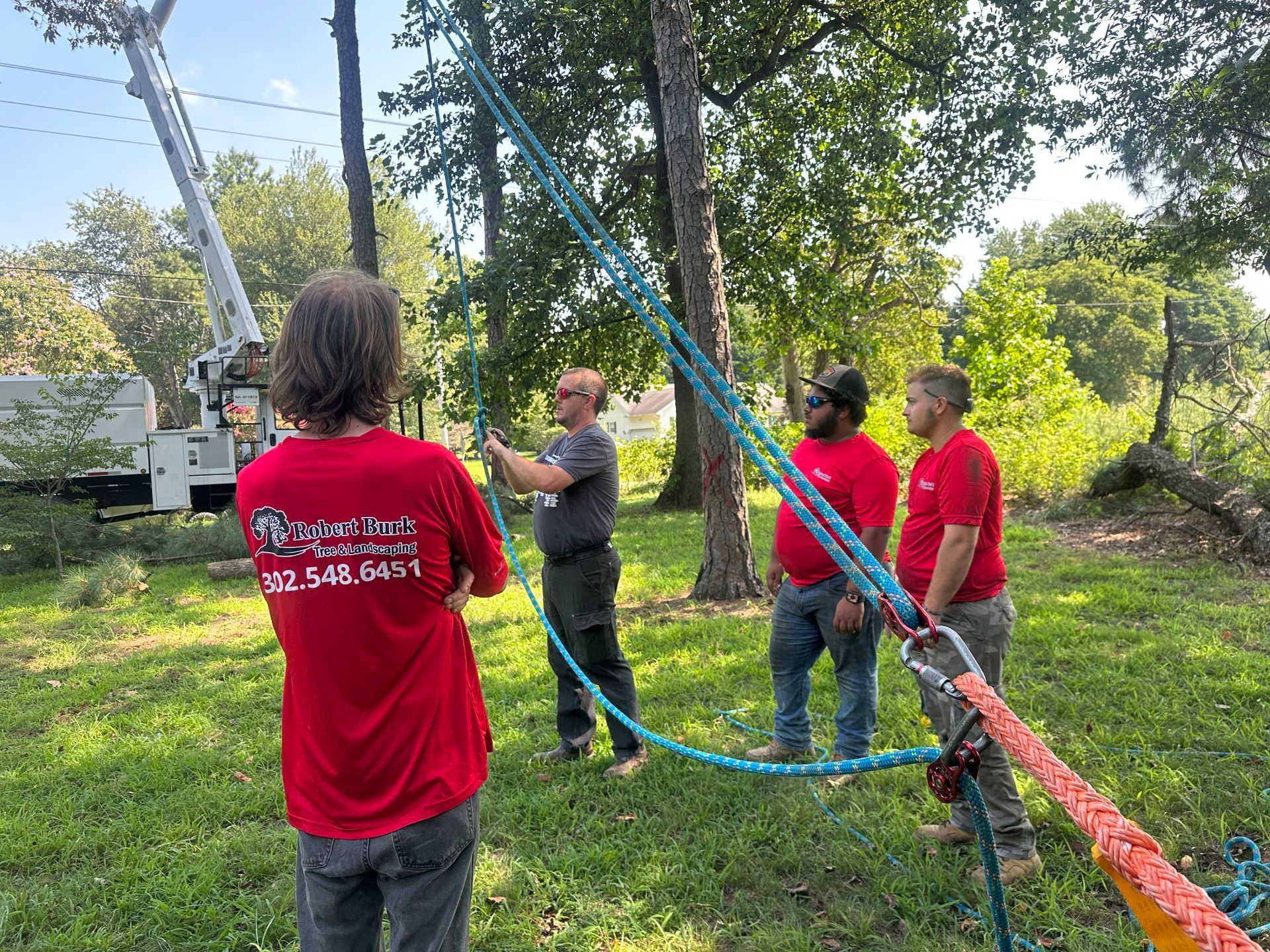
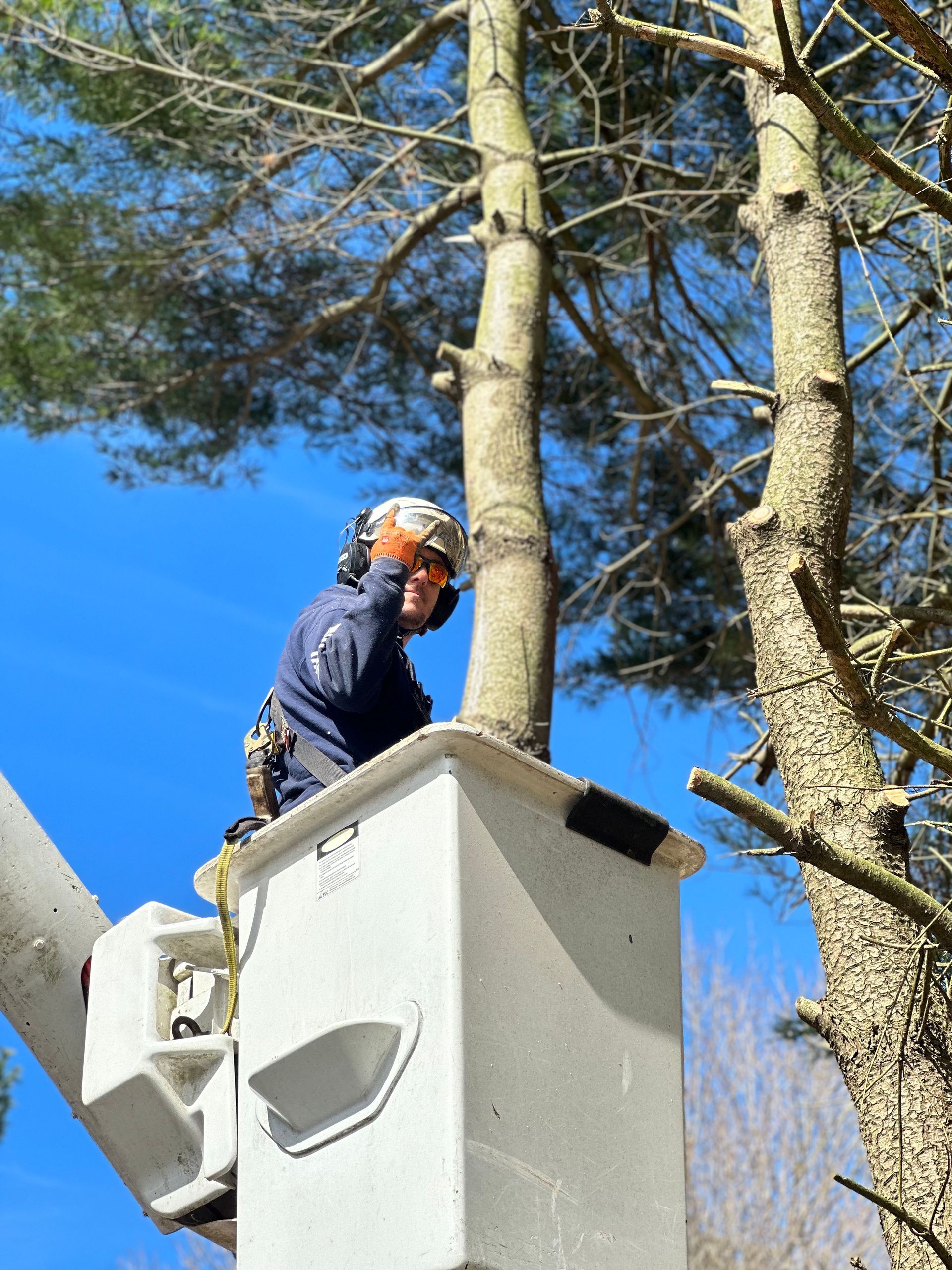
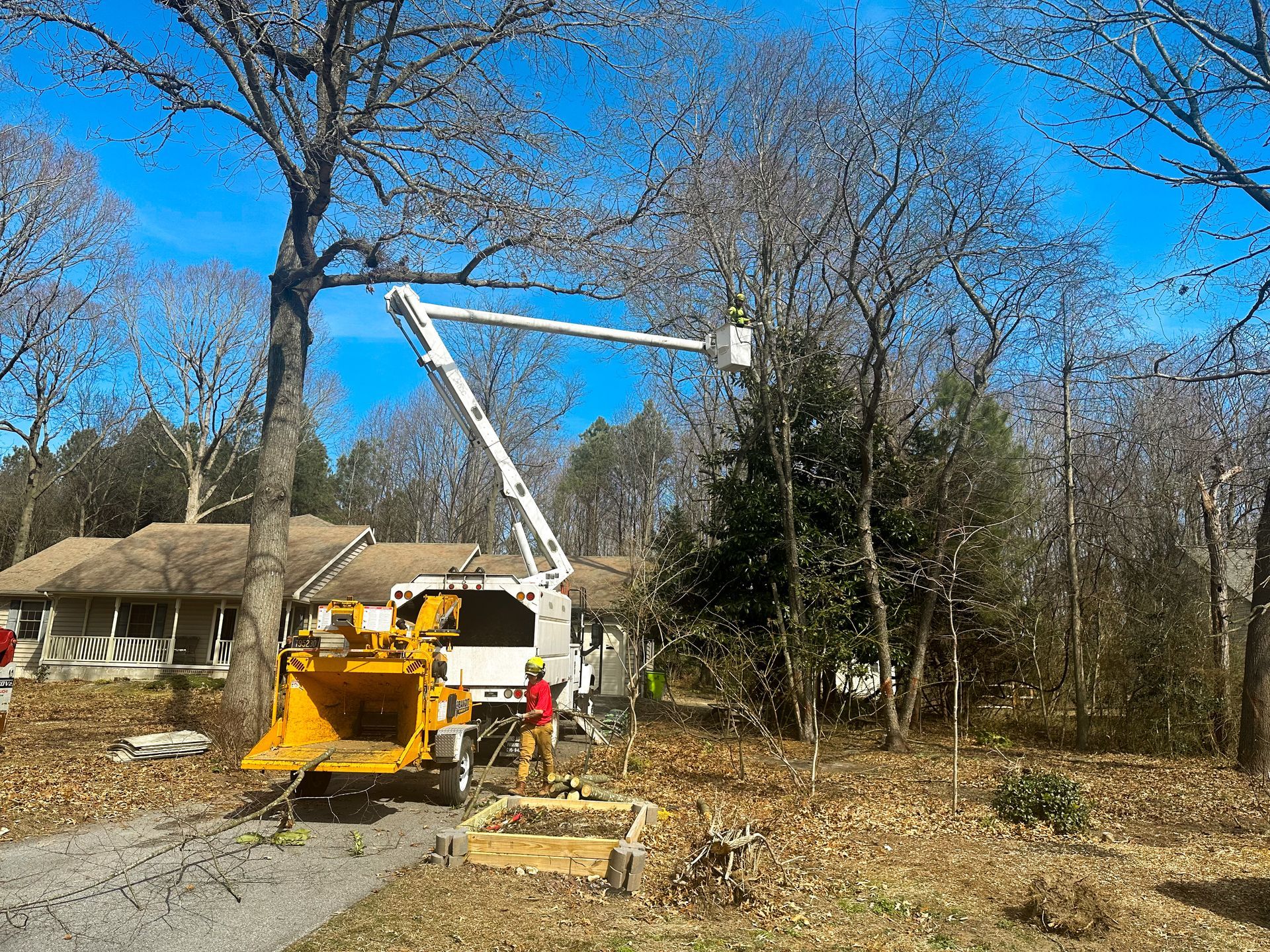
These images illustrate the equipment and work-zone control used when branches must be reached, cut, lowered, processed, and removed around buildings, roads, utilities, parking, and established landscaping.
Some Dover trees need pruning, while others require health evaluation, emergency stabilization, or removal. Commercial properties may also need recurring clearance, clearing, or hauling. Use these pages to understand the available scope before scheduling.
Find useful guidance on street trees, pedestrian control, crown cleaning, building clearance, signs and lighting, seasonal timing, utilities, storm recovery, cleanup, and estimate factors.
First confirm who owns and controls the tree. A trunk within the public right of way, a utility corridor, shared property, or a regulated site may require authorization or coordination before work. Contact the City of Dover or the appropriate agency when the boundary or responsibility is uncertain.
The area below is closed and kept clear before cutting begins. Vehicles are moved, pedestrians are redirected, and branches are lowered or directed into a controlled zone. Cleanup happens before the walk or parking spaces return to normal use.
Crown cleaning targets dead, broken, rubbing, or poorly attached branches. Thinning removes selected live branches to meet a defined objective and should not be applied evenly just to make the tree look open. Many mature Dover trees need cleaning or specific clearance rather than broad thinning.
Yes, when growth can be redirected to suitable branches without creating a row of stubs. We identify the sightline or lighting cone, consider future growth, and prune selectively so the tree remains balanced while the obstruction is reduced.
Dormant-season pruning can make branch structure easier to see for many species, but timing changes with species, flowering cycle, health, and the work objective. Hazardous deadwood, broken limbs, or urgent building conflicts should be assessed when they are discovered rather than waiting for a calendar date.
Yes, with appropriate access and branch control. The crew evaluates roofs, chimneys, narrow drives, pavers, fences, gardens, overhead service, and neighboring space. Bucket access, climbing, rigging, or mechanical support may be combined so branches do not free-fall onto sensitive surfaces.
Do not attempt the work yourself. Contact the electric utility when branches touch or threaten primary conductors, and keep everyone away from the tree and connected objects. Describe lower service-line conflicts when requesting an estimate so responsibility and safe procedure can be confirmed.
The appropriate amount depends on tree age, species, vigor, past work, branch size, and the reason for pruning. A professional scope removes only the live crown needed to meet the objective and avoids stripping interior growth, making unnecessary large wounds, or forcing every branch into the same outline.
Sometimes. The crew looks at the roots, trunk, main unions, remaining crown, and the location of the damage. Broken branches may be removed and the crown restored when the primary structure remains sound. Deep trunk splits, root movement, or extreme crown loss may make removal the safer recommendation.
Cleanup and debris handling are available for both. The estimate should state whether brush is chipped, wood is hauled or left, pavement is swept, parking is reopened, and any chips or logs are placed in a requested location. Commercial timing can also be planned around customer or tenant access.
Cost is based on crown height, branch condition, target clearance, public or occupied space below, equipment, rigging, utilities, traffic control, access, surface protection, and debris volume. A tree beside an active entrance may require more setup and control than a taller tree over an open backyard.
Call Robert Burk Tree & Landscaping for a clear plan around sidewalks, parking, roofs, entrances, deadwood, storm damage, or young-tree structure. The crew will review the crown, site access, public or household activity, branch-control method, cleanup, and the result the property needs.