Wind-Damaged Limb Cleanup
Torn ends, cracked branches, and suspended wood are removed in a sequence that avoids loading the damaged union or shifting debris onto buildings and fences.
Ask About Storm-Damaged Limbs
Open-lot wind, long branches above sheds, and older in-town trees can create problems that a quick trim will not solve. Robert Burk Tree & Landscaping plans pruning around branch load, access, buildings, driveways, and the tree’s future shape, then handles the brush and cleanup when the cutting is complete.

Robert Burk Tree & Landscaping prunes trees in Harrington for storm-broken limbs, deadwood, long laterals over buildings, driveway and road clearance, uneven crowns, weak co-dominant stems, and young-tree development. The team also handles commercial frontage and larger properties that need equipment access and debris hauling.
The crew first determines what the tree needs to keep and what the property needs cleared. That prevents a common mistake: removing healthy interior growth while leaving heavy branch ends, poor unions, or the actual conflict untouched.
Harrington’s railroad-era core, homes near Commerce Street and Railroad Avenue, subdivisions along the city edges, and open properties near U.S. 13 and Route 14 create very different work zones. A site visit lets the pruning plan reflect those differences instead of relying on a one-size-fits-all trim.
Use the choices below to describe what changed or what the branch is interfering with. The result is a starting point, not a diagnosis. Keep people and equipment away from hanging wood, a cracking union, or any branch involved with electrical service.
A branch that is split, partly attached, or caught in nearby limbs can move without warning. Close the area beneath it and avoid pulling on the branch from the ground. Emergency or prompt pruning may be needed to remove the loaded wood and inspect the remaining attachment.
Trees beside fields and broad lawns often develop long, light-seeking branches that take direct wind. In town, mature crowns may stand close to porches, narrow drives, sheds, fences, and overhead service. Both settings call for specific load and clearance decisions, not a uniform haircut.
Harrington sits along U.S. Route 13 and Delaware Route 14, with a compact railroad-era center surrounded by a mix of farms and subdivisions. The city also has a meaningful share of older housing, so pruning access may involve established landscapes, small setbacks, and trees that have carried decades of previous cuts.
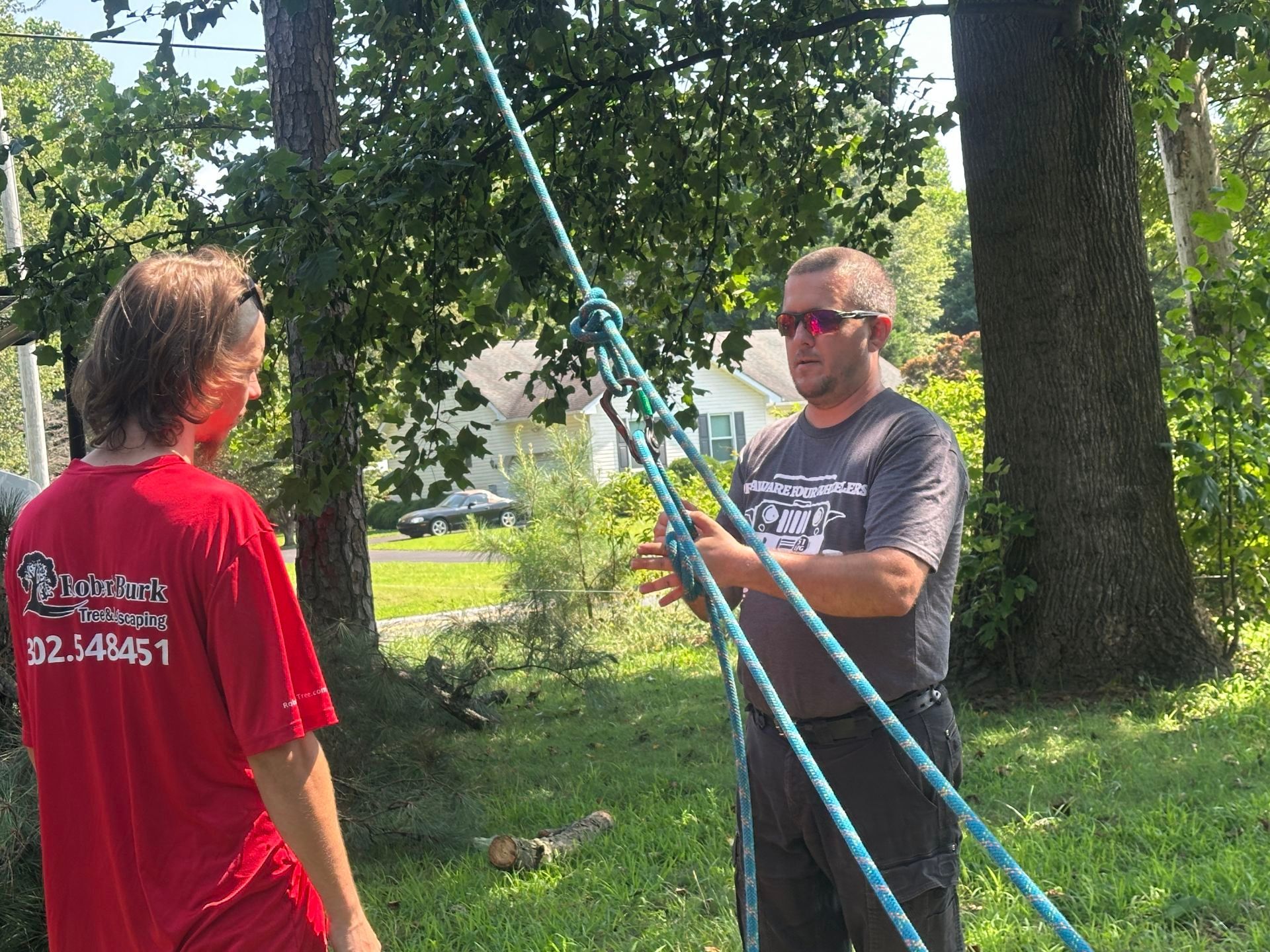
Harrington properties range from close in-town lots to open yards and agricultural edges. The pruning method should reflect the branch problem, the amount of room below, and the way the property is actually used day to day.
Torn ends, cracked branches, and suspended wood are removed in a sequence that avoids loading the damaged union or shifting debris onto buildings and fences.
Ask About Storm-Damaged LimbsBranches above sheds, garages, lanes, and parking areas are pruned to useful laterals or removed at sound attachments for lasting space.
Plan Property ClearanceExtended limbs can be selectively shortened to reduce leverage while keeping interior growth and avoiding bare, heavy tips.
Discuss Limb ReductionYoung shade trees can be guided toward one dependable leader and better branch spacing before conflicts become large cuts.
Review Young Tree StructureLow branches are addressed around vehicles, trailers, gates, roads, and walks with attention to future growth and trunk exposure.
Request Access ClearancePruning can improve visibility, pedestrian clearance, parking access, and presentation for businesses without stripping useful shade from the site.
Schedule Commercial PruningSome branch issues develop gradually, while others appear after one windy afternoon. Acting while the problem is still limited can preserve more of the tree and reduce the amount of work needed around buildings or access routes.
Exposed fibers or a hanging strip of wood means the branch failed unevenly and may leave additional cracked material behind.
Very long branches on the exposed side can carry more leverage and receive stronger wind than growth sheltered by the house.
A seam between upright stems may show new separation, trapped bark, or swelling where the load is concentrated.
Repeated movement can damage roofing, loosen fasteners, and turn routine clearance into a difficult lowering job.
Impact from vehicles can tear bark, split attachments, and create hazards along a lane that stays in regular use.
Clusters of fast shoots around large stubs often signal previous topping and need selective restoration rather than another hard cut.
Pruning is well suited to isolated limb defects, access conflicts, and recoverable storm damage. It is not a substitute for sound roots and trunk wood, so the whole tree should be considered before a large corrective cut is approved.
A broken limb is handled differently from a long healthy lateral or a young competing leader. The crew selects a method that solves the specific concern and leaves the remaining structure capable of carrying normal growth.
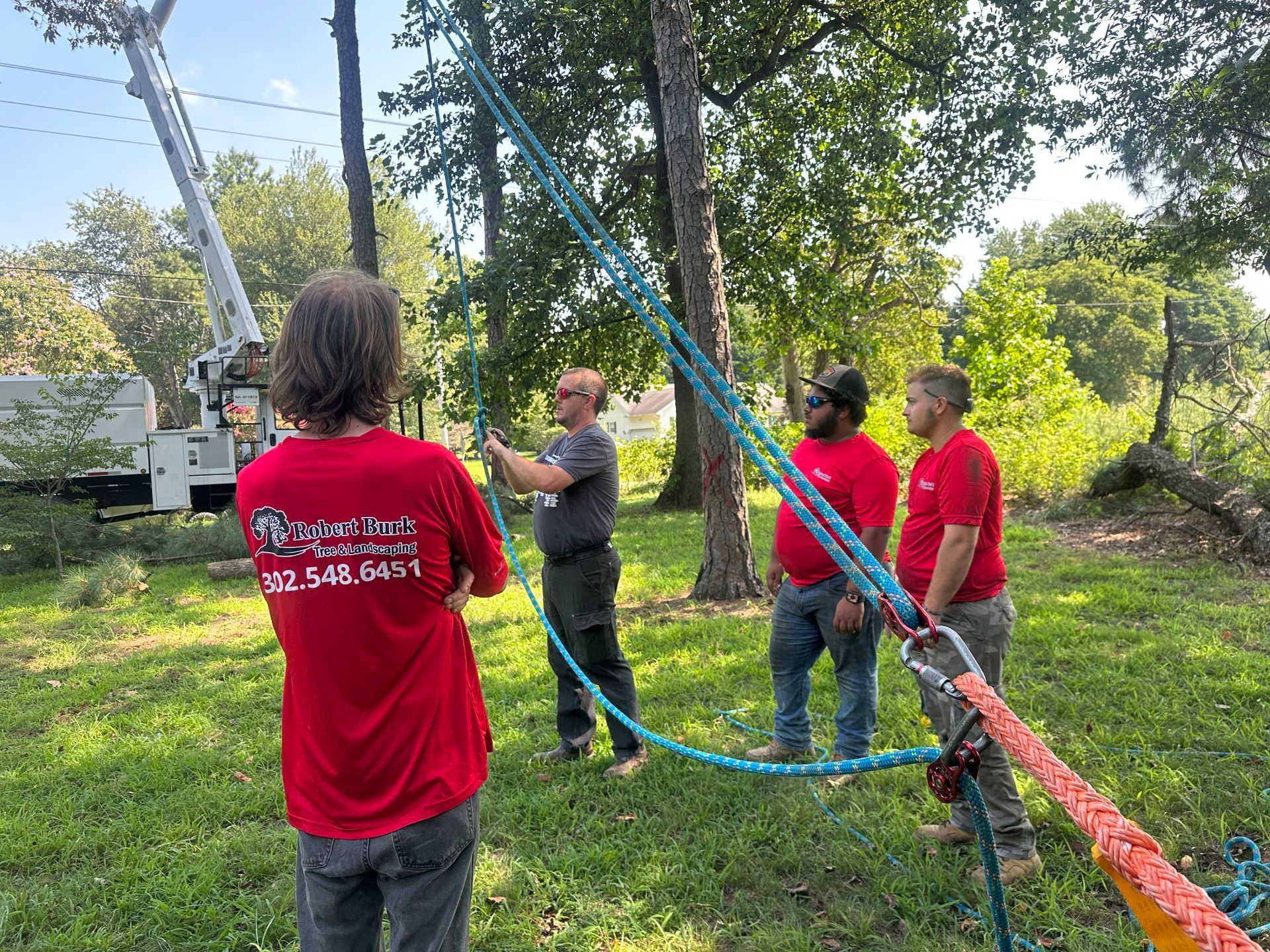
Length and end weight are reduced back to viable side branches, lowering leverage without removing all interior foliage from the limb.
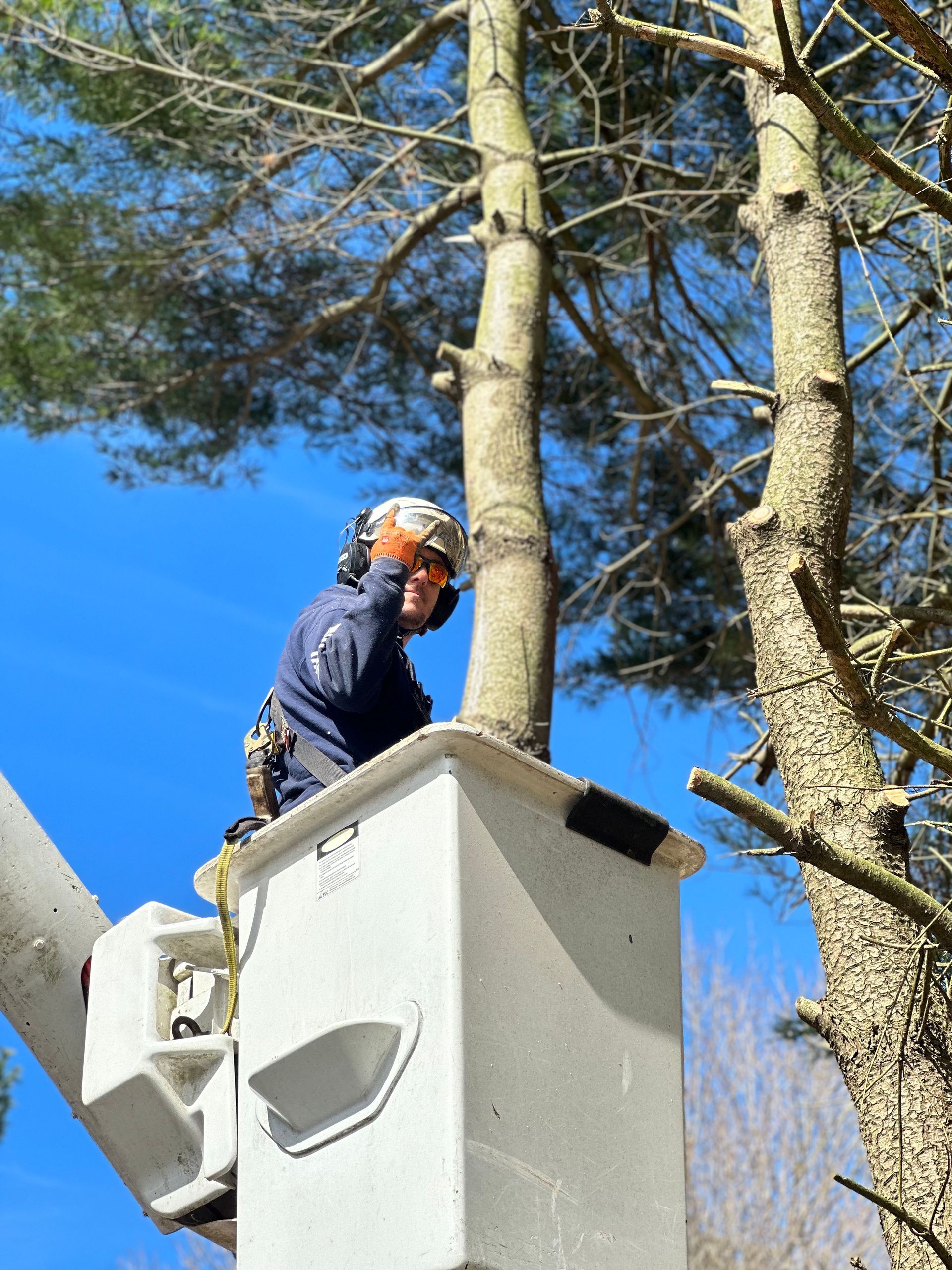
Broken, dead, and torn branches are removed at appropriate targets, then the remaining crown is checked for secondary cracks or imbalance.

Lower growth is pruned around lanes, gates, roofs, parking, and work areas based on the property’s real clearance requirements.

Competing stems and weak branch spacing are managed early or in stages so one visit does not create an oversized wound or sudden imbalance.
A useful estimate should connect the tree concern to the work plan. You should understand where the crew will enter, which branches will be addressed first, how structures and access will stay protected, and what debris leaves the property.
We examine the crown, buildings, lanes, fences, utilities, ground, and open exposure, then choose the side that offers the safest access and branch-control options.
Priority limbs, reduction points, rigging needs, equipment locations, and restricted areas are established before the first branch is released.
The crew removes hazards and solves the main clearance or structural objective, checking crown balance before proceeding with lower-priority work.
Branches are chipped or hauled as agreed, lanes and gates are reopened, and the finished tree and surrounding property are reviewed with the owner.
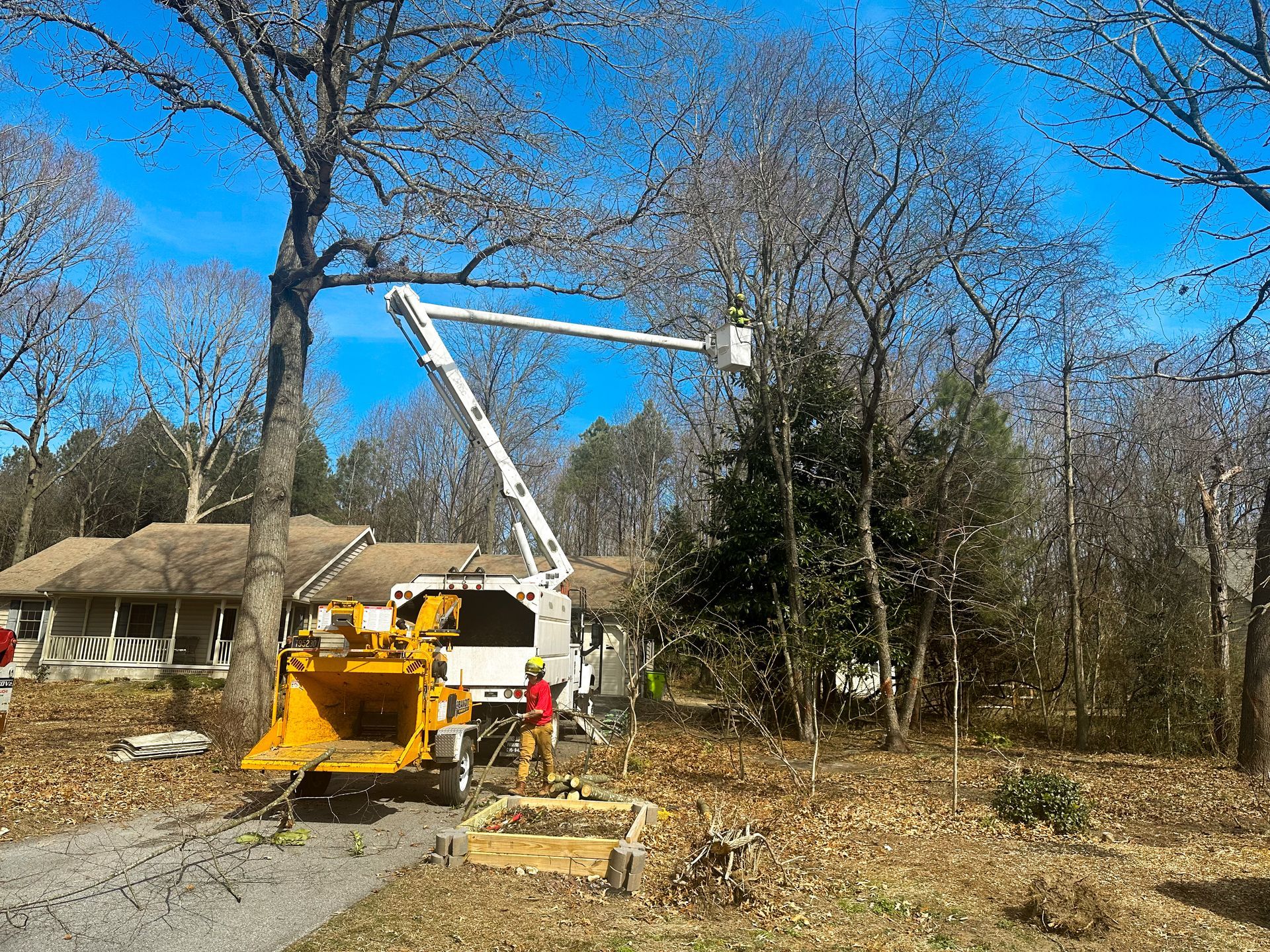
Around Commerce Street, Railroad Avenue, and older residential blocks, crews may work between porches, small yards, overhead lines, and narrow access. Near U.S. 13, Route 14, subdivisions, and agricultural edges, crowns may have more room but greater exposure and longer equipment routes.
Harrington-area soils can include shallow water-table conditions and occasional ponding. After sustained rain, the tree may be ready for pruning while the yard is not ready for a heavy truck, so staging and lawn protection should be decided before the appointment.
Two trees with similar height can require very different crews and equipment. Exposure, branch leverage, buildings, access, surface conditions, the desired clearance, crown response, and brush handling all affect the final scope.
Field edges and broad lawns can place long limbs in stronger, less-buffered wind, changing which branches deserve reduction or monitoring.
Metal roofs, sheds, barns, porches, and detached garages limit drop space and may require lowering instead of free release.
Width, turning room, gravel condition, locked gates, culverts, and overhead clearance determine which equipment can reach the tree.
Length, diameter, end weight, included bark, old wounds, and decay influence the safe cutting order and rigging points.
Ponding, a shallow water table, roadside ditches, septic areas, and saturated lawns can restrict staging or shift the work date.
The height and width needed for trailers, delivery trucks, farm equipment, or emergency access sets the pruning target.
Young trees tolerate small structural corrections differently from mature trees with established crowns and large old cuts.
Long laterals generate bulky debris, and the distance from the crown to the chipper can add handling time to the project.
The Robert Burk Tree team travels throughout Kent County and nearby Sussex County communities for routine maintenance, clearance work, storm restoration, and larger pruning projects. Call with the address and a description of the tree so scheduling and access can be discussed.
Crews serve in-town residences, subdivisions, farms, commercial frontage, and community properties with pruning plans suited to the tree and the available work zone.
A branch above a barn, fence, garden, gravel drive, or parked equipment may need ropes and a defined landing route even when the cut itself is straightforward. Equipment also needs enough room to enter, turn, and leave without damaging shoulders, lawns, culverts, or underground systems.
The company’s bucket, rigging, crane, chipping, hauling, and cleanup capabilities allow the crew to adapt, but the estimate should still spell out the protective steps that fit your property rather than treating every yard the same.
The best value is not the largest amount of cutting. It is a crew that recognizes the branch problem, chooses a defensible scope, controls the work around your property, and completes the debris handling promised in the estimate.
The gallery shows how aerial access, rigging, mechanical support, branch processing, and crew setup help manage canopy work where open space, structures, roads, or utilities shape the job.
A pruning estimate may lead to tree health care, emergency work, removal of an unsalvageable tree, or recurring commercial maintenance. Review the service most closely connected to the problem, then contact the team with the property details.
Learn how often to inspect mature trees, manage branches over outbuildings, respond after wind, create access clearance, restore poor past cuts, work around wet ground, and understand pricing.
The interval depends on species, age, exposure, prior work, and what sits below the crown. A tree near a house, road, barn, or frequently used lane deserves more regular observation than one in open space. Schedule an evaluation when you notice deadwood, new rubbing, broken ends, or changing clearance.
Often, provided the limb and tree have suitable structure. We look for healthy laterals, sound attachment, decay, end weight, and room for controlled lowering. Reduction may be appropriate, while a cracked or badly decayed union could lead to a different recommendation.
Hanging, split, or actively moving branches should be treated as urgent. Stable damage can be scheduled after the site is safe, but it still deserves review before torn wood decays further or the remaining branch carries an uneven load. Keep the area below closed until the condition is understood.
Pruning can reduce leverage on selected long branches, but the goal is not perfect visual symmetry. Field-edge trees often follow light and wind patterns. We preserve useful interior growth, shorten only where suitable laterals exist, and avoid stripping the exposed side of the crown.
We begin with the tallest vehicles, trailers, deliveries, and equipment that use the route, then consider future growth and the tree’s lower structure. This avoids removing more branches than necessary while still creating dependable access and sightlines.
Ownership and responsibility vary. A public road tree, utility easement, shared boundary tree, or branch near primary conductors may require coordination with the municipality, DelDOT, the utility, or another property owner. Confirm the trunk location and authority before approving work outside your clear property control.
Some trees can be managed with restoration pruning, but recovery usually takes multiple visits. The crew selects better-attached shoots, removes weak competition gradually, and evaluates decay around the old stubs. The tree’s species, vigor, wound size, and location determine whether restoration is realistic.
The estimate considers height, branch spread, open or confined access, outbuildings, roads, utility conflicts, rigging, equipment, live-crown work, and brush handling. Long limbs over a barn can cost more to control than larger limbs over an open field, so diameter alone does not set the price.
Sometimes, although Harrington-area ground can pond or stay soft after rain. The crew checks the approach, lawn, shoulder, ditches, culverts, septic areas, and equipment footprint. Work may be adjusted or rescheduled when access would create ruts, instability, or unnecessary property damage.
The pruning estimate should state exactly what leaves the site. Robert Burk Tree can chip brush, haul debris, and clean the work area. Larger wood can be removed or left when requested, but its location and the equipment route should be agreed upon in advance.
Removal deserves discussion when roots are moving, a major stem is splitting, decay affects the load-bearing trunk, or storm loss leaves too little functional crown. Pruning is valuable for branch problems, but it should not be used to disguise a tree whose primary structure is no longer dependable.
Call Robert Burk Tree & Landscaping to review broken limbs, outbuilding clearance, long field-edge branches, low access, weak unions, or young-tree structure. You will receive a practical scope for the cuts, equipment, property protection, debris handling, and timing your tree actually requires.