Deadwood And Crown Cleaning
Dead, broken, rubbing, and poorly attached branches are removed selectively so useful live growth remains in place and the finished crown still looks natural.
Review Residential Tree Pruning

Branches scraping a roof, hanging over a walkway, or crowding one side of the crown do not always call for removal. Robert Burk Tree & Landscaping evaluates the tree’s structure, identifies the cuts that solve the problem, and prunes with attention to healthy growth, safe clearance, and a clean yard.

Robert Burk Tree & Landscaping provides tree pruning in Milford, DE, for deadwood removal, crown cleaning, roof and driveway clearance, storm-damaged branches, young-tree structure, and selective reduction. The crew works on residential trees, commercial properties, and larger canopies that require bucket access or controlled lowering.
Good pruning starts with a specific goal. The team looks for weak unions, rubbing limbs, excessive end weight, prior poor cuts, and branches growing toward structures, then chooses cuts that preserve useful live crown instead of stripping the tree.
Milford’s riverfront blocks and older streets often place mature limbs close to roofs, sidewalks, and service drops, while properties near Route 113 and newer neighborhoods may have young trees that need early structure. An on-site review shows what should be cut now and what is better left to grow.
Select the condition that most closely matches your tree. This guide helps you organize the problem before an estimate, but branch condition, species, height, targets, and access still need to be checked on the property. Stay out from beneath cracked, hanging, or electrically involved limbs.
Dead limbs over shingles, entrances, patios, or sidewalks should be evaluated before normal weather or the next storm brings them down. Keep the area below clear. The crew can identify sound rigging points and remove the deadwood without dragging it across the roof or surrounding landscape.
A mature canopy can shade a home, frame the yard, and remain valuable for decades when pruning is measured. Removing too much live growth at once can push weight to the branch tips, trigger dense sprouts, expose bark, and leave the tree with less energy to close pruning wounds.
Milford stretches across the Mispillion River into both Kent and Sussex Counties. Compact downtown frontage, river-adjacent ground, suburban lots near Route 113, and larger properties beyond the city core each create different equipment, drop-zone, and cleanup needs.
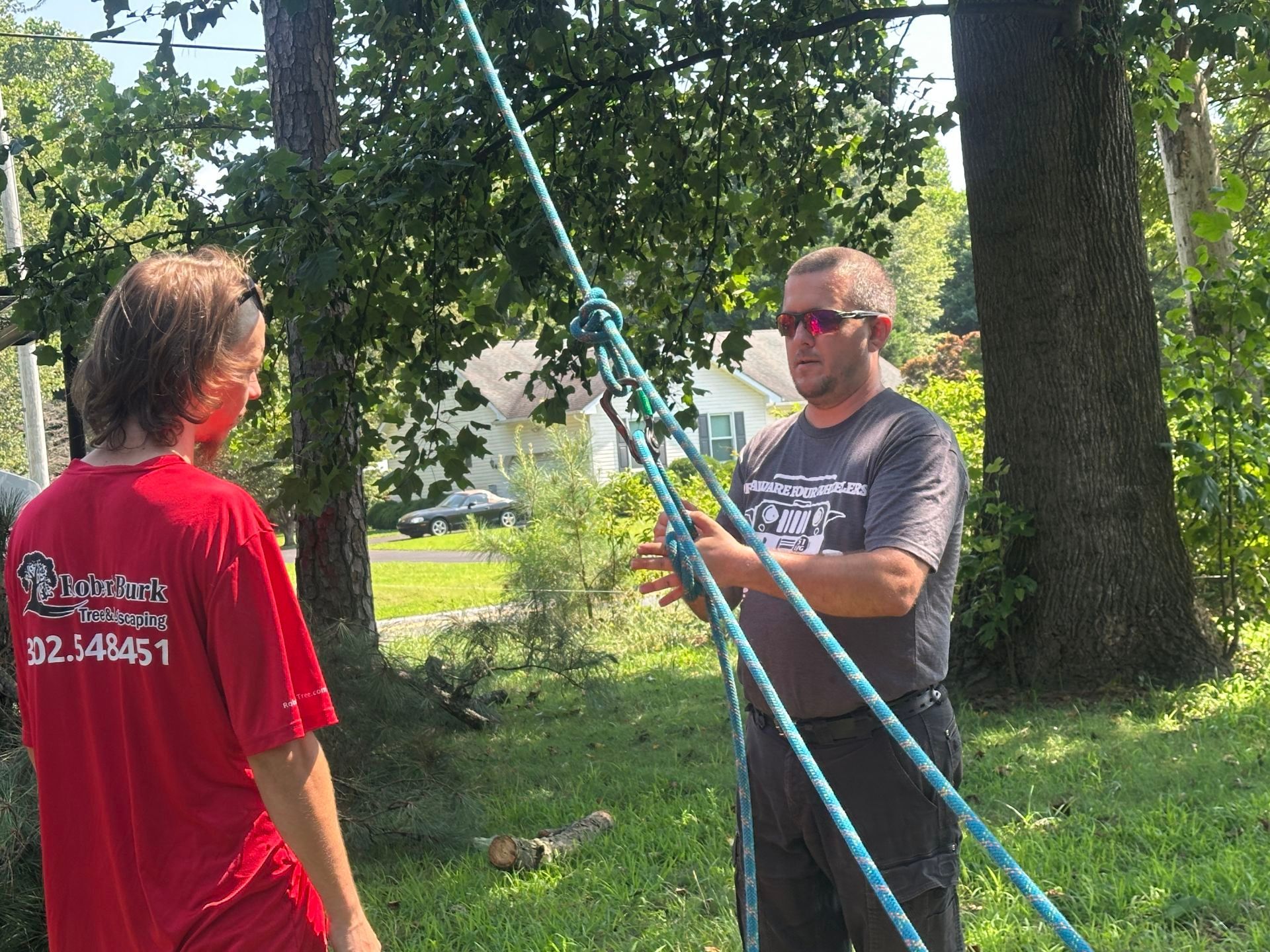
The right scope depends on the tree’s age, species, branch condition, location, and the result the homeowner needs. Robert Burk Tree & Landscaping combines ground evaluation, aerial access, and controlled branch handling for routine maintenance and more complicated canopy work.
Dead, broken, rubbing, and poorly attached branches are removed selectively so useful live growth remains in place and the finished crown still looks natural.
Review Residential Tree PruningWe create practical space around shingles, gutters, chimneys, siding, and outbuildings without cutting every limb back to the trunk or leaving abrupt holes.
Discuss Building ClearanceEarly corrections can favor a strong leader, improve branch spacing, and reduce future conflicts before small defects turn into large, expensive cuts.
Plan Young Tree CareLow limbs can be shortened or removed in stages to improve access and sightlines while preserving enough lower crown for balance and trunk protection.
Request A Clearance EstimateAfter wind breaks part of the crown, the crew removes torn wood, evaluates the remaining structure, and shapes a realistic recovery plan when the tree can be retained.
View Emergency Tree HelpLong, heavy laterals may be shortened back to suitable branches to reduce leverage or restore clearance without topping the tree or creating rows of stubs.
Ask About Crown ReductionPruning is most useful when it addresses a defined branch problem before that problem becomes a failure, a building conflict, or a much larger cut. These conditions are worth discussing during an on-site estimate.
Bare branches above an entrance, parking spot, patio, or sidewalk can drop even when the rest of the tree appears healthy.
Repeated contact can wear shingles, fill gutters, and damage the branch itself as wind moves the crown against the house.
Rubbing branches create open wounds and usually become harder to separate cleanly as their diameter increases.
Branches near driveways and corners may hide pedestrians, traffic, or approaching vehicles while also taking repeated impact.
Young trees with two similar leaders can develop a tight union that carries increasing load as both stems lengthen.
A partially attached limb may look stable from the ground while cracked fibers continue to carry uneven weight.
A branch problem can often be corrected while the tree remains in place. Pruning has limits, however, and it cannot rebuild decayed roots, close a major trunk split, or restore a crown that no longer has enough sound structure.
Pruning is not measured by the size of the brush pile. A successful job solves the stated problem, uses natural pruning targets, keeps the crew and property protected, and leaves the tree with a balanced framework for its next stage of growth.
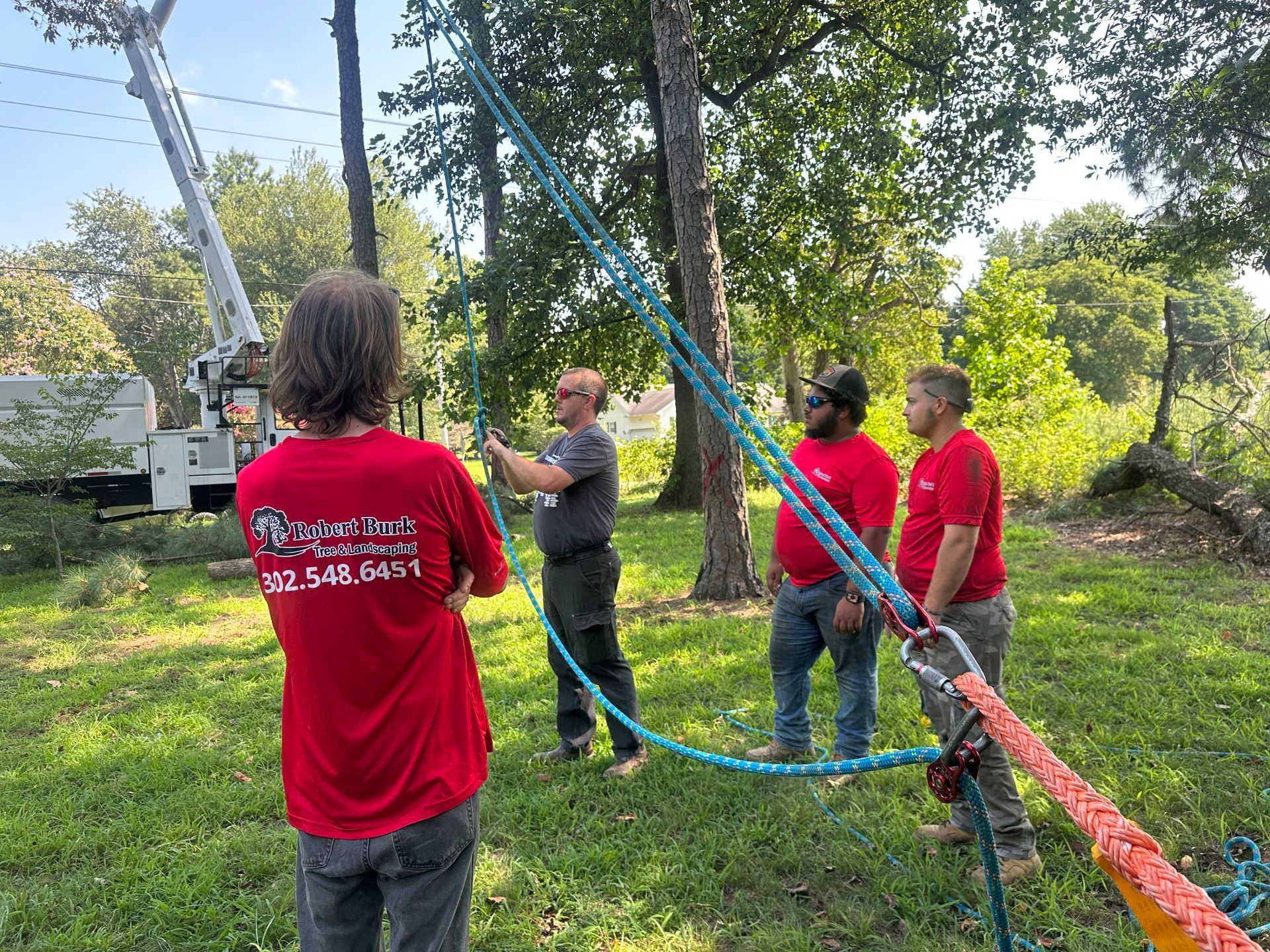
The crew removes selected dead, broken, rubbing, or weak growth with final cuts placed outside the branch collar rather than flush against the trunk.
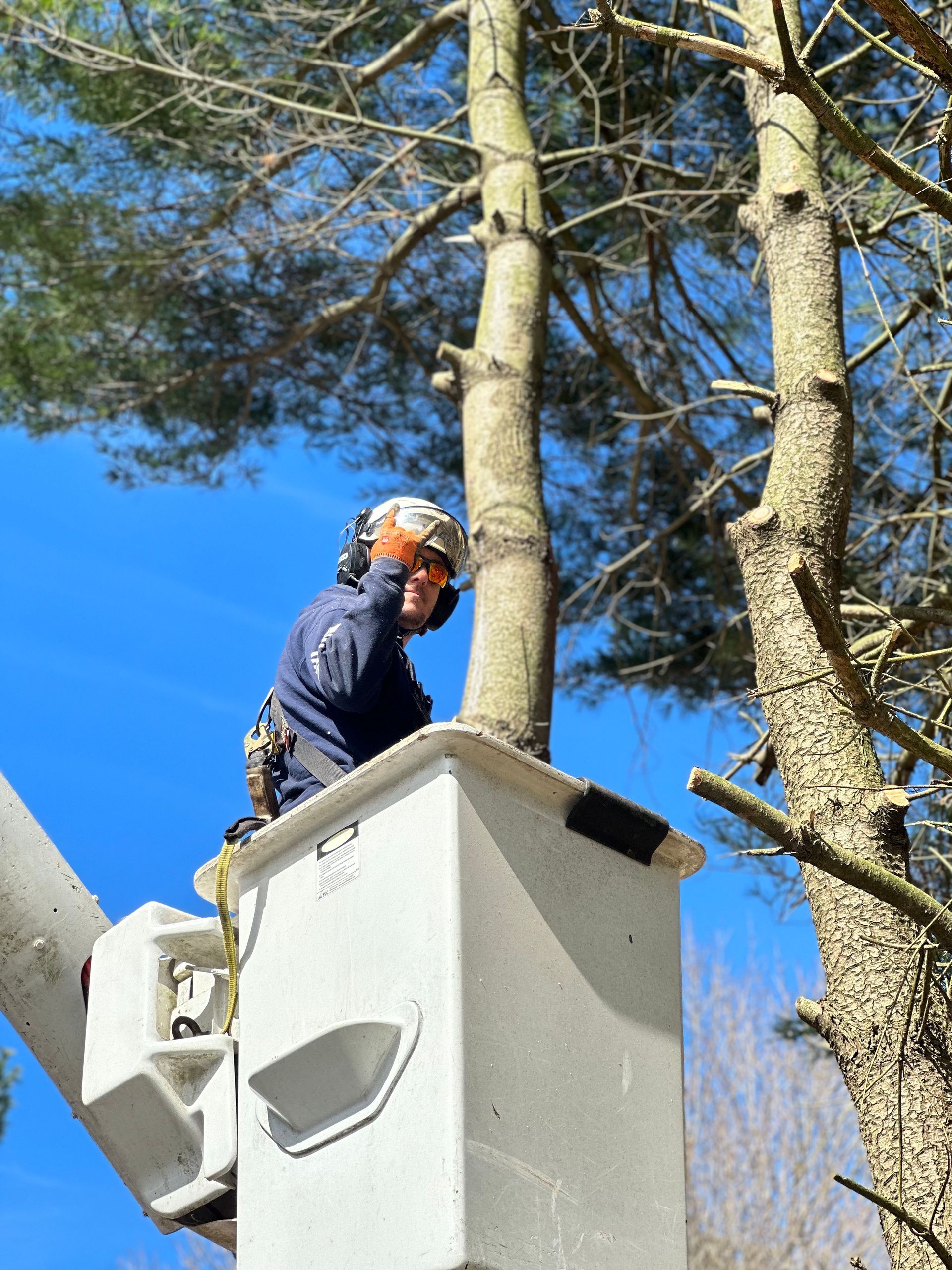
Branches are shortened to appropriate laterals or removed at their origin to create room around buildings, drives, lights, and pedestrian areas.

Small cuts guide leader development, branch spacing, and permanent scaffold selection before defects become large and difficult to correct.

Extended or damaged limbs are brought back to suitable side branches, preserving a functional crown while reducing leverage or correcting torn growth.
Before saws start, the homeowner should know the pruning objective, which branches are priorities, how the crew will reach and control them, and what the property will look like after cleanup.
We review the tree from the ground, discuss clearance or structural concerns, identify occupied areas and utilities, and agree on the result the pruning should achieve.
The crew chooses access, lowering points, equipment placement, and exclusion zones, then protects surfaces and landscaping beneath the planned work.
Priority branches are removed or shortened from the outside and top of the crown inward, with each major cut evaluated against the remaining structure.
Branches are processed according to the written scope, the work area is cleaned, and the finished clearance and crown balance are reviewed with you.
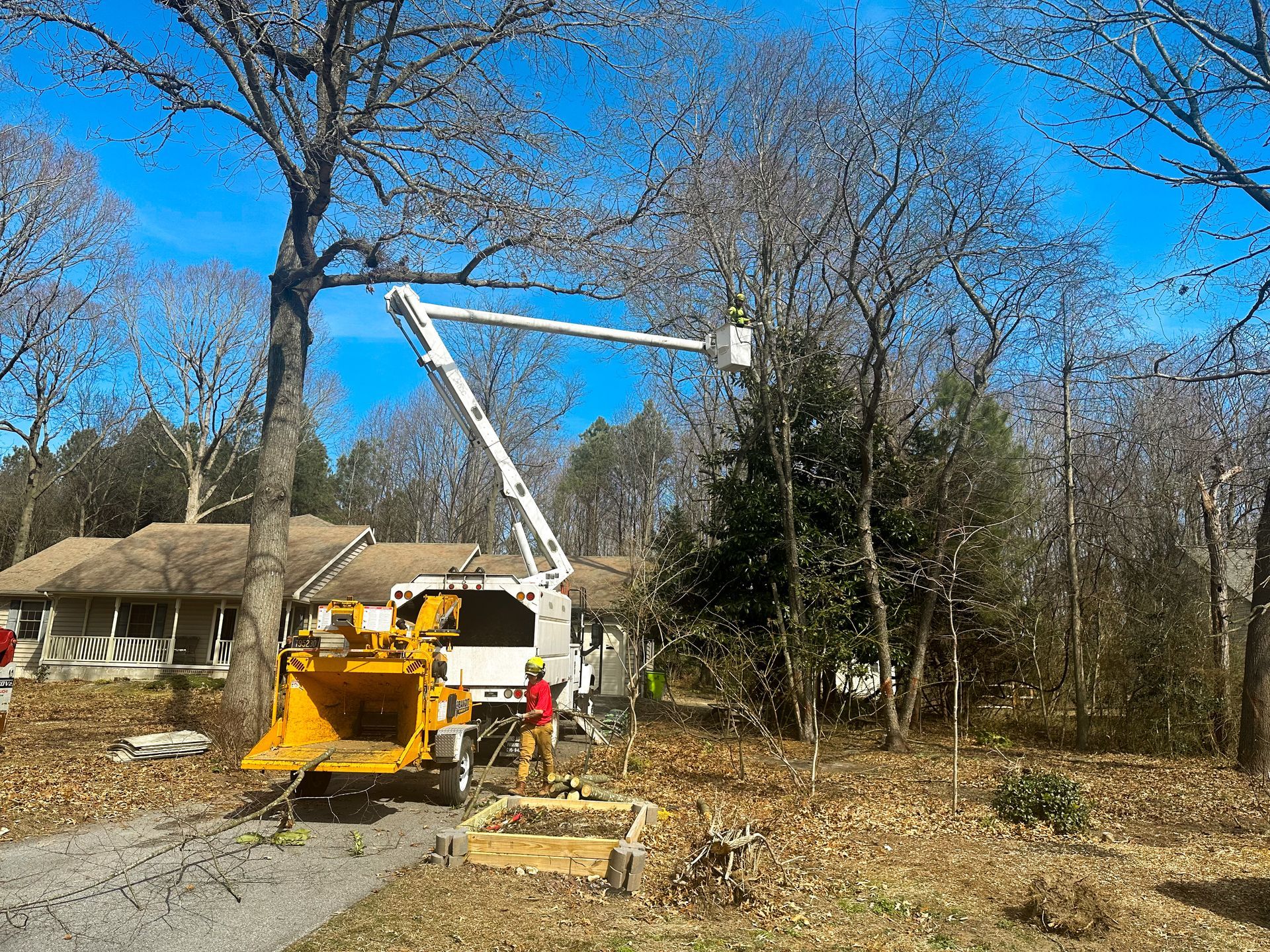
Near the Mispillion River and the downtown street grid, mature trees may share limited space with sidewalks, roofs, alleys, overhead service, and neighboring yards. Farther out along Route 113 and the city’s expanding edges, wider lawns and newer plantings can make access easier but often call for early structural pruning rather than major correction.
Wet ground deserves attention before heavy equipment enters. Low areas can stay soft after rain, and pruning plans should account for driveway edges, lawn protection, drainage routes, and the location of underground systems as carefully as the branches overhead.
Tree height is only one part of a pruning estimate. The objective, branch condition, amount of live crown, reach, targets, access, ground, and cleanup requirements determine how the work should be completed.
Deadwood removal, roof clearance, structural training, storm restoration, and reduction each require different cuts and a different finished result.
Branch arrangement, seasonal response, mature size, and the tree’s ability to produce suitable laterals influence what can be corrected safely.
Large dead limbs, cracked unions, old stubs, decay, and previous topping can increase the need for rigging and careful cut sequencing.
A tall crown or limbs extending over the house may require bucket positioning, climbing, or controlled lowering from secure points.
Roofs, walks, vehicles, fences, gardens, and service wires limit where branches can move and where debris can land.
Gate width, driveway strength, wet soil, slopes, irrigation, and septic areas affect equipment choice and staging.
The crew balances the immediate objective against the foliage and branch structure the tree needs to remain vigorous and stable.
Brush volume, chipper access, wood handling, parking, and traffic around the property influence crew time and cleanup.
Robert Burk Tree & Landscaping schedules pruning for homes, businesses, community properties, and larger lots throughout central and southern Delaware. Share your address and the tree concern so the team can confirm service and the equipment likely to be needed.
The company is based in Milford and works throughout Kent and Sussex Counties on routine pruning, structural corrections, storm-damaged branches, tree health concerns, and larger property projects.
Branches often need to be handled above roofs, gardens, driveways, fences, and outdoor living areas. The work plan should explain where equipment will sit, which pieces can be lowered, how the drop zone will be controlled, and what needs to be moved before the crew arrives.
Robert Burk Tree & Landscaping combines trained crews, bucket and rigging capability, chipping, hauling, and cleanup. Those resources should be matched to the surfaces, access limits, and tree objectives on your specific property.
Professional pruning requires more than reaching the branch. Choose a company that can explain why a cut is needed, work safely around the property, preserve the useful crown, and leave the site ready to use.
These project images show aerial access, controlled cutting, branch handling, equipment staging, and cleanup methods used around homes, roads, utilities, and established landscapes.
Pruning may uncover a health concern, confirm that a damaged tree needs removal, or become part of broader maintenance for a commercial site. These service pages explain the options, and the contact page is the best place to request an on-site recommendation.
Get practical answers about timing, roof clearance, live-crown limits, large-tree access, storm preparation, utilities, cleanup, pricing, and right-of-way concerns.
Look for dead or broken limbs, branches rubbing the roof, low growth blocking a drive or walk, crossing limbs, weak competing leaders, and storm tears. Pruning should solve a specific condition, so an on-site review is more useful than cutting simply because the crown looks large.
Timing depends on species, tree condition, and the objective. Many deciduous trees are easier to evaluate while dormant, but broken or hazardous limbs should not wait for a preferred season. Flowering trees and certain species may need a different schedule, which we discuss during the estimate.
Yes, when the tree has suitable branch structure for directional clearance. We identify which limbs can be shortened to laterals or removed at their origin, then create practical space without cutting the entire side of the crown flat against an imaginary line.
There is no single percentage that fits every tree. Age, species, vigor, prior pruning, storm damage, and the size of the proposed cuts all matter. The goal is to remove only what the objective requires while keeping enough healthy foliage and interior structure for the tree to respond well.
Indiscriminate topping leaves large wounds, removes productive crown, and often triggers clusters of fast-growing shoots with weak attachments. When size or leverage is the concern, selective reduction to suitable lateral branches is usually the more responsible pruning approach.
Often, yes. The crew evaluates gate width, side-yard space, rooflines, neighboring property, ground firmness, and possible bucket or climbing positions. Limbs can be lowered in controlled sections when there is not enough open space for them to fall freely.
Pruning can reduce some avoidable problems by removing deadwood, correcting weak growth, or shortening overextended limbs. It cannot guarantee storm survival, especially when roots, the trunk, or major unions are compromised. A useful estimate separates manageable branch issues from larger structural risk.
Yes, debris handling and cleanup are part of the company’s pruning service. Your written estimate should still identify whether branches will be chipped, larger wood hauled or left, chips removed, and any homeowner-requested material placed in a specific area.
Stay clear and contact the utility first when a branch touches or threatens primary electrical conductors. Do not use a ladder, pole saw, or rope near the line. For a service drop to the house, describe the location when you call so the necessary coordination can be determined.
Pricing reflects tree height, branch diameter, condition, access, targets below the crown, equipment, rigging, the amount of pruning, and debris volume. A small tree over a garden may require more control than a larger tree with open ground, which is why the crew prices from an on-site scope.
Possibly. A tree in the public right of way, on a shared boundary, within an easement, or governed by an association may involve another owner or local authority. Confirm ownership before authorizing work, and contact the City of Milford when the trunk or requested cuts appear to fall within city-controlled space.
Call Robert Burk Tree & Landscaping for an on-site look at deadwood, roof conflicts, low limbs, crowded growth, storm damage, or young-tree structure. The crew will explain the pruning objective, access plan, priority cuts, cleanup, and the next step that makes sense for the tree.