Hazardous Residential Tree Removal
Dead, split, or declining trees beside a home are removed with attention to bedrooms, porches, driveways, service lines, and neighboring yards inside the fall zone.
Review Home Tree Removal
In Dover, a failing tree may hang over a roof, sidewalk, parking area, service line, or a street used all day. Robert Burk Tree & Landscaping starts by securing the area and studying the tree’s load, then removes it with a method designed around people, structures, traffic, and the space available for equipment.

Robert Burk Tree & Landscaping removes hazardous, dead, storm-damaged, structurally compromised, and unwanted trees throughout Dover. The crew handles residential work, commercial properties, emergency clearance, heavy debris, and cleanup, with bucket and crane options when the site requires them.
The work plan is based on the tree and everything operating around it. Pedestrian routes, parked cars, neighboring buildings, overhead conductors, drive aisles, fences, signs, and underground features can be as important as trunk diameter.
Properties near Silver Lake and the historic center often have different staging limits than larger lots west of the city or sites along the U.S. Route 13 corridor. A site visit allows the estimate to reflect actual access and occupancy instead of a generic price range.
Select the description that best matches the condition you can see from a safe location. The result provides immediate precautions and useful details to share when you call. Do not stand below broken wood, enter a cordoned area, or approach a tree that may be energized.
Keep the building, drive, sidewalk, or parking area closed and stay clear of the trunk and compressed limbs. A fallen tree can shift as weight transfers between the ground and the structure. Call for emergency response rather than cutting or pulling from an unknown load point.
A large tree on a Dover city lot can reach across a home, sidewalk, parking area, or neighboring property. When the ground below is occupied or hardscaped, the crew may need to dismantle the crown in short, controlled pieces instead of allowing wood to free fall.
The compact streets around downtown and North State Street, the water-influenced areas near Silver Lake and the St. Jones River corridor, and the commercial corridors around Route 8, U.S. Route 13, and Bay Road each create different access and protection concerns. Scheduling, traffic flow, equipment reach, and ground bearing all belong in the removal plan.
Dover includes close residential blocks, institutional properties, commercial frontage, apartment communities, parking areas, and larger lots near the city edges. Each setting needs a removal method that protects the people, structures, and access patterns surrounding the tree.
Dead, split, or declining trees beside a home are removed with attention to bedrooms, porches, driveways, service lines, and neighboring yards inside the fall zone.
Review Home Tree RemovalCommercial and multi-use sites require a work zone that separates cutting and equipment from customers, employees, parked vehicles, entrances, signs, and deliveries.
Discuss A Commercial SiteAfter wind or impact, the crew evaluates loaded limbs, uprooted roots, damaged structures, and blocked access before releasing tension or moving heavy debris.
Request Emergency ResponseTrees extending over roofs, walks, fences, and small yards can be reduced from aerial access and lowered into controlled landing areas.
Plan A Confined RemovalA crane or bucket can provide reach and lifting control when the wood is too large, too weak, or too confined for conventional climbing and drop cuts.
See Lift And Crane CapabilitiesChipping, loading, hauling, and final cleanup are organized with the cutting sequence so material does not accumulate in active drives or pedestrian routes.
Get A Written Removal ScopeTree condition can change at the roots, lower trunk, branch unions, or upper crown long before the entire tree appears dead. Act sooner when the potential fall zone includes a home, sidewalk, street, parking space, business entrance, or power service.
Raised roots, separated soil, or new pavement movement beside the trunk may show that anchorage is shifting under the weight of the tree.
A hollow, old pruning wound, or soft area in the trunk can reduce the ring of sound wood available to carry the crown.
A vertical bark seam that opens at a major fork may indicate that co-dominant stems are beginning to pull apart.
Dead limbs above a walkway or frequently used parking area can fall independently of the rest of the tree and create a focused public hazard.
A broad section of the canopy losing leaves, buds, or smaller branches can point to root stress, vascular decline, or advanced disease.
A trunk that has recently shifted toward a building, play area, road, or entrance warrants an inspection even if the tree still has green foliage.
Pruning can correct individual branches, improve clearance, and reduce leverage on a structurally sound tree. Removal becomes more likely when the problem involves anchorage, the lower trunk, a primary union, or extensive crown death in a location with serious consequences.
A removal beside an open field is not planned like one over a sidewalk or parking lot. The crew selects equipment and cutting techniques that keep the public separated, maintain control of each section, and minimize impact to buildings and hard surfaces.
The site survey records tree defects, daily foot and vehicle traffic, protected structures, utility conflicts, available closures, and the reach needed from equipment.
Barriers, spotters, equipment placement, and alternate routes create a work zone that prevents residents, customers, and vehicles from entering active cutting areas.

The crown and trunk are dismantled in a sequence that controls swing, drop distance, and landing force through rigging, aerial access, or crane support.

Brush and wood are processed, pavement and lawn areas are cleared, and the crew verifies that entrances, drives, and walks are ready to reopen.
A professional scope should identify the tree, the hazard, the method, the access plan, the material handling, and any temporary change to how the property will be used during the work.
The estimator inspects roots, trunk, crown, fall reach, surrounding occupancy, utilities, surfaces, and the path required for workers and equipment.
The crew positions machines, closes the necessary area, protects nearby property, and confirms the cutting, rigging, and communication plan.
Branches and trunk sections are removed in the approved order using ground felling, climbing, aerial lift, rope control, or crane picks as appropriate.
All included debris is processed or hauled, the site is cleaned, access is restored, and the finished condition is reviewed with the property owner or manager.
Dover’s layout ranges from close-set established blocks near Loockerman Plaza and North State Street to commercial frontage along U.S. Route 13, Route 8, and Bay Road, with larger residential parcels toward the city’s edges. Near Silver Lake, Mirror Lake, and the St. Jones River corridor, water-influenced ground and drainage can add another layer to equipment placement and root stability.
A removal may need to preserve customer access, street parking, a public walk, or a shared drive while also keeping every person outside the drop and swing zones. Those constraints should be resolved before the crew arrives, not during the first cut.
Two trees with the same diameter can require very different crews, equipment, and time. The estimate reflects occupancy, structural condition, access, reach, ground support, utilities, material handling, and the urgency of the hazard.
A tree over a sidewalk or entrance requires a different level of exclusion and timing than one over an unused corner of a large yard.
Decay, root loss, cracks, deadwood, and storm loading determine whether the tree can support climbing, rigging, or a conventional cutting sequence.
Street width, gates, drive aisles, parked vehicles, turning space, and neighboring access shape how equipment reaches and leaves the site.
Tree height and setback determine whether ground crews, a bucket, a crane, or a combination can safely reach the necessary cuts.
Saturated soil, drainage structures, pavement edges, and underground systems affect outrigger placement and the loads the property can carry.
Electrical lines, service drops, streetlights, communications, and buried utilities may reduce working space or require coordination.
The crew must chip, load, stage, and haul material without allowing brush and logs to obstruct entrances, traffic, or emergency access.
A stable scheduled removal can be sequenced around property use, while an actively failing tree may require immediate restrictions and priority response.
Robert Burk Tree & Landscaping serves homeowners, businesses, property managers, and larger sites in Dover and surrounding Delaware communities. Call with the address, tree condition, and access concerns so the team can determine the appropriate next step.
The crew handles scheduled removals, urgent storm work, commercial projects, pruning, clearing, and hauling throughout Kent County and into Sussex County.
A successful removal does more than eliminate the tree. It also controls impact on the roof, siding, windows, pavement, lawn, landscaping, signs, neighboring property, and the routes people rely on throughout the day.
Robert Burk Tree & Landscaping plans cutting and material movement together. That allows the crew to keep the work zone organized, protect sensitive surfaces, and prevent the cleanup from becoming a second disruption after the tree is down.
Removing a large tree around occupied property requires more than cutting skill. It requires a realistic hazard assessment, disciplined site control, equipment that fits the reach, and a debris plan that keeps the property functional.
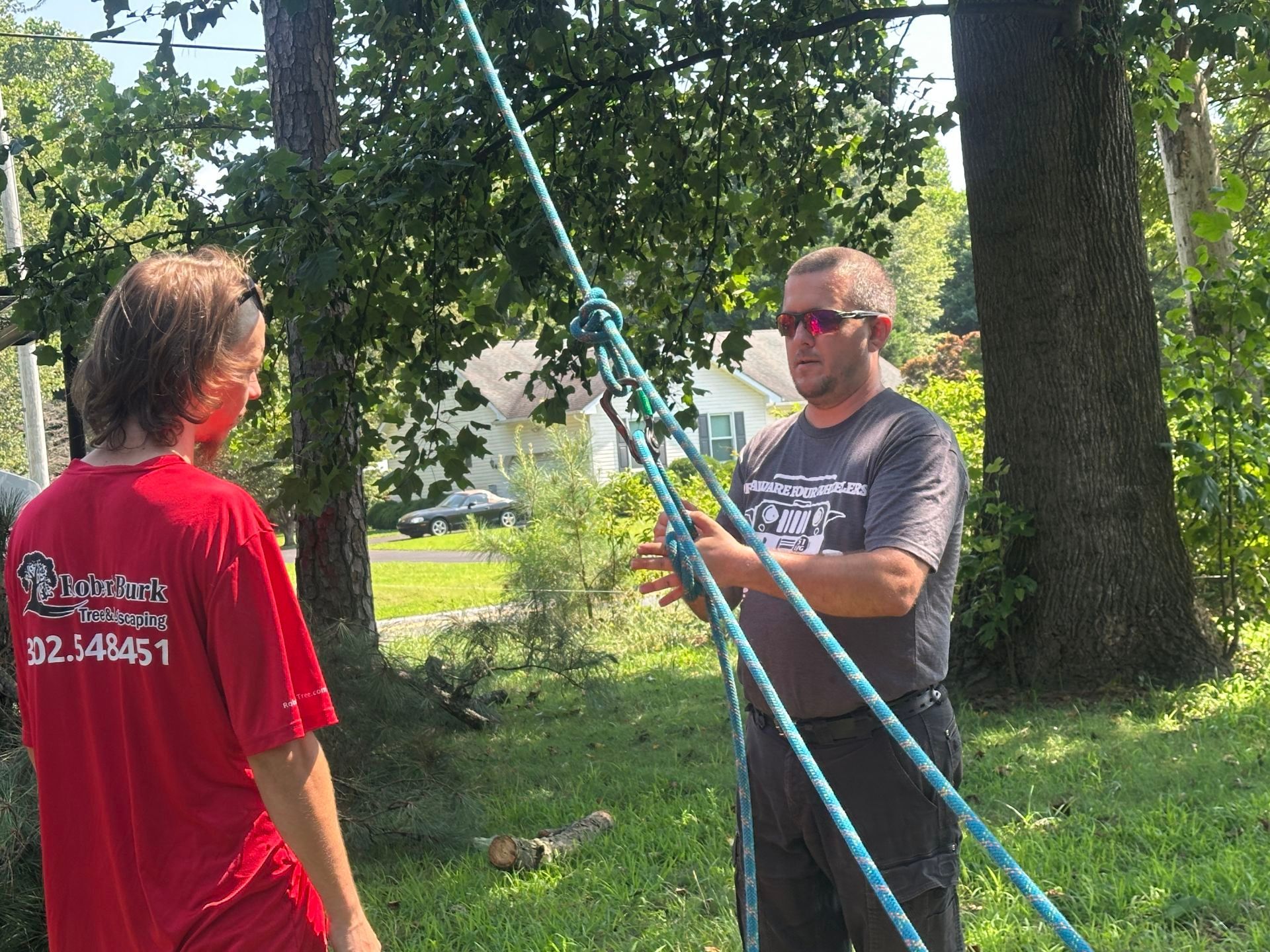
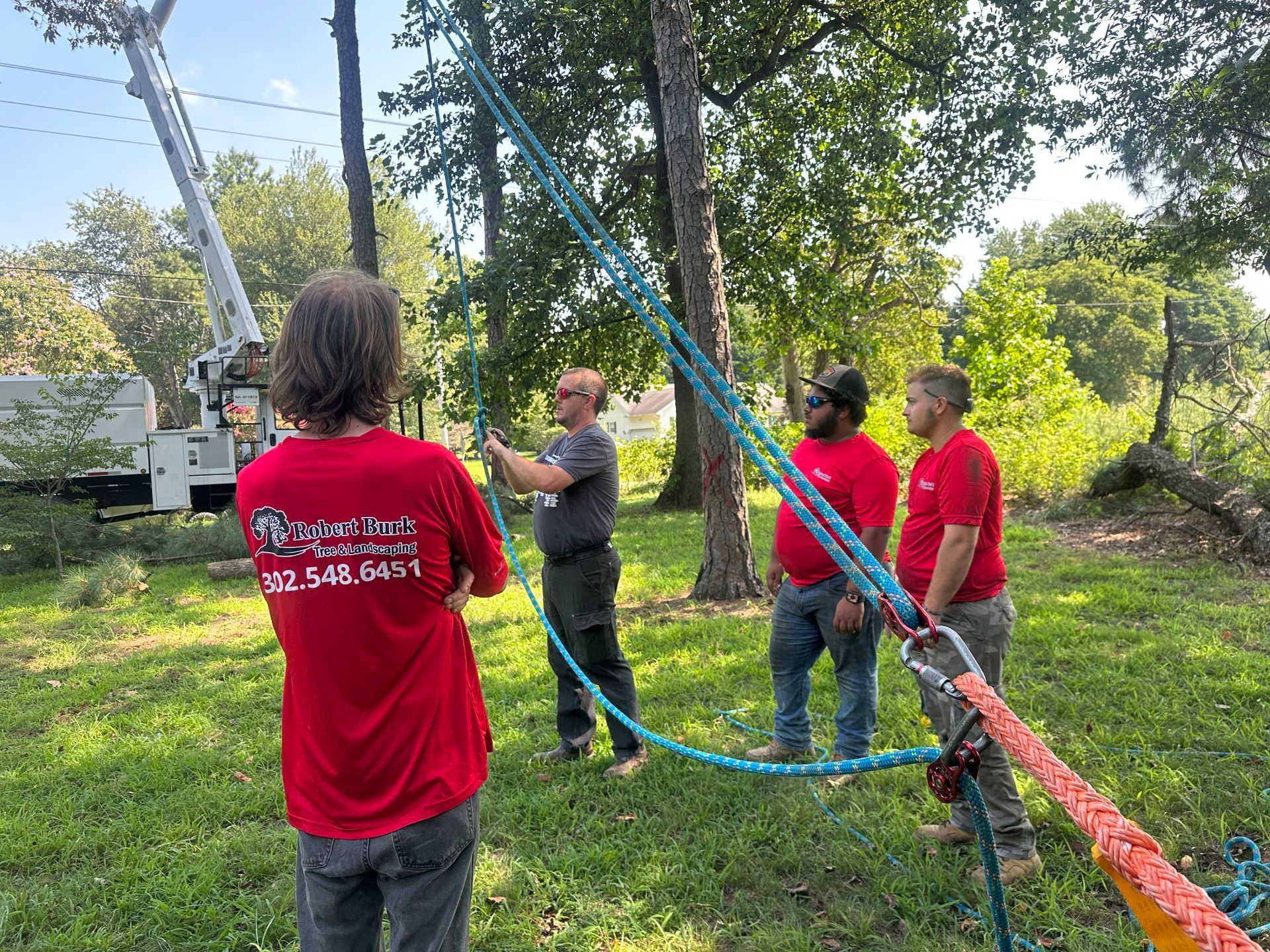
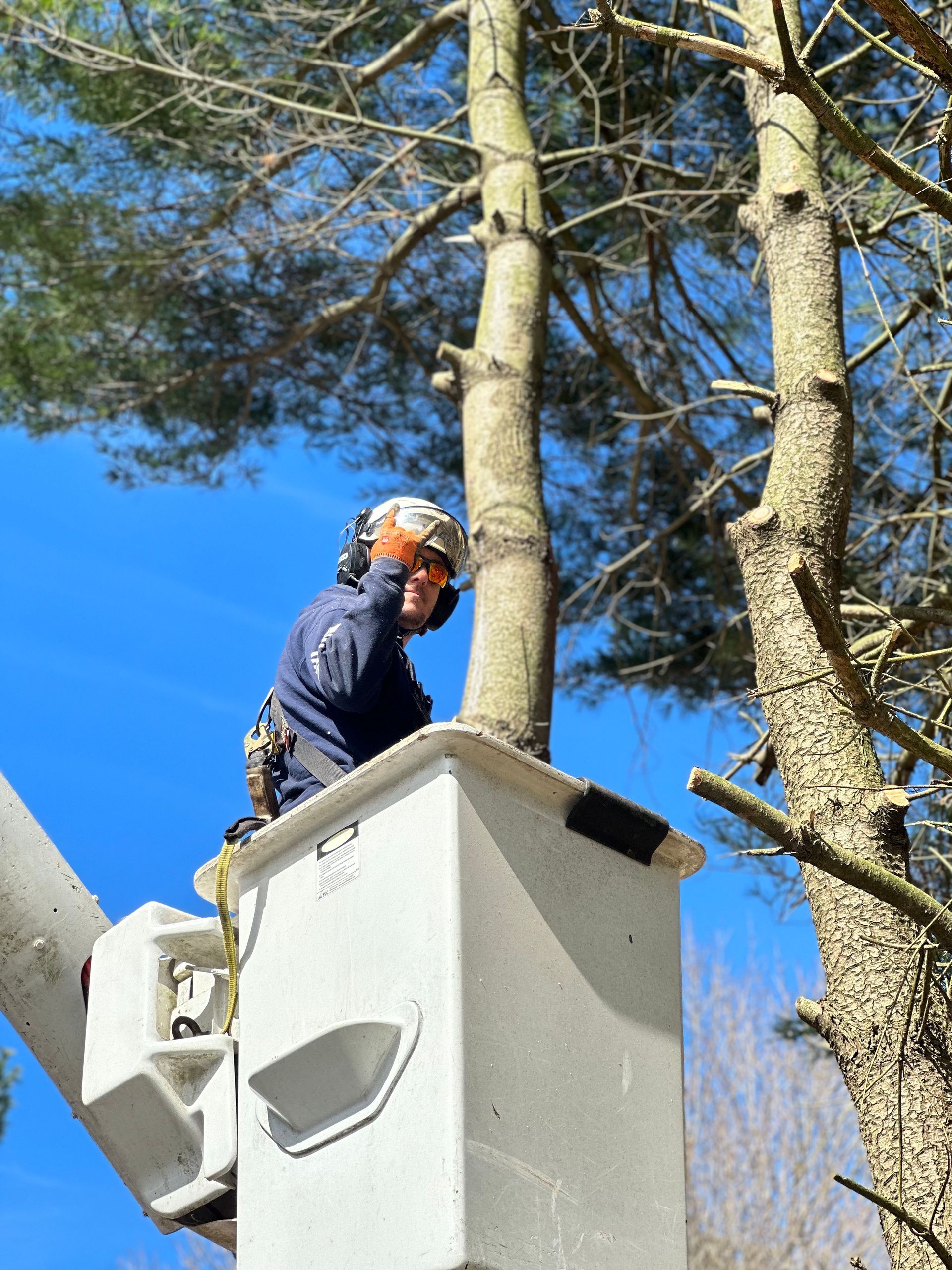
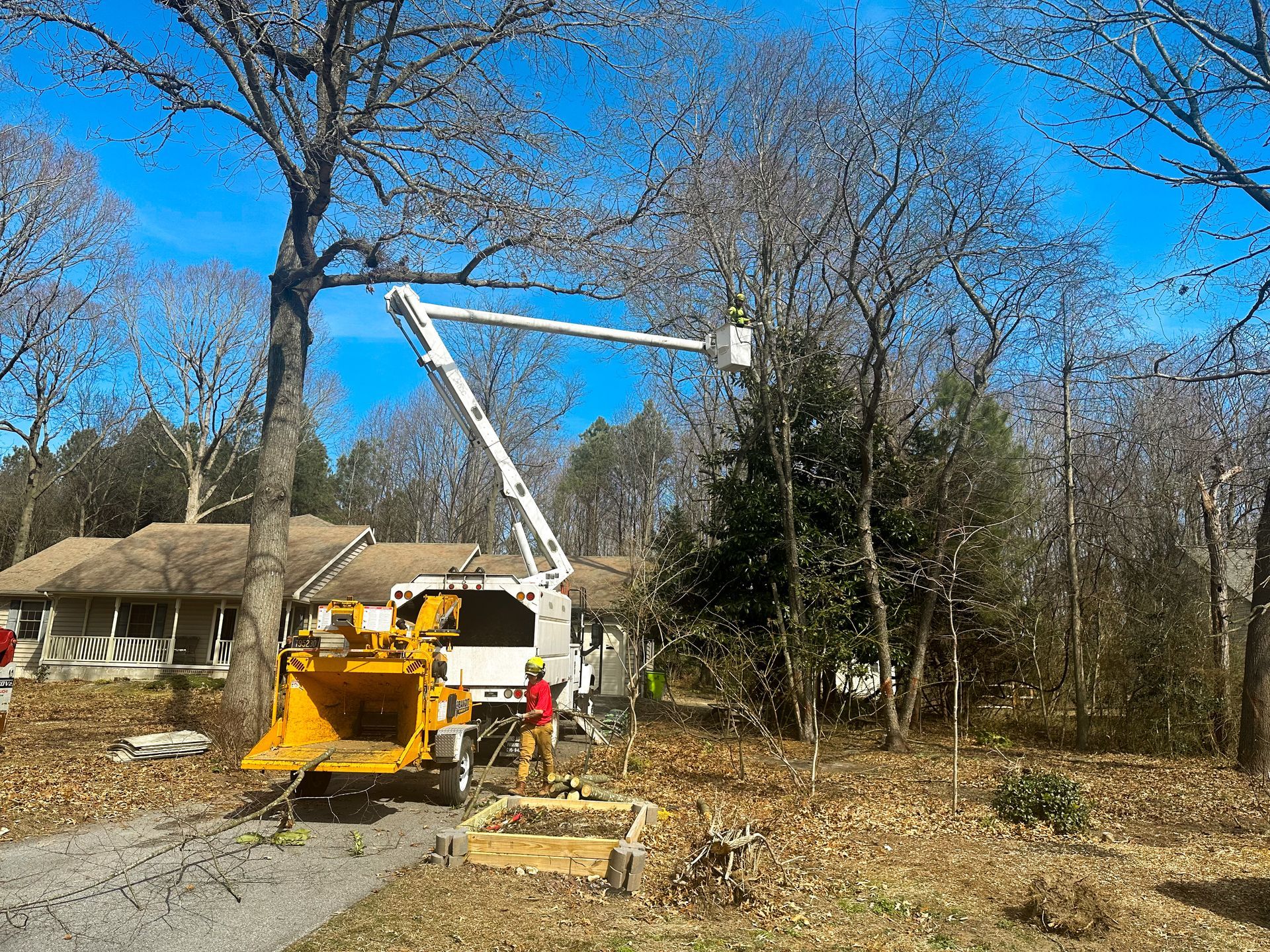
These project images show aerial access, sectional cutting, crane lifting, rigging, chipping, loading, and the organized work zones needed around occupied Delaware properties.
Some trees can be preserved with health care or pruning, while other sites need emergency work, commercial maintenance, clearing, or heavy material removal. Use these service pages to understand the available scope before requesting an estimate.
Find practical guidance about emergency response, work zones, cranes and bucket trucks, utilities, pavement protection, limited access, neighboring trees, cleanup, scheduling, and local restrictions.
Emergency response is available 24/7 for trees affecting a building, road, entrance, utility, or immediate safety. Response timing depends on conditions and current storm demand. When calling, describe what the tree is resting on, what is blocked, and whether it is still moving.
Often the work can be phased, but the active drop, swing, and equipment zones must remain closed. The estimator will identify alternate entrances, temporary parking changes, barriers, spotters, and the safest period for cutting so people do not enter the hazard area.
A bucket provides aerial access for cutting, while a crane can support and lift heavy pieces that cannot be safely lowered or dropped. Tree stability, height, setback, access, load size, nearby targets, and available setup space determine which equipment is appropriate.
It may. Any tree touching an energized line should be reported to the electric utility or emergency services first. Even without contact, required clearance can limit equipment and cutting positions. The crew will identify what coordination is needed before entering the line zone.
The plan considers surface capacity, pavement edges, underground drainage, truck weight, crane outriggers, and the route used for logs and loaders. Equipment may be repositioned or protective measures used when a surface cannot safely carry the expected load.
Yes, when there is a workable route and controlled landing area. The tree may be dismantled in smaller pieces, material may be carried or mechanically moved through limited access, and a bucket or crane may be staged from a drive or street if reach and permissions allow.
Confirm ownership and obtain agreement before authorizing work on a shared or disputed tree. The crew can explain the practical access and rigging needs, but property rights should be settled by the owners, association, or appropriate local authority before cutting begins.
The estimate should state whether branches are chipped, logs are hauled or left, chips are removed, the work area is raked or blown, and stump grinding is included. Review these details because cleanup scope can materially change the price and final condition.
Yes. Busy access periods, street or parking restrictions, high wind, lightning, saturated ground, and equipment availability can change the safest work window. The crew will coordinate around known site activity and update you if conditions require a schedule adjustment.
Not automatically. Dead wood may be too brittle to support a climber or rigging. The crew evaluates remaining sound wood and may use a bucket, crane, alternate tie-in, or ground-based method to avoid relying on compromised parts of the tree.
The property owner should confirm requirements when a tree is in a public right-of-way, governed community, shared boundary, protected area, or utility easement. Robert Burk Tree can provide the proposed scope, but approval should be obtained from the City of Dover, association, utility, or other responsible authority when applicable.
Call Robert Burk Tree & Landscaping for a site-specific plan for a dead, decayed, split, leaning, storm-damaged, or unwanted tree. The crew will review occupancy, access, utilities, equipment reach, property protection, debris handling, and the safest sequence for removal.