Tree Removal Harrington, DE | Robert Burk Tree & Landscaping
Controlled Tree Removal For Harrington Properties

Tree Removal Harrington, DE

A declining tree beside a porch, garage, drive, or service line can turn a manageable project into a sudden hazard. Robert Burk Tree & Landscaping evaluates the tree and the working space first, then uses a controlled removal plan that fits the lot, the targets below, and the cleanup you expect.

Veteran Led Jobsite Discipline The crew defines access, exclusion zones, communication, and the cutting sequence before work begins.
Generational Tree Knowledge More than 30 years of experience informs decisions around weak wood, heavy crowns, and difficult landing areas.
Rigging, Bucket, And Crane Options Specialized equipment helps control trees beside roofs, outbuildings, fences, utilities, and narrow yards.
Emergency Response Day Or Night Call when a tree has fallen, is still moving, blocks the property, or threatens an occupied structure.

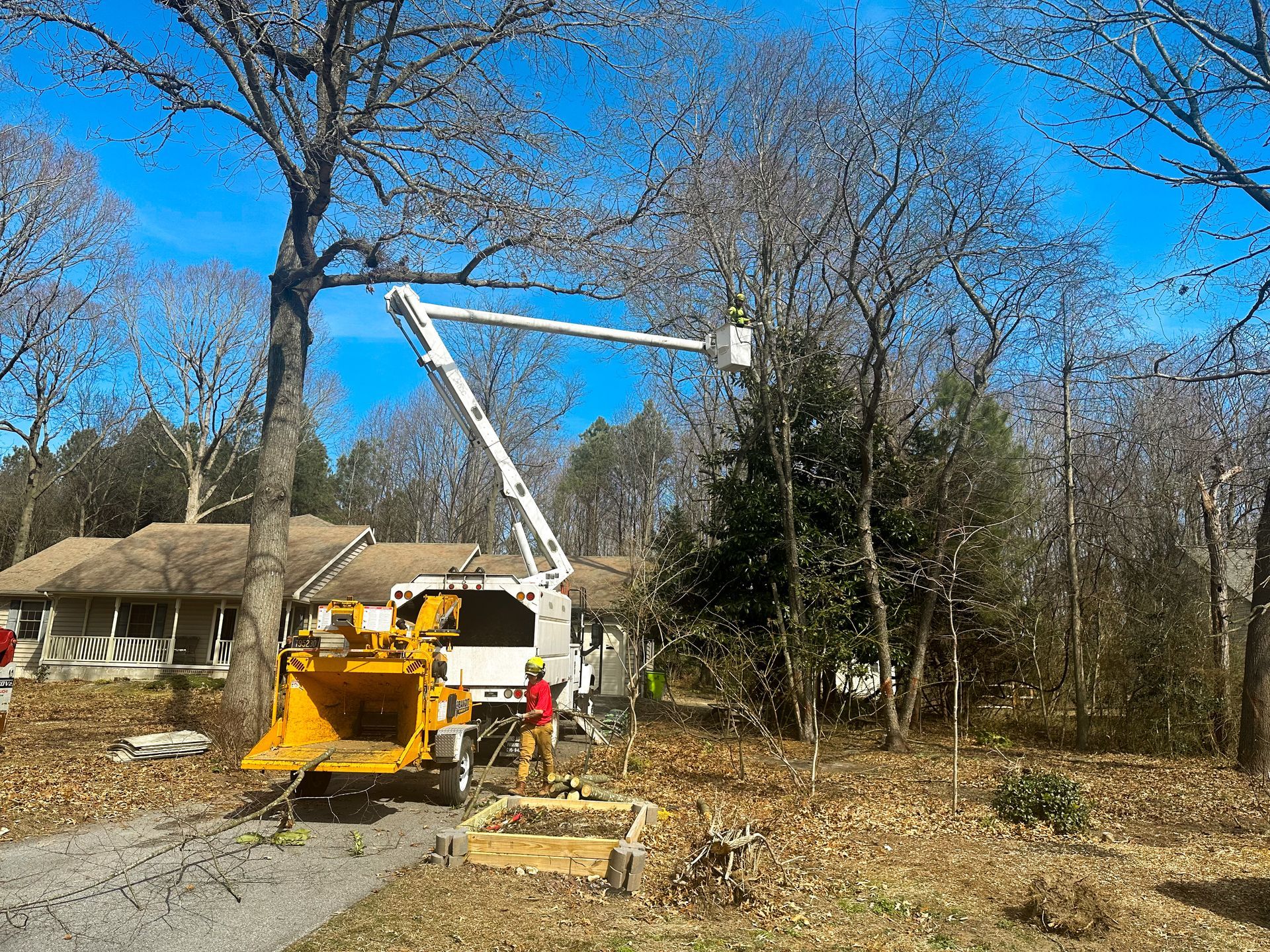
Robert Burk Tree crew performing controlled tree removal for a Harrington area property
Robert Burk Tree & Landscaping Serving Harrington and communities across Kent and Sussex Counties | Weekday office hours, 8:00 AM to 5:00 PM | 24/7 response for urgent tree hazards
Call (302) 548-6451
Local Answer

Who Can Remove A Hazardous Tree In Harrington, DE?

Robert Burk Tree & Landscaping removes dead, storm-broken, uprooting, split, and unwanted trees for Harrington homeowners, businesses, and larger properties. Service can include the takedown, brush processing, log handling, hauling, and a final work-area cleanup.

Before recommending a method, the crew looks at the direction of lean, wood condition, branch weight, nearby buildings, overhead service, fences, pavement, and the amount of clear ground available. Those details decide whether a tree can be felled or must be taken apart from the top.

A tree on a narrow lot near Commerce Street calls for different staging than one beside a long drive outside the city core. The estimate is completed on site so access, surfaces, neighboring property, and equipment placement are considered in the price and work plan.

Match The Hazard You See

Which Tree Condition Are You Seeing?

Choose the description closest to the problem on your property. The guidance below helps you explain the hazard when you call, but it is not a substitute for an in-person inspection. Do not walk beneath suspended wood or enter the reach of a shifting tree.

Immediate Site Hazard

Tree Across A Roof, Shed, Or Drive

Keep the affected building and the area around the trunk empty. Loaded limbs can roll, settle, or release when cut, so do not climb onto the structure or try to drag wood with a vehicle. Call for emergency service and describe what is supporting the tree.

  • Stay beyond the full reach of the trunk and any bent or suspended branches.
  • Close the driveway or doorway if the tree could shift into that route.
  • Report visible movement, cracking sounds, damaged utilities, and whether anyone is trapped or access is blocked.
Plan Before The First Cut

Harrington Tree Removal Often Comes Down To Room And Routing

In Harrington’s established residential blocks, a large canopy may cross a rear fence, shade two yards, and sit only a few feet from a garage or overhead service. There may be no open landing zone, so limbs and trunk wood must be redirected or lowered into a small working area.

The traditional core around Commerce Street, Railroad Avenue, Mechanic Street, Dorman Street, and Fleming Street has a different layout from properties near U.S. Route 13, Route 14, and the rural edges of town. Street parking, rail-side clearance, soft shoulders, outbuildings, drainage, and long equipment approaches all affect the setup.

  • Determine whether the trunk and crown can safely support climbing, rigging, or controlled lifting
  • Locate homes, sheds, fences, service lines, drainage features, parked equipment, and neighboring targets
  • Trace the route from the street to the work zone and protect the surfaces that must carry equipment
  • Select directional felling, sectional dismantling, bucket access, crane support, or rope lowering for the actual space
  • Define brush processing, log removal, cleanup limits, and the treatment of the remaining stump in the estimate
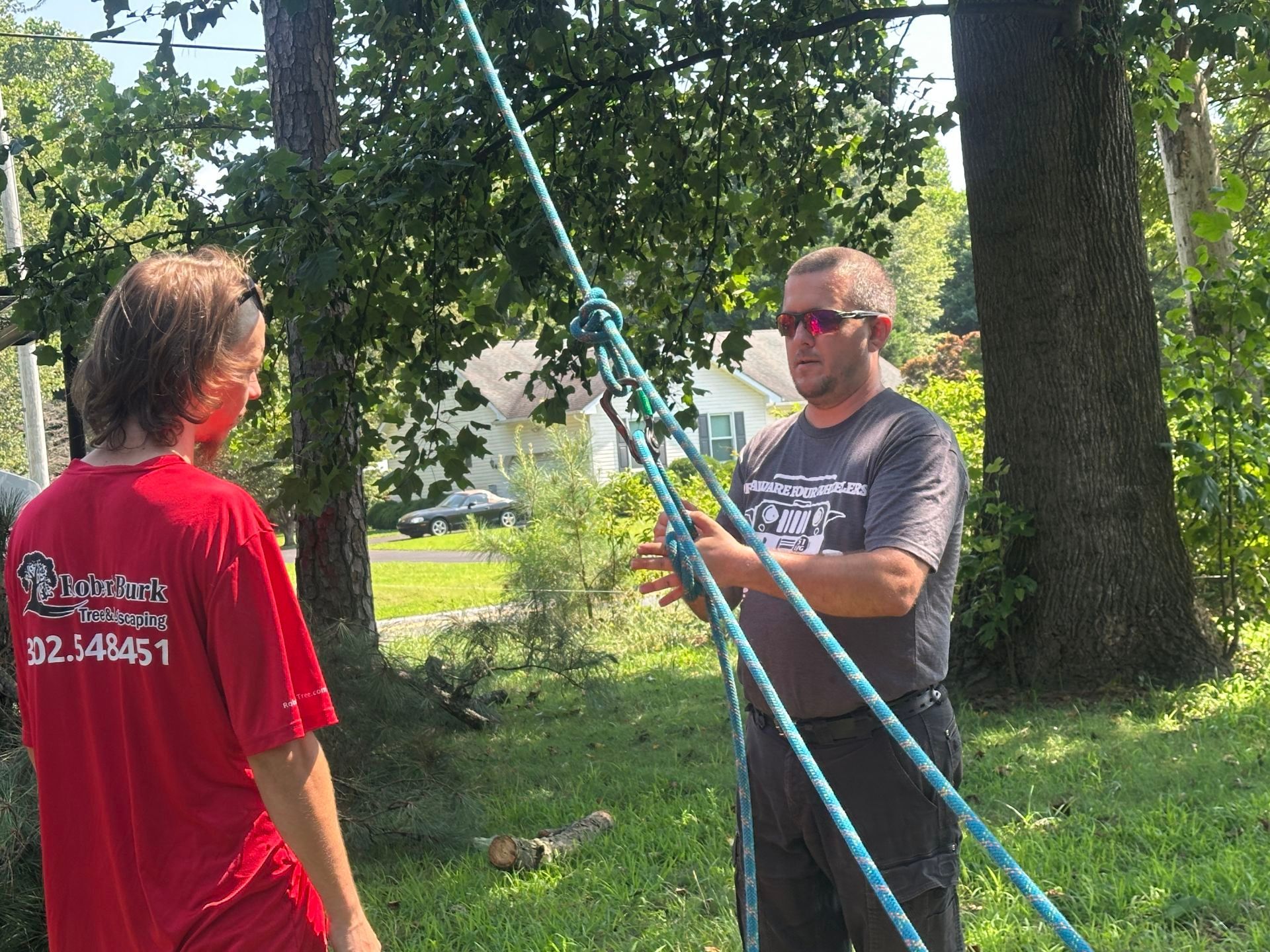
Robert Burk Tree crew checking ropes, access, and rigging before a confined removal
Tree Removal For Real Property Constraints

Tree Removal Built Around The Hazard And The Lot

A safe removal plan is specific to the tree’s condition, the buildings and surfaces below it, and the path available for trucks and debris. Robert Burk Tree & Landscaping handles routine takedowns, confined backyards, storm failures, and equipment-assisted work throughout the Harrington area.

Dead And Declining Tree Takedowns

When a tree has extensive dieback or internal decay, the crew limits how much weight and movement the remaining wood must carry. Sections are removed in an order that keeps the work predictable.

See Residential Removal Service

Trees Crowding Homes And Outbuildings

A trunk growing close to a porch, garage, barn, or shed may need to be reduced in short pieces so wood never swings into the structure or drops across an occupied route.

Plan A Structure-Side Removal

Wind-Damaged And Uprooted Trees

Wind-torn tops, uprooted stems, and trees caught in other trees are handled only after the crew identifies stored tension, unstable support, and the safest direction for each release.

Get Emergency Tree Help

Backyard Removals With Limited Access

When gates, fences, landscaping, or neighboring property restrict access, the crew can use smaller landing zones, planned rigging, and careful material movement through the site.

Discuss Limited-Access Work

Mechanical Lift And Crane Support

Bucket and crane options provide reach and control when a tree is too tall, too weak, or too close to a target for conventional climbing and free-fall cutting.

View Robert Burk Equipment

Chipping, Hauling, And Work-Area Reset

Brush can be chipped, wood can be loaded or placed as agreed, and the work area is cleared so residents can safely use the property after the crew finishes.

Request A Complete Scope
Conditions That Deserve A Closer Look

Six Changes Harrington Property Owners Should Not Ignore

Tree failure often gives some warning at the root plate, trunk, major unions, or upper crown. Treat a change as more urgent when the tree can reach a bedroom, porch, driveway, barn, road, or utility service.

Soil Heaving Beside The Trunk

A ridge of raised soil or a widening gap at the base may show that roots are losing their grip and the root plate is beginning to rotate.

A Trunk Union That Is Opening

Fresh tearing, separated bark, or daylight showing between main stems can indicate that a union is opening under the weight of the crown.

Large Dead Limbs Over Used Areas

Large bare limbs over a parking spot, play area, entrance, or roof can break without the whole tree appearing dead.

Mushrooms Or Soft Wood At The Root Flare

Conks, mushrooms, crumbling wood, or a soft cavity near ground level may signal decay where the trunk depends on its strongest support.

A Crown Left Heavy On One Side

After a major limb breaks, the remaining crown may become heavily weighted to one side and place new leverage on the trunk and roots.

Frequent Branch Drop In Calm Weather

Repeated small and medium branch drop during calm weather can be a sign of advanced decline, brittle deadwood, or hidden structural damage.

Removal Or Targeted Tree Care?

A Whole Tree Decision Starts At The Roots And Main Stem

One broken branch can often be corrected without removing a healthy tree. The equation changes when the defect is in the roots, lower trunk, primary union, or enough of the crown that the tree no longer has a dependable structure for its location.

Removal Becomes The Practical Option When

  • Root movement, soil separation, or severe root loss shows that anchorage is no longer dependable
  • A deep cavity, active trunk split, or widespread decay leaves too little sound wood for the load
  • Most of the upper crown is dead and brittle branches continue to fall
  • Storm damage has shifted the tree onto a structure or left the main stem unstable
  • The likely consequence of failure is unacceptable because the tree stands over occupied property

Pruning Can Still Be A Sound Option When

  • The problem is confined to specific dead, broken, rubbing, or overextended limbs
  • Clearance pruning can create adequate space above a roof, drive, walk, or service line without destabilizing the crown
  • Roots, trunk, and primary unions remain sound enough to support selective work
  • A recent storm damaged outer branches but left the main framework intact
  • A monitored care plan can reduce risk while preserving a healthy tree with useful life remaining
A photograph may show the lean or the damaged side, but it cannot reveal every internal cavity, root defect, loaded branch, or access limit. The recommendation should follow a ground-level and site-wide inspection.
How Difficult Trees Are Managed

Choose The Technique That Keeps Each Piece Predictable

Open ground may allow a directional fell, while a tree behind a home may need to be reduced from the outer crown to the trunk. The crew chooses the method that controls movement, limits impact, and fits the route available for equipment and debris.

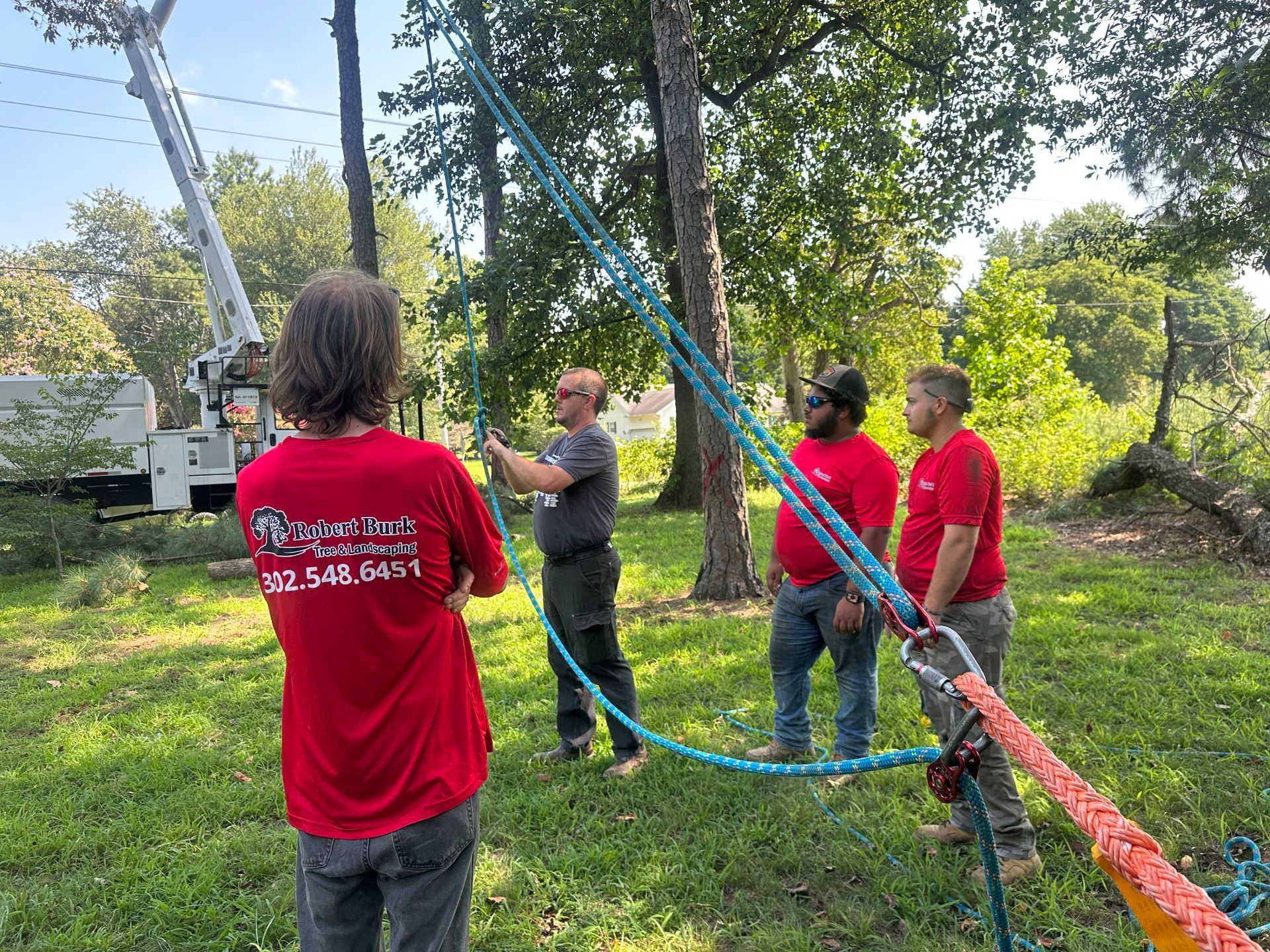
Crew reviewing the work zone and rigging path before tree removal
01

Map The Working Envelope

The first step identifies tree defects, the full reach of the crown, protected targets, machine routes, rigging positions, and areas that must remain open.

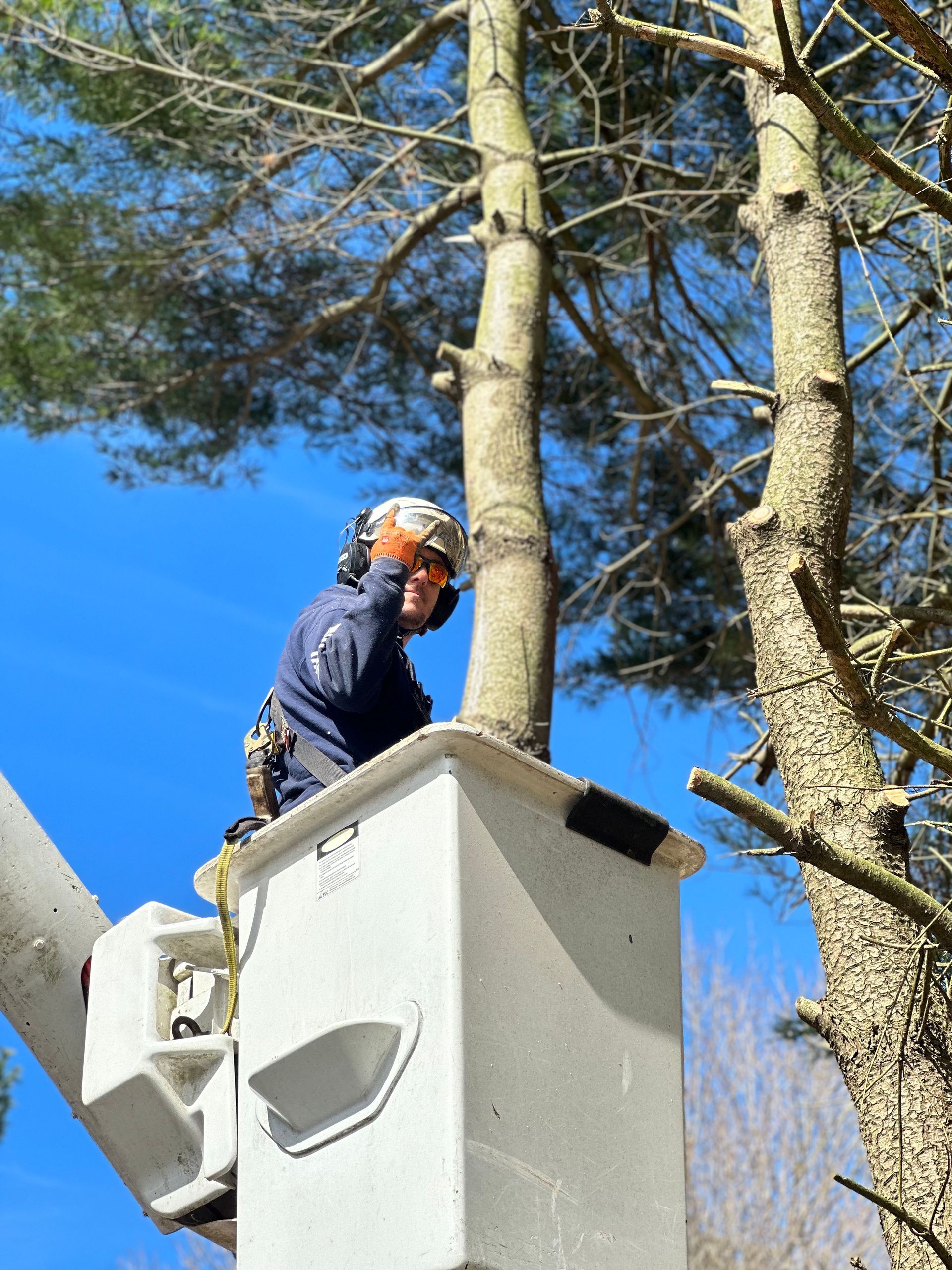
Bucket operator dismantling a tree in planned upper sections
02

Reduce The Crown In Sequence

The crown is reduced in an order that removes leverage and creates a clear path for the next cut instead of trapping the crew beneath loaded wood.

Crane supporting controlled movement of a heavy tree section
03

Lift Or Lower Heavy Sections

A bucket, crane, ropes, and lowering hardware can hold or redirect sections that cannot safely be released into the landing zone below.

Tree removal equipment processing branches and cleaning the site
04

Process Debris And Restore Access

Loaders, chippers, saws, and hauling equipment move brush and wood out of the work area while the crew keeps drives and neighboring access organized.

From Estimate To Clean Site

A Four Part Removal Plan For Harrington Properties

You should know the trees included, why they are being removed, how the crew expects to reach them, and where every part of the tree will go before the scheduled date.

Walk The Site And Confirm Scope

The estimator walks the property, examines the tree’s structure, identifies what it can reach, and records access, utility, surface, and debris concerns.

01
02

Prepare Access And Exclusion Zones

Before cutting, the crew establishes exclusion zones, positions equipment, confirms rigging and landing areas, and protects the routes that must stay usable.

Dismantle Or Fell The Tree

The tree is felled or dismantled according to the approved sequence, with each limb and trunk section directed away from buildings and other targets.

03
04

Clear Debris And Review The Stump

Brush and wood are handled according to the scope, the work area is cleaned, and the homeowner reviews the finished site and any stump that remains.

Bucket truck and chipper staged for a residential tree removal project
Harrington Property Conditions

Downtown Blocks, Highway Frontage, And Rural Edges Need Different Setups

Harrington’s traditional core includes residential and commercial streets around Commerce Street, Railroad Avenue, Mechanic Street, Dorman Street, Fleming Street, and Delaware Avenue. Those blocks can mean close neighbors, sidewalks, street parking, and limited turning room, while properties near U.S. Route 13, Route 14, the fairgrounds, and the city edges may have wider yards but more traffic, longer access routes, outbuildings, ditches, or field exposure.

Wet soil and open wind can change a tree’s stability and the ability of heavy equipment to enter. A new lean, torn roots, or soil lifting after a storm should be treated as a restricted area until the tree is evaluated.

  • The downtown street grid can restrict truck turns, curbside staging, and the space available for a chipper
  • Railroad corridors, overhead service, and utility easements must be identified before equipment or rigging is positioned
  • Established lots may contain shared fences, narrow side yards, detached garages, sheds, and mature shade trees
  • Properties near Route 13 and Route 14 may need driveway access and vehicle movement maintained during the work
  • Rural-edge sites can include drainage ditches, septic systems, soft shoulders, fields, and longer paths to the tree
What The Estimate Must Account For

Eight Details That Change The Equipment And Work Time

Tree height is only the starting point. The crew must also account for the strength of the wood, the consequences of a missed landing, the route to the tree, the ground under the equipment, utility clearance, material volume, and whether the hazard is still changing.

Wood Strength At The Cut

Brittle deadwood, hidden cavities, storm cracks, and root damage determine which sections can carry a climber, a rope, or the weight of the next cut.

Targets Inside The Reach Of The Crown

The plan considers every building, line, fence, road, parked vehicle, animal area, and neighboring yard inside the potential reach of the tree.

Path From Road To Tree

Gate openings, turns, overhead branches, driveway width, and distance from the street determine which machines can reach the work zone.

Lawn, Drive, And Shoulder Bearing

Lawns, gravel drives, pavement edges, soft shoulders, septic areas, and buried drainage can limit where trucks and outriggers may be placed.

Lines, Easements, And Rail Clearance

Electrical service, communication lines, railroad property, buried utilities, and easements can require added separation or outside coordination.

Space For Rigging And Landing

The crew needs enough controlled space to lower wood, operate equipment, stack material, and keep residents away from the active zone.

Volume And Destination Of Material

A broad crown and heavy trunk can produce multiple loads of brush and logs, so the destination of every material type affects time and equipment.

Whether The Hazard Is Still Moving

A stable dead tree can be scheduled, while a tree on a building, blocking the only drive, or continuing to uproot may require priority response.

Tree Crews Serving Harrington

Tree Removal For Harrington And The Surrounding Service Area

Robert Burk Tree & Landscaping serves residential, commercial, and larger properties in Harrington and throughout central and southern Delaware. Share the property address and the tree’s condition so the team can confirm coverage and the likely access needs.

Coverage Throughout Central Delaware

Harrington Service With Reach Across Kent And Sussex Counties

The company responds to planned removals, storm failures, commercial tree work, land clearing, and heavy debris projects from Harrington to surrounding communities.

  • Harrington, Farmington, Houston, Felton, Greenwood, and nearby properties
  • Milford, Frederica, Camden, Dover, and other Kent County communities
  • Seaford, Georgetown, Milton, Millsboro, and additional Sussex County service areas
  • Emergency response available 24 hours a day when a tree is actively threatening people, access, or property
Keeping The Rest Of The Property Intact

Good Tree Work Leaves Driveways, Lawns, And Access Usable

The tree may be the reason for the visit, but the removal plan also needs to protect the porch, roof, fence, garden, driveway, lawn, drainage, and routes used by the household. Damage prevention starts with equipment placement and a realistic landing plan.

Robert Burk Tree & Landscaping brings trained crews, aerial and lifting options, chipping, hauling, and site cleanup. The written scope should explain how those capabilities will be used on the surfaces and structures unique to your property.

  • Choose truck, chipper, and loader positions that do not unnecessarily block neighbors or damage weak pavement edges
  • Direct limbs and trunk sections away from porches, roofs, fences, gardens, barns, sheds, and outdoor equipment
  • Identify septic areas, wells, irrigation, drainage paths, buried utilities, and soft shoulders before heavy equipment enters
  • Agree on whether logs and chips will be removed, placed in a requested location, or handled under a separate scope
  • Finish with a debris sweep, access check, and homeowner review of the work area and remaining stump
Crane holding a tree section away from nearby residential targets
Why Robert Burk Tree Is Equipped For The Work

A Crew Prepared For Routine And High Consequence Removals

Tree removal is not the place for an improvised plan. The company you hire should be able to explain the hazard, select equipment for the site, control the work zone, move heavy material, and leave the property in a condition you understand.

What Robert Burk Tree Brings To The Site

  • Veteran-led organization with an established safety-first approach to tree work
  • More than 30 years of generational experience evaluating and removing trees
  • Residential, commercial, emergency, land clearing, and heavy hauling capabilities
  • Bucket truck, crane, rigging, chipping, loading, and debris management options
  • A work plan that includes access, property protection, material handling, and cleanup

What A Clear Estimate Should Tell You

  • The exact trees, stems, and hazards included in the proposed work
  • The planned access route, machine placement, rigging needs, and utility limitations
  • How brush, logs, chips, and the stump will be handled when cutting is complete
  • The anticipated schedule and whether the project is routine, priority, or emergency work
  • What the owner should move, mark, unlock, restrain, or keep clear before arrival
Helpful Services Before And After Removal

Plan The Next Step For The Tree Or The Site

The right starting point may be a removal estimate, a health evaluation, selective pruning, emergency response, or a broader clearing and hauling project. These pages explain the available services and what each one is designed to solve.

Harrington Tree Removal Questions

Frequently Asked Questions About Tree Removal In Harrington

These answers cover access, estimates, neighboring property, soft ground, utilities, debris, stumps, and the practical steps that help a Harrington removal go smoothly.

Can a large tree be removed from a narrow lot near downtown Harrington?

Yes, when the work can be planned around the available landing area and access. The crew may reduce the tree from the top, lower sections by rope, use bucket access from the street or drive, and move material through a gate or side yard instead of trying to fell the tree whole.

What will the crew look at during my tree removal estimate?

The estimator reviews tree size, defects, lean, branch weight, roots, nearby structures, overhead lines, gates, driveways, surface conditions, equipment routes, and the volume of brush and wood. The visit also establishes what cleanup and stump work are included.

How is a tree handled when limbs cross a neighbor’s yard?

The removal plan must account for the full crown and the property below it. Discuss the boundary and access with your neighbor before the scheduled work when possible. The crew can plan rigging and landing zones to keep material within the authorized work area.

Is a fresh lean after heavy rain considered urgent?

A new lean combined with raised soil, exposed roots, or cracking around the base deserves prompt attention. Keep people and vehicles outside the potential fall zone and tell the crew when the change appeared, how wet the ground is, and what the tree could strike.

Can you keep my driveway open during the work?

Often at least part of the access can remain available, but it depends on where the tree, chipper, bucket truck, crane, and debris must be positioned. The crew will explain any temporary closure and the safest time to move vehicles before cutting starts.

What happens when the tree is close to a service wire or utility easement?

The crew first identifies the line and the separation required for safe work. A tree contacting an energized conductor must be reported to the utility or emergency services. Other easements or utility conflicts may also require coordination before equipment is placed.

Do you remove the logs, brush, and chips after cutting?

Robert Burk Tree & Landscaping offers debris hauling and cleanup, but the written estimate should state the exact material plan. It should specify whether brush is chipped, logs are removed or left, chips are hauled, and the stump is cut or ground.

Should I move trailers, vehicles, or outdoor equipment before the crew arrives?

Move anything portable outside the planned work and equipment routes, including cars, trailers, grills, furniture, toys, and lawn equipment. Unlock gates, secure pets, and point out septic, drainage, irrigation, or buried features during the prework review.

Will soft ground delay tree removal?

It can. Saturated lawns, weak driveway edges, roadside shoulders, and underground systems may not safely support trucks or outriggers. The crew may change equipment, add protective measures, use a different staging position, or reschedule nonemergency work to avoid unnecessary damage.

What is left at the stump after the tree is down?

The base is normally cut to the height described in the scope. Stump grinding is a separate operation unless the estimate specifically includes it. Ask about final height, grind depth, surface roots, chip removal, and backfill before approving the work.

Can one damaged trunk be removed from a multi-stem tree?

Sometimes, but removing one lead can change the balance and expose decay at the shared union. The crew needs to inspect the attachment, remaining crown, roots, and likely response before recommending partial removal instead of taking down the entire tree.

Address The Risk While The Site Is Still Controllable

Need A Tree Removed In Harrington, DE?

Call Robert Burk Tree & Landscaping for an on-site review of a dead, split, leaning, storm-damaged, or unwanted tree. The crew will explain the safest method, access requirements, protection plan, debris handling, and the next practical step for your property.

Call (302) 548-6451