Removal Of Dead Trees
A dead or severely declining tree can shed limbs or fail at the trunk without much warning. We plan where each piece will travel and how the wood and brush will leave your property.
Review Tree Removal Options
A tree leaning over your roof or opening at the trunk can become dangerous quickly. Robert Burk Tree & Landscaping inspects the tree, maps access and protected areas, then removes it in controlled sections with the right equipment and a thorough cleanup.

Robert Burk Tree & Landscaping handles tree removal in Milford, DE, for dead, decayed, leaning, split, storm damaged, and unwanted trees. The crew can provide routine removal, urgent response, equipment support, hauling, and site cleanup.
The safest plan depends on what the tree can hit and how each section can be moved. Rooflines, fences, driveways, service wires, neighboring yards, gardens, and the available landing area all shape the cutting and rigging sequence.
A compact lot near Downtown Milford or Silver Lake presents different access than a wooded property outside town. An on site estimate lets the crew evaluate those conditions instead of guessing from a photograph.
Select the condition that best matches what you see. This guide can help you describe the problem, but it cannot replace an on site inspection. Keep everyone clear when a tree is moving, resting on a structure, or touching electrical lines.
Keep people and pets out of the affected area and away from the tree. Do not climb onto the roof or pull on loaded branches. Call for emergency service so the crew can assess the weight and remove it without shifting more force onto the building.
Most trees near homes cannot simply be dropped at the stump. Mature trunks and wide crowns may extend over roofs, garages, fences, gardens, utility service, septic areas, and narrow side yards, so every cut needs a planned destination.
Milford spans Kent and Sussex Counties along the Mispillion River, and site conditions can change after extended rain. Soft ground, open wind exposure, road frontage, and limited staging space all affect where equipment can work and how the tree comes apart.
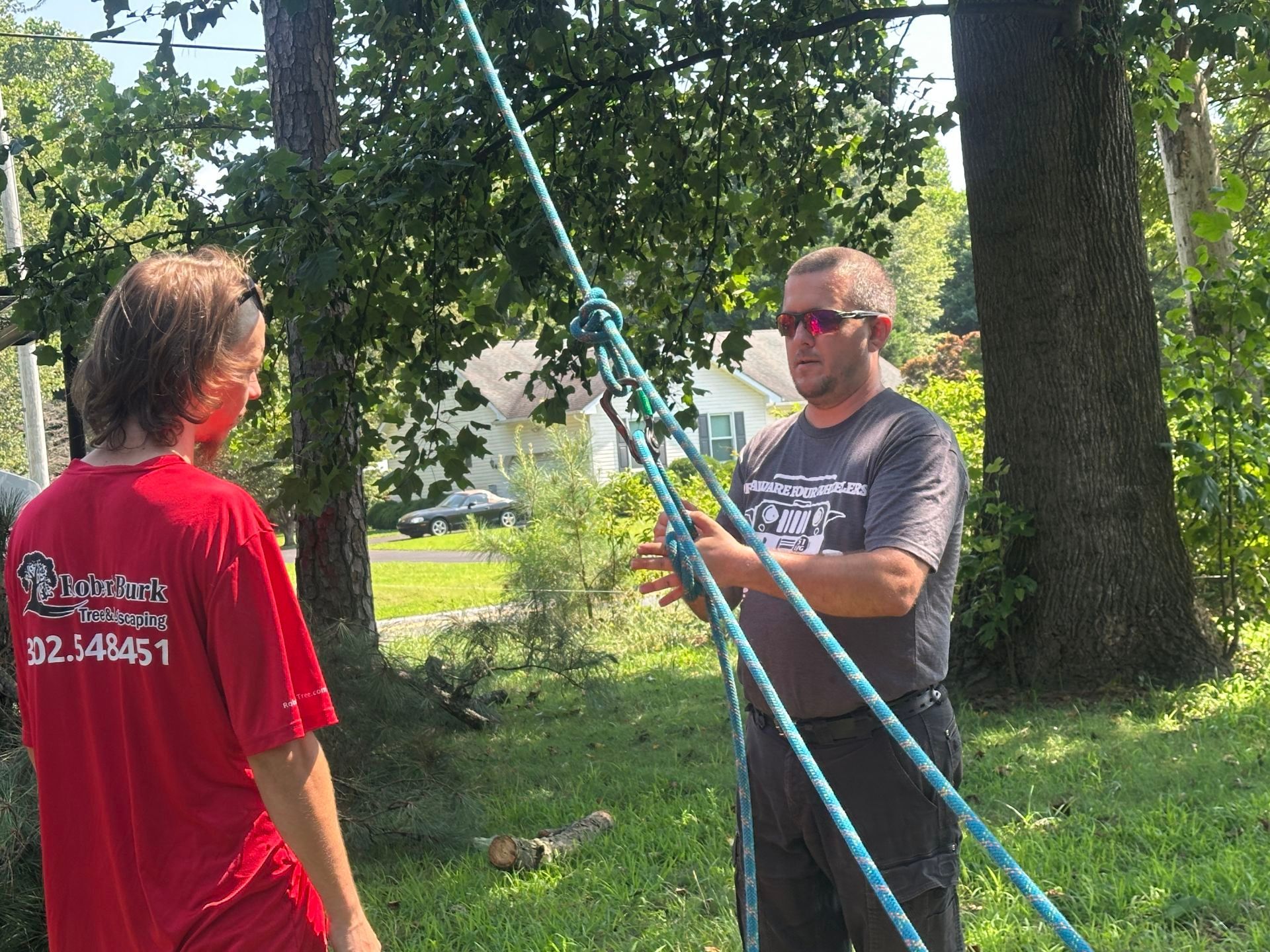
Each project requires a method that fits the tree, the targets below it, and the access available on the property. Robert Burk Tree & Landscaping handles straightforward removals as well as confined work that requires careful lowering or specialized equipment.
A dead or severely declining tree can shed limbs or fail at the trunk without much warning. We plan where each piece will travel and how the wood and brush will leave your property.
Review Tree Removal OptionsFresh lean, lifted soil, widening seams, and root plate movement are reasons to keep the area clear and request a prompt assessment, especially near homes or traffic.
Schedule A Tree AssessmentWe remove broken tops, suspended branches, uprooted trees, and trunks resting on structures after securing the work area and choosing a controlled sequence.
View Emergency Tree ServiceTrees behind fences, between buildings, or over valuable landscaping can be dismantled in smaller pieces and lowered away from protected areas.
Explore Confined Tree RemovalBucket and crane access can improve reach and control when a tree is tall, unstable, close to a building, or unsafe to climb.
See Equipment In ActionWe plan for chipping, log handling, hauling, and final cleanup so the work area is safe and usable when the crew leaves.
Request A Detailed EstimateChanges at the roots, trunk, or crown can show that a tree is losing strength. Pay closer attention when the fall zone includes a house, driveway, play area, road, or utility line.
Mounded soil, new gaps, or exposed roots on one side of the trunk may show that the root plate is shifting.
A tree that moved after heavy rain or wind needs attention, especially when people, vehicles, or structures are within reach.
Fresh wood inside a widening seam or separation between main stems can indicate active structural failure.
A suspended limb may release after the storm has passed, even when the tree appears still from the ground.
Cavities, fungal growth, loose bark, and soft wood around the root flare can reduce the sound wood carrying the tree.
Repeated branch drop, a bare upper crown, or widespread dieback may mean the tree has declined beyond what pruning can correct.
A damaged limb does not always mean the whole tree must come down. The decision changes when defects involve the trunk, main unions, roots, or a large share of the crown, especially where failure could injure someone or damage property.
A tree behind a house calls for a different approach than one standing in open ground. We match the removal method to tree stability, available landing room, access limits, and the equipment that can work without damaging the property.
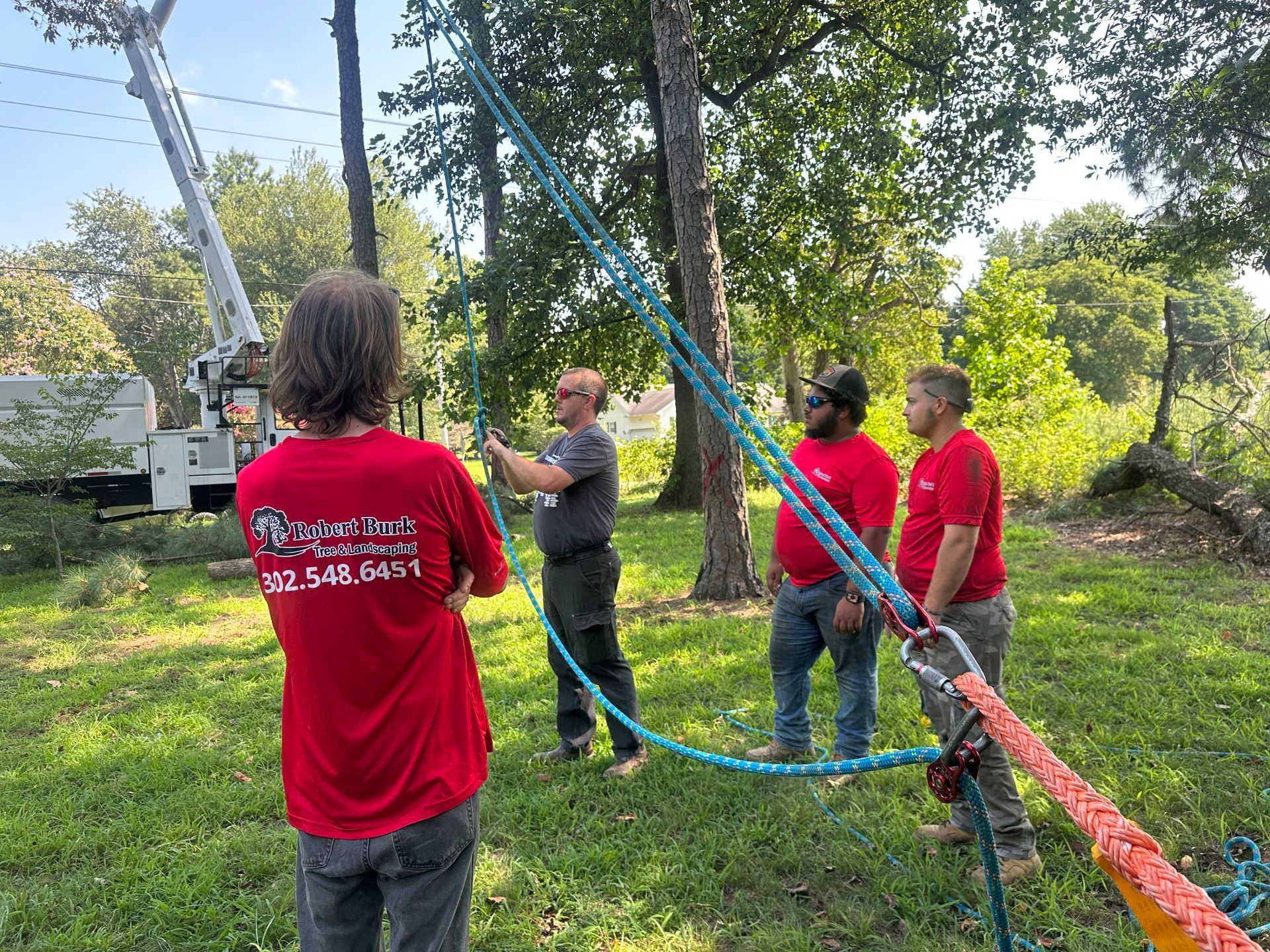
We review lean, defects, nearby targets, utilities, gates, pavement, soil firmness, and the safest route for crew and equipment.
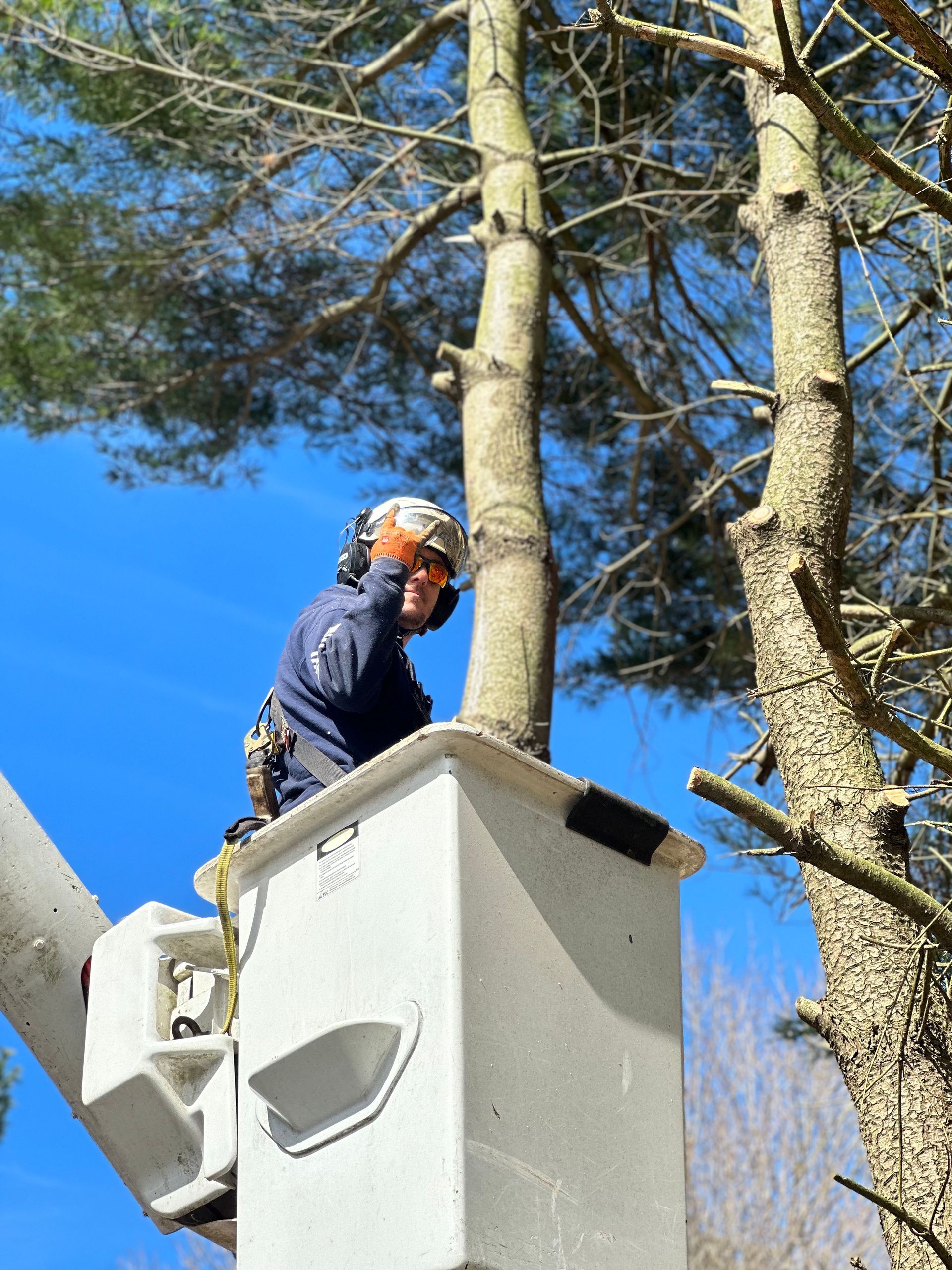
When open space is limited, large limbs and trunk sections are cut in a planned order and controlled before they reach the ground.

A bucket truck or crane can provide controlled reach to tall stems, unstable crowns, and trees positioned close to structures.

Ropes, lowering devices, loaders, chippers, and hauling equipment help manage each section and clear the work area efficiently.
Before work starts, you should understand what will be removed, how the crew will control it, which equipment will enter the site, and what cleanup is included.
We inspect the tree, fall zone, utilities, access, soil conditions, nearby structures, and the expected volume of brush and wood.
The crew sets the drop zone, rigging points, equipment route, traffic controls, and protection needed for neighboring property.
The tree is felled or dismantled in sequence using ground work, climbing, bucket access, rigging, or crane support as conditions require.
We handle debris according to the written scope, clean the work area, and review the finished site and any remaining stump with you.
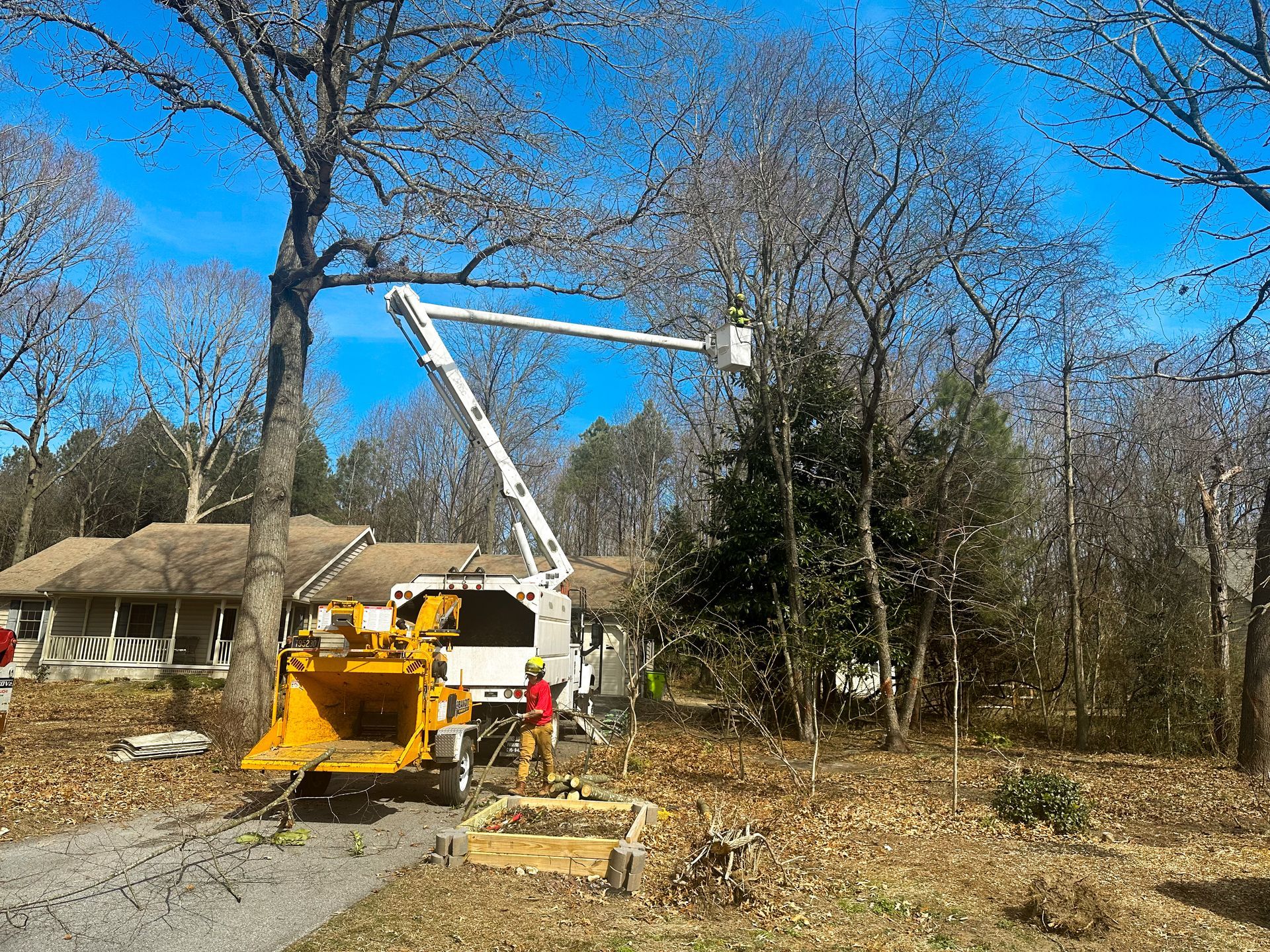
Milford sits on the Mispillion River and spans both Kent and Sussex Counties. Near Downtown Milford, Silver Lake, and older neighborhoods, crews may face mature shade trees, close lot lines, overhead service, and limited staging; outside town, longer equipment routes, soft shoulders, drainage areas, septic systems, and open wind exposure may matter more.
Wind and saturated soil can create a dangerous combination. Keep clear of any tree that develops a new lean, exposed roots, or fresh soil cracks after a storm until it has been inspected.
Tree size matters, but it is only one part of the estimate. Condition, targets, access, ground, utilities, work zone needs, debris, and urgency determine the safest and most efficient approach.
Dead wood, cavities, cracks, decay, and root damage affect whether the tree can support climbing, rigging, and the planned cutting sequence.
We consider where the tree naturally loads and every roof, road, line, fence, play area, or neighboring property it could reach.
Gate width, driveway capacity, overhead clearance, soft shoulders, septic areas, and landscaping can limit the equipment available.
Wet soil can weaken root anchorage and prevent heavy trucks from staging without damaging lawns, pavement edges, or underground systems.
Service drops, conductors, streetlights, buried lines, and utility easements may require added clearance or coordination.
Residents, pets, vehicles, pedestrians, and neighboring access must remain outside the drop, swing, and equipment zones.
Large trees create substantial brush and wood, so chipping, loading, hauling, and log placement need to be included in the plan.
A tree on a building, blocking the only access, or continuing to move takes priority over a stable removal scheduled for later.
Robert Burk Tree & Landscaping serves homes and commercial properties throughout central and southern Delaware. Call with your address so the team can confirm availability and discuss access for the equipment your project may need.
The team works in Milford and surrounding communities on residential trees, commercial properties, storm response, land clearing, and hauling projects.
A removal is not finished well if it leaves ruts in a soft lawn, broken driveway edges, damaged landscaping, blocked access, or an unexpected pile of wood. Those concerns should be identified before trucks, rigging, and cutting begin.
Robert Burk Tree & Landscaping combines trained crews, specialized equipment, and cleanup capabilities. Your estimate should turn that experience into a clear plan for the specific hazards and surfaces on your property.
Tree removal leaves little room for improvisation. Choose a crew that can assess the risk, explain the plan, bring suitable equipment, protect the site, and handle the debris from start to finish.
These photos show bucket access, rigging, sectional removal, crane support, brush handling, and cleanup around homes, roads, utilities, and other protected areas.
A tree removal project may also involve pruning, health care, emergency response, commercial maintenance, clearing, or hauling. Review the relevant service page before you schedule, or contact the team for help choosing the right starting point.
Get practical answers about estimates, scheduling, emergency conditions, equipment access, wet ground, cleanup, stumps, permits, and preparing your property.
We price the work after looking at tree height and diameter, condition, lean, access, nearby structures, utility conflicts, equipment needs, and debris volume. An on site visit gives you a reliable scope because two trees of similar size can require very different removal plans.
Yes. We look at the roots, trunk, main unions, crown, and what the tree could hit if it fails. Pruning may solve isolated branch problems, while major root movement, trunk decay, extensive dieback, or an unstable split may make removal the safer choice.
We usually dismantle confined trees in smaller sections and control each piece with ropes, bucket access, or crane support as needed. Before cutting, we map the landing area, equipment position, rooflines, fencing, landscaping, and neighboring property.
Yes. Robert Burk Tree & Landscaping provides emergency response 24 hours a day for fallen, storm damaged, or actively failing trees. Tell us whether the tree is on a structure, blocking access, uprooting, moving, or shedding large limbs so we can understand the urgency.
Stay well back and call the electric utility or emergency services first. Do not touch the tree, nearby fencing, vehicles, tools, or anyone in contact with the area because electrical current can travel through connected materials and the ground.
Debris hauling and site cleanup are part of the company’s tree removal service, but your estimate should still spell out the details. Ask whether brush will be chipped, logs removed or left, chips hauled, and stump work included.
Many residential trees can be removed within part of a day, while very large, unstable, crane supported, or multiple tree projects may take longer. Setup, access, weather, rigging, traffic control, and debris volume all affect the schedule we give you.
Sometimes, but we first need to assess soil firmness, root movement, driveway edges, drainage, and underground systems. We may adjust equipment, staging, protective measures, or the work date if entering the property would create unnecessary damage or risk.
The estimate should clearly state what happens to the stump. We will explain whether the trunk is cut near grade and whether stump grinding is included, priced separately, or not part of the scheduled work.
Move vehicles, furniture, grills, toys, and fragile items away from the work area. Keep children and pets inside, unlock gates, and point out septic systems, irrigation, buried utilities, drainage features, or access limits before equipment enters.
Possibly. Requirements can vary when a tree is within a public right of way, near utility easements, governed by an HOA, on a shared boundary, or affected by local environmental rules. Check with the City of Milford, the applicable county, your utility, or your association before authorizing work when any of those conditions apply.
Call Robert Burk Tree & Landscaping for a careful assessment of a dead, leaning, split, storm damaged, or unwanted tree. We will review the hazard, access, nearby structures, equipment needs, debris plan, and the safest way to complete the removal.